Less Instead of More
Production
A week and a half to two weeks on the skins, barely more — that's the rule of thumb for a classic white Sviri. In neighboring Kakheti, by contrast, the same must is often left to ferment for half a year with skins, seeds and even stems. Although both methods are called Qvevri wine and both age in the same buried clay vessel, the results could hardly taste more different.
Officially, the limit for the Sviri appellation is defined even more tightly. Pomace is the solid mass of skins and seeds. It may make up at most five to six percent of the must. Anything above that, and the wine can no longer bear the village's name.
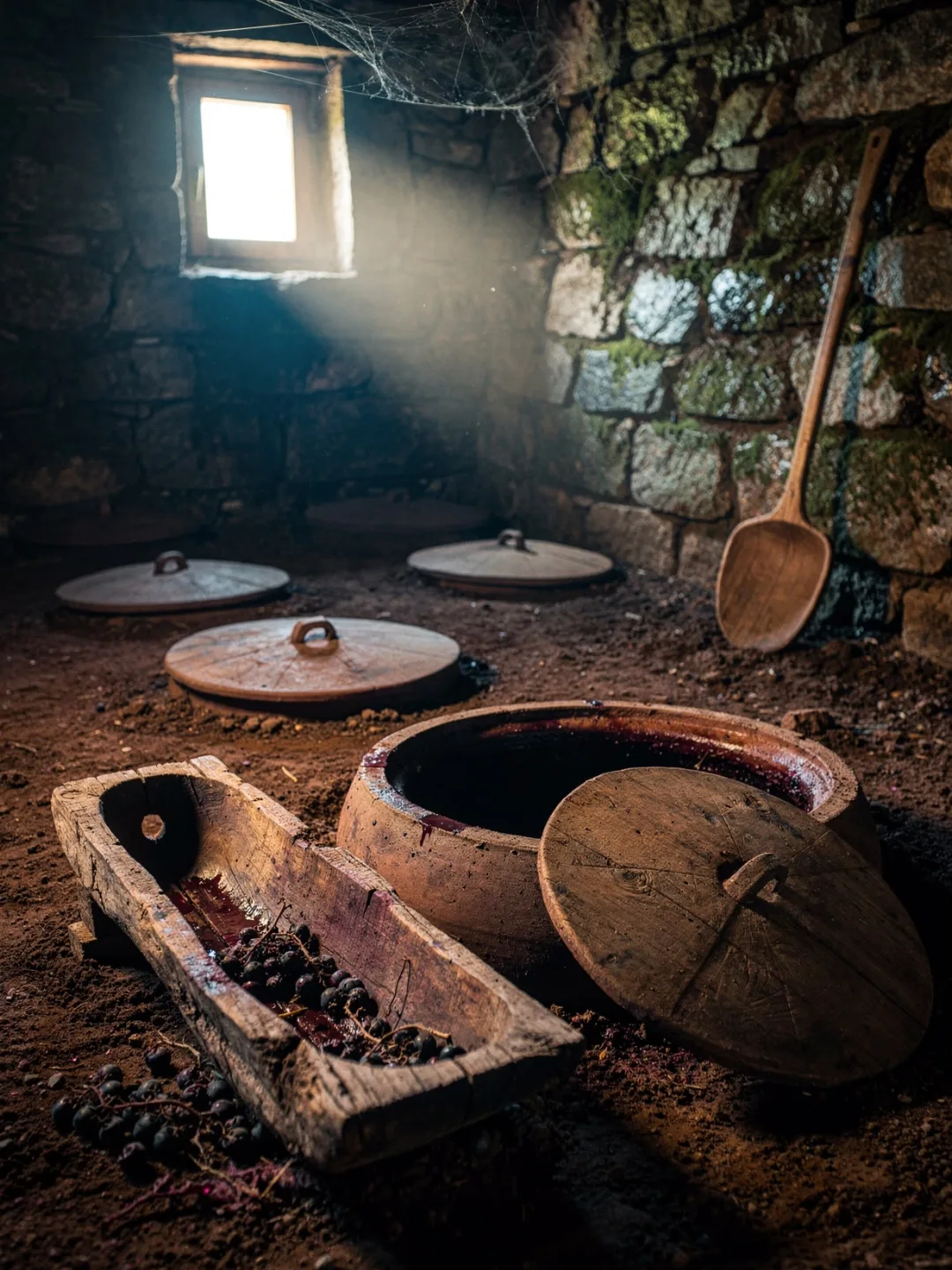
Pressing is traditionally done in a Satsnakheli, a hollowed-out tree trunk trough in which the berries are trodden underfoot — the same technique used centuries ago, only today the trough often stands in stainless steel beside the old wooden one. The must runs into the Churi, a bulbous clay vessel buried up to its neck in the ground. A wooden lid and a layer of clay or sand then seal it almost airtight.
The red Otskhanuri Sapere from Obcha, by contrast, gets more time on the skins than its white neighbors. Otherwise it would barely release any color or tannin. Its acidity is high to begin with, its sugar scarce, and only after many years in the cellar does its initial harshness turn into a dense, spicy red wine.
What remains after pressing isn't thrown away. The pomace is distilled into Chacha, the Georgian pomace brandy. For many families here, this is still a natural part of the harvest, just as elsewhere apple pomace becomes schnapps.