Mtsvadi & Churchkhela
Wine & Food
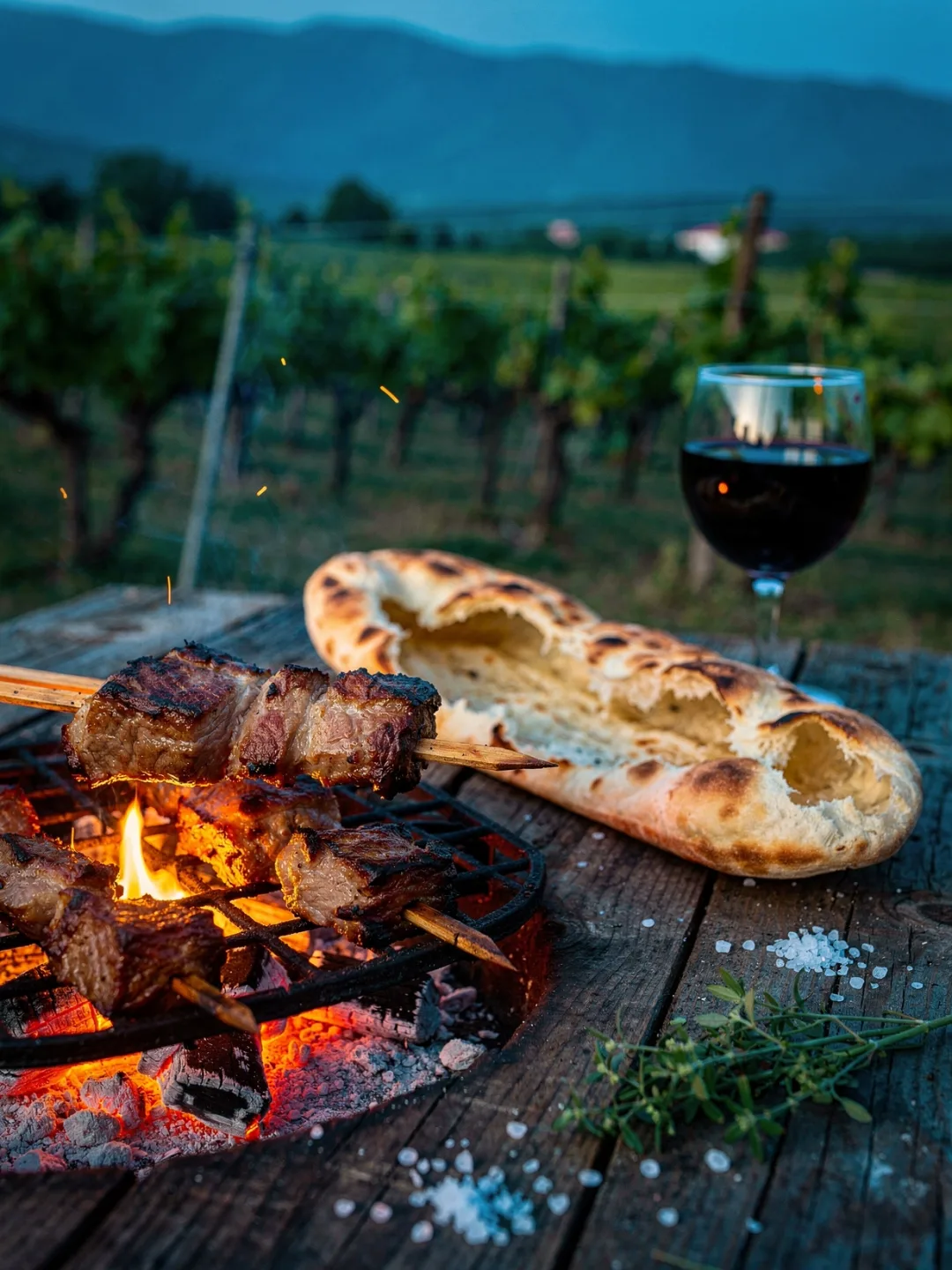
In a region where nearly every farm has vines, even the vine cuttings don't go to waste. Mtsvadi, skewered pork or beef, traditionally sizzles in Kakheti over the embers of spent vine wood, which lends the meat a slightly smoky, resinous note and gives the fat a hint of forest flavor no gas grill could ever achieve. A young, chilled Saperavi pairs well with it. Its acidity cuts through the fat, almost like a squeeze of lemon on a steak.
On every Kakhetian table lies Shotis Puri, a long, canoe-shaped white bread from the clay oven, torn rather than sliced. At the great feast, the Supra, a chosen Tamada guides the evening with toasts, and between courses the wine moves naturally from toast to toast.
With spicier, salty dishes featuring plenty of garlic or walnut paste, a Kindzmarauli from Kvareli works better than a dry Saperavi. The residual sweetness tames the heat, while the acidity keeps the wine fresh rather than letting it feel heavy-handed.
Dessert means Churchkhela: strings of walnut halves dipped repeatedly in thickened grape must called Badagi and dried until they form a candle-shaped sweet. The Kakhetian method of making it has been recognized as part of Georgia's intangible cultural heritage since 2015. Badagi is simply concentrated grape must, which is why the sweet tastes almost like an edible echo of the wine made from the very same harvest.
This is the common thread running through Kakhetian cuisine. Wine doesn't just sit alongside the food here—it comes from the same harvest as the bread, the meat on the skewer, and the sweet at the end. Eating in Kakheti always means, in the end, tasting a piece of the vineyard too.