Caucasus as a Shield
Climate
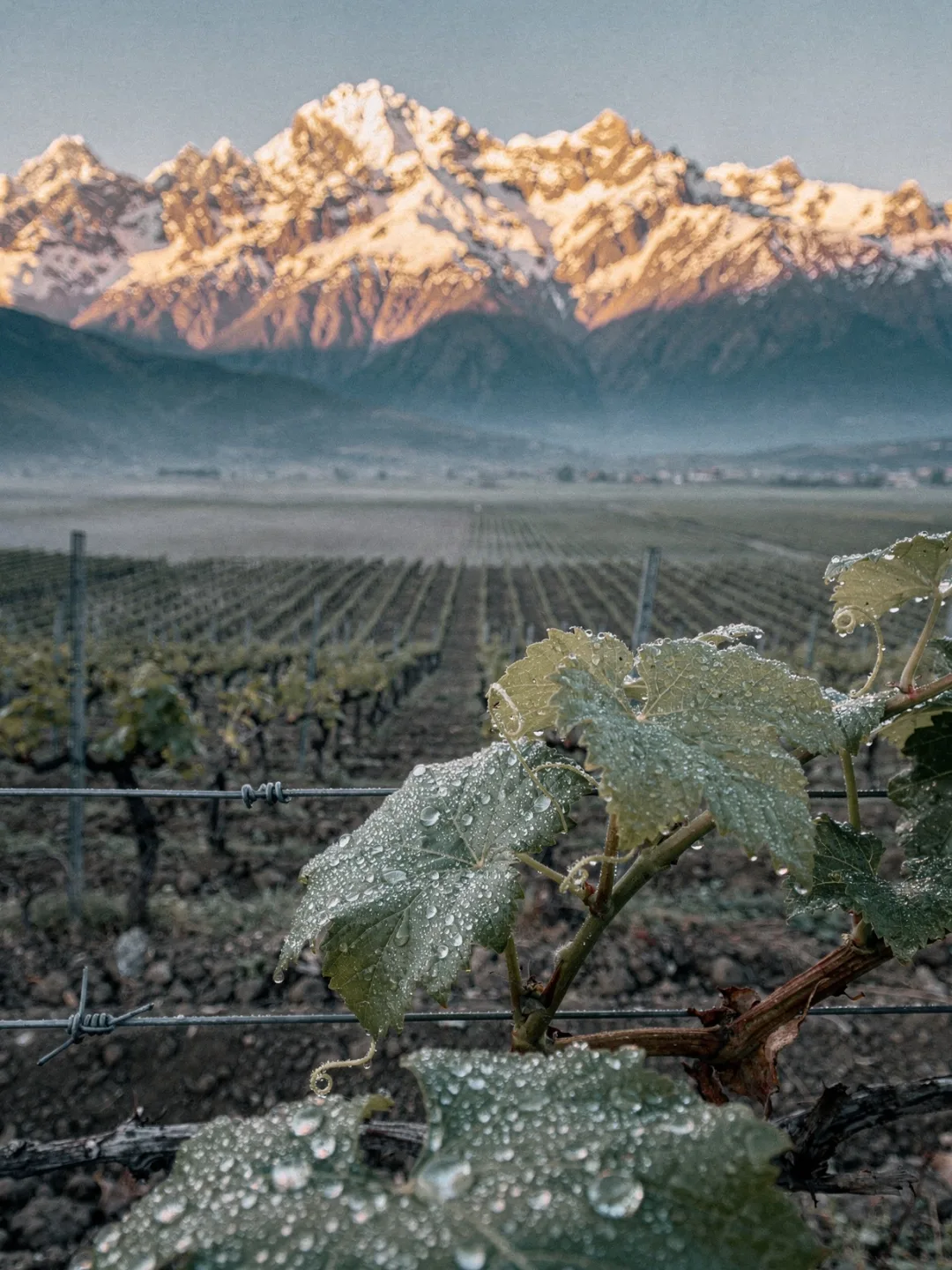
The Greater Caucasus acts like a wall. In northern Kakheti, individual peaks rise above four thousand meters and hold back cold air masses from Russia long before they can even reach the Alazani Valley. What does arrive has usually already weakened and carries little cold with it. The result is a continental climate with long, warm summers and winters that rarely turn truly harsh. Mild winters spare the vines the burying that would be necessary further north.
Rain falls mainly in spring and autumn, four hundred to six hundred millimeters a year in total — not much, but usually well timed. In midsummer it often stays completely dry for weeks. Fungal diseases barely stand a chance as a result, and many winemakers largely forgo spraying. Anyone driving through the vineyards around Gurjaani will therefore rarely see dense canopies.
A second mountain range works in the opposite direction. The Tsiv-Gombori range separates the Alazani Valley from the drier Iori Basin to the west and captures moisture that would otherwise drift on from the other side. Between the valley floor and the highest vineyard lies a difference of over five hundred meters in elevation, specifically from around two hundred fifty to eight hundred meters. This leaves plenty of room to maneuver: those wanting to preserve acidity plant high, those aiming for richness stay low in the plain.
In Kvareli, the vineyards crowd right up against the foot of the mountains. Cool downslope winds from the Caucasus sweep through the rows in the evening, bringing cold nights even when the previous day was scorching hot and the grapes seemed to nearly cook in the midday sun. This is exactly what gives Saperavi from Kvareli its balance between sweetness and acidity.
Warmer summers are noticeable here too. Some producers are now harvesting earlier. Others deliberately plant new plots higher up the slope, hoping the mountains to the north will keep letting through enough cool air so the acidity in the grapes doesn't vanish before harvest.