Gravel & Limestone Marl
Soils
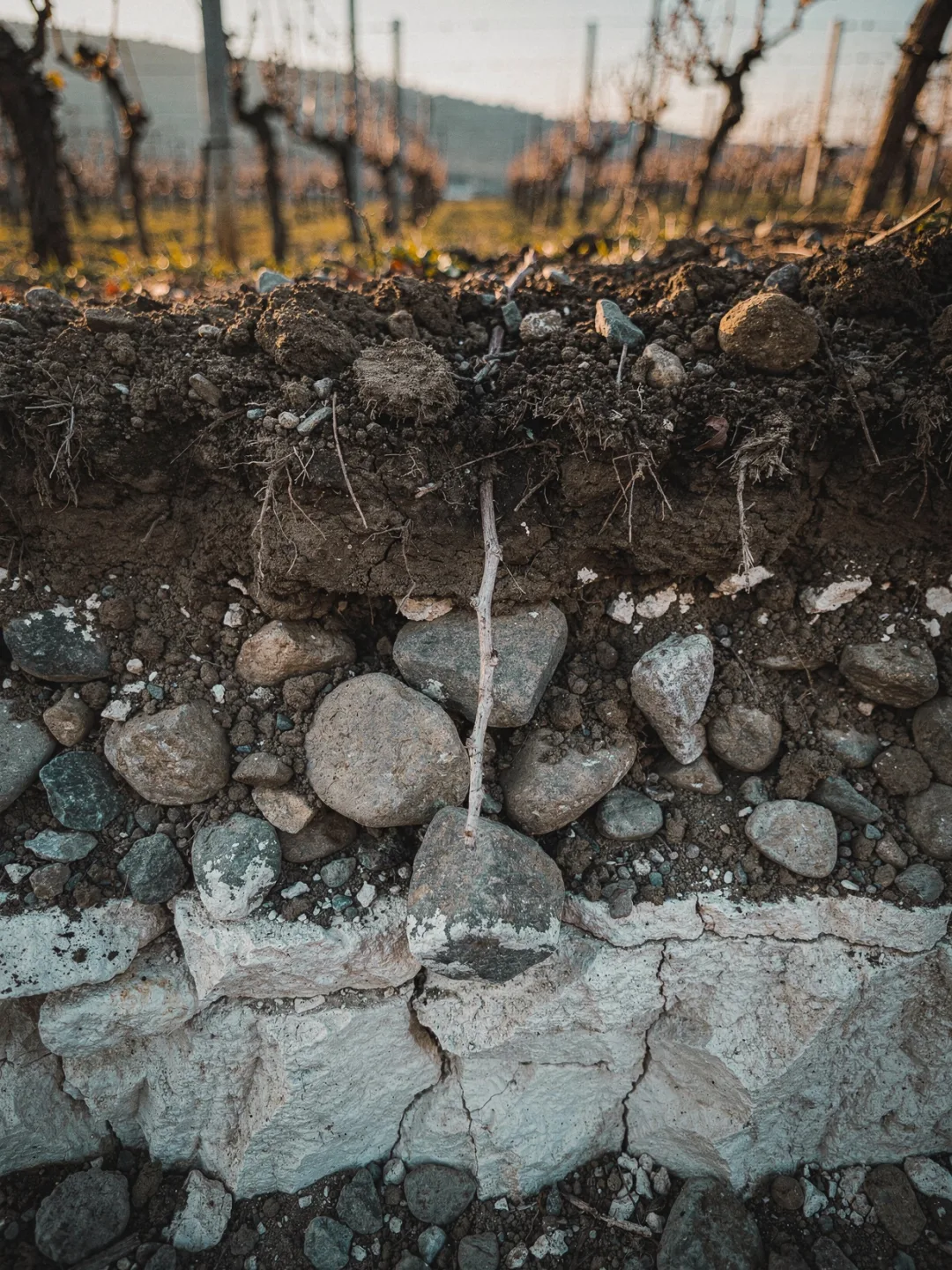
Dig a hole in a vineyard near the Alazani. After thirty centimeters, the color shifts from dark brown to grayish brown. Suddenly round pebbles crunch between your fingers. This is gravel that the river and its tributary, the Duruji, carried down from the Caucasus over thousands of years, constantly shifting and tumbling until every sharp edge was worn smooth.
Above it lies a thin layer of clay and loess, enriched by the leaves and vine cuttings of centuries of winegrowing. It holds moisture in spring. By midsummer it dries out quickly, forcing roots to head deep early if they don't want to go thirsty.
What they find there is, at first, hardly inviting: bare, permeable gravel that stores heat and acts during the day like underfloor heating from below. For ripening grapes, this is a benefit. For the root, it's a struggle — it must squeeze between the stones and finds hardly any nutrients there.
Only deeper down, often beyond a meter, comes solid limestone marl, as seen exposed in the hills around Kvareli. Pale, dense stone that stores water for weeks and secures a reserve for the vines in dry summers. Saperavi grapes for Kindzmarauli grow on this marl. Their stonier, leaner soils produce more minerality and more acidity than elsewhere in Kakheti.
A stubborn misconception persists: that the vine sucks minerals from the limestone and that's why the wine tastes mineral. That's not quite right. What actually matters is the detour through water and heat that dry, stony soils like those in Kvareli force upon the vine, pushing the roots deep down and producing smaller, more concentrated berries in the process. The soil doesn't determine flavor directly. It determines how hard the vine has to work.
Dark clay mixed with loess, enriched with leaves and vine cuttings. Holds spring rain and dries out quickly by midsummer.
The root: This is where the fine roots sit. They catch the last spring rain — and are already high and dry by July.