From the Minoans to Today
Region & History
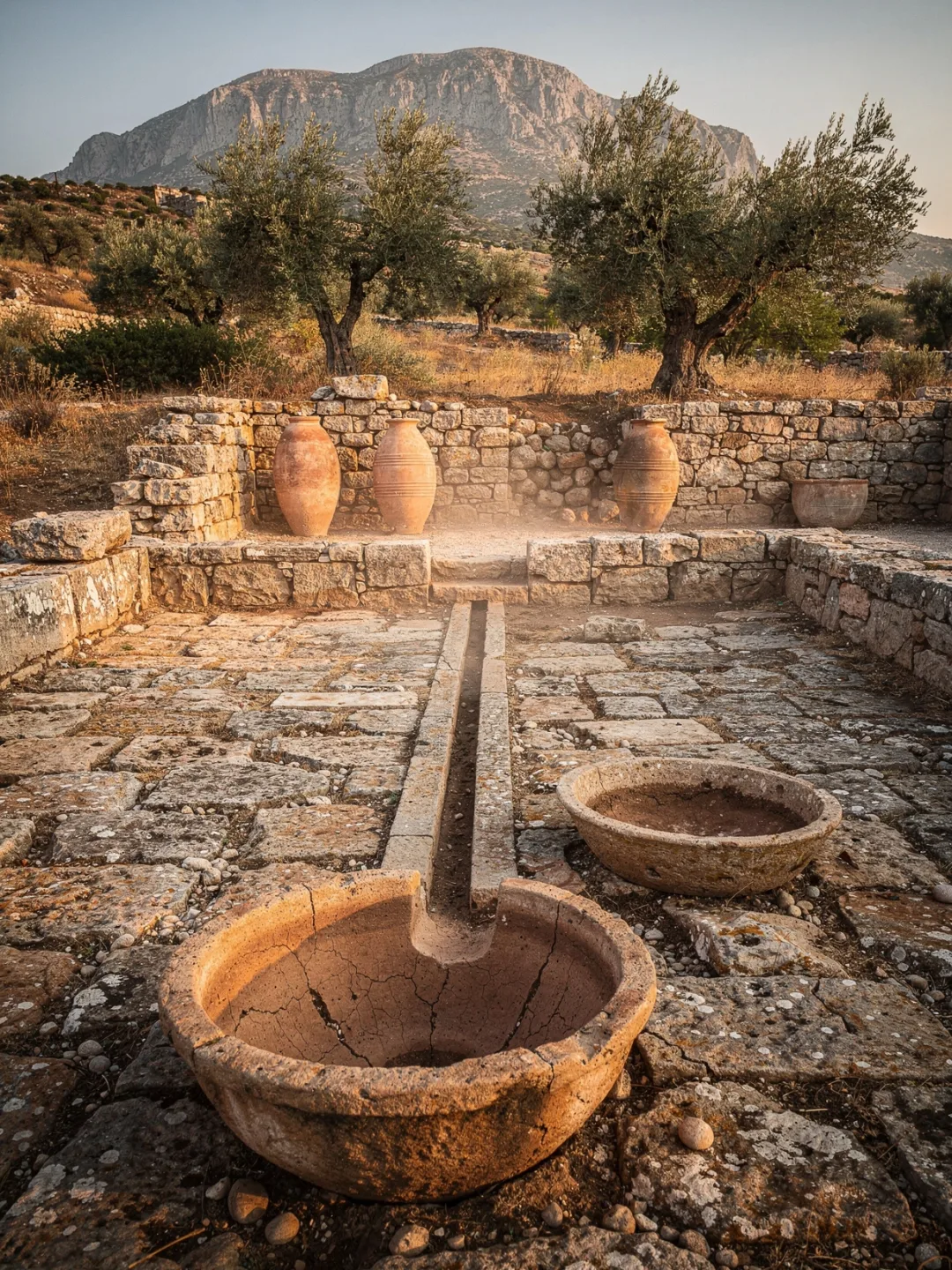
Near Vathypetro, five kilometers south of Archanes, stands the oldest wine press in the world. It's roughly three thousand six hundred years old. A shallow basin of fired clay caught the grapes, a narrow channel carried the must into a collecting vessel, and both still stand in the same spot where the Minoans built them more than three thousand years ago. Rome didn't exist yet.
Venice conquered Crete after the Fourth Crusade. The port city on the north coast became its most important trading hub for a sweet wine called Malvasia. The city was then called Candia. Its older name, Handakas, traces back to a deep trench that Arab conquerors dug around the walls in the ninth century — this became Chandax in Greek and Candia in Venetian. Ships loaded with Malvasia sailed out of Candia to Venice for six centuries, and from there further north — the Venetian wine taverns were simply named malvasie after the cargo.
The end came slowly, then suddenly. Starting in 1645, Ottoman troops besieged the city, and the siege dragged on for twenty-one years — the longest in recorded military history — until Venice surrendered in 1669 and had to cede Crete to the Ottomans. The trade in Malvasia collapsed. Winemaking continued, mostly in the monasteries and on the fields of Christian farmers. It now served only the family table, no longer export.
It wasn't until the 1990s that the tide turned. The Lyrarakis family replanted two nearly extinct white grape varieties in 1992. The spot was their Psarades vineyard, at 480 meters elevation: Dafni and Plyto. Dafni is named after the laurel, because the wine recalls it. A Bronze Age vessel from Chania already bears the words "Dafnitos Oinos" — wine from Dafni. Both varieties had nearly disappeared. Crete's four great appellations — Peza, Archanes, Dafnes, and Sitia — have existed on paper since 1971, but they only came alive when winemakers like these started betting on native varieties over volume.