Cooking with Xinomavro
Wine & Food
The cuisine of Naoussa knows hardly a recipe without its own wine. The foundation that collects the town's old recipes states it almost word for word. Nearly every dish is drunk with the region's Xinomavro, and in many, the wine is already part of the cooking itself.
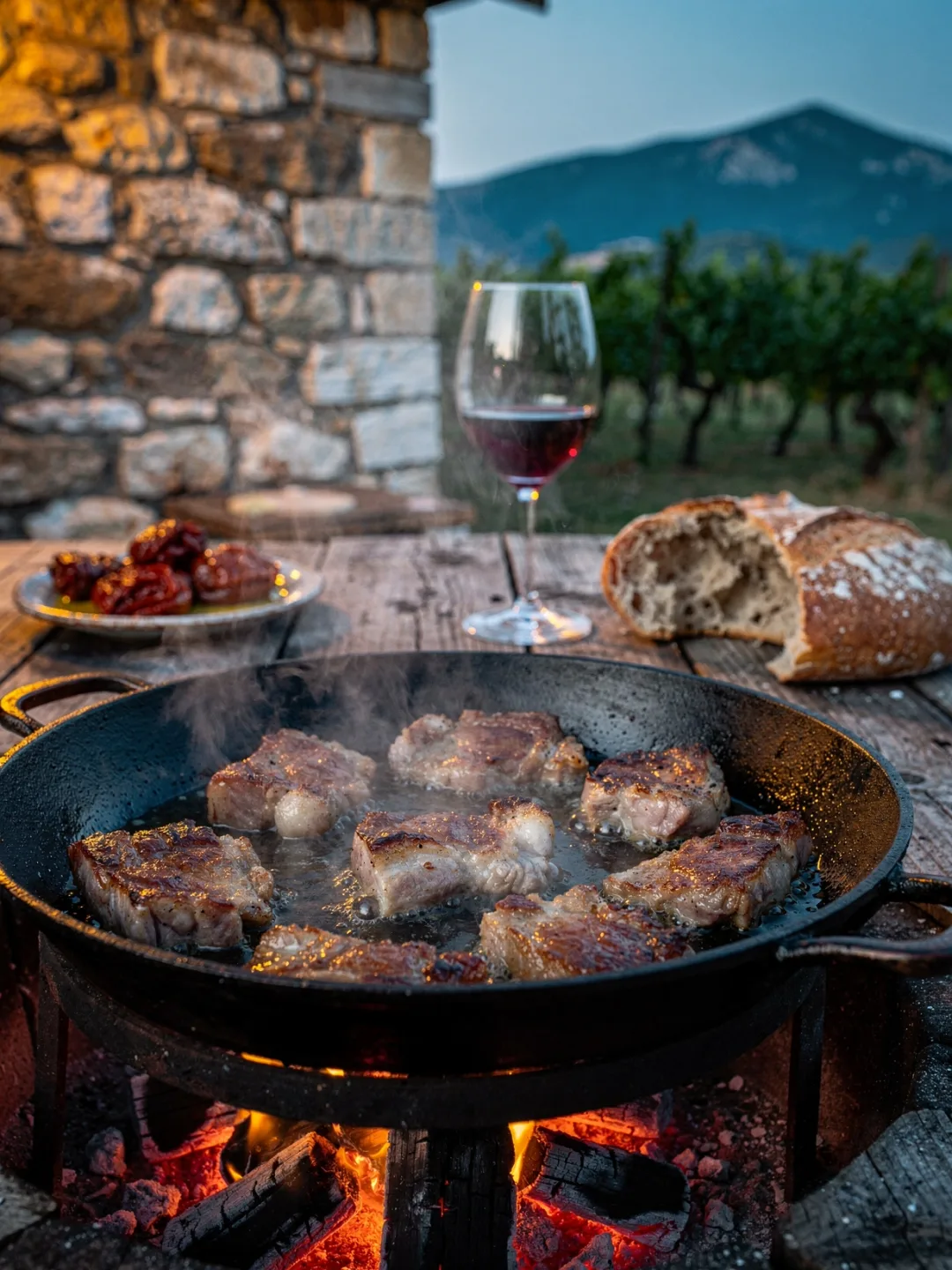
Tigania shows this most clearly. Pieces of pork are fried with salt, pepper, and cumin, then deglazed with wine at the end – traditionally served at Christmas and on the great meat feast before Lent, when kitchens across the whole town smell of cumin. Anyone who cooks with the same wine they drink has already won. The pairing has long been settled.
At Easter, lamb comes to the table with fresh spring onions, offal, and cumin. It cooks slowly in the oven until the fat renders the meat tender from within. It's exactly this fat that needs the acidity of Xinomavro to keep from feeling heavy; without it, the lamb would coat the palate, but with it, every bite stays fresh.
One ingredient straight from the vineyard keeps reappearing in the old cuisine. It's called agourida, the pressed juice of unripe grapes. Before lemons were easy to come by in Macedonia, it stood in for the sour splash in soups and sauces. The same high acidity that later defines the finished Xinomavro already came from the green, unripe berry back then.
With rich, hearty dishes like rendered pork fat with crispy cracklings or an aged hard cheese, the same rule applies again, just from the other direction. Fat and salt make the tannin in Xinomavro softer and rounder. A lean, simple dish, by contrast, makes that very same tannin seem louder and drier.