Tomato, Olive, Tannin
Tasting
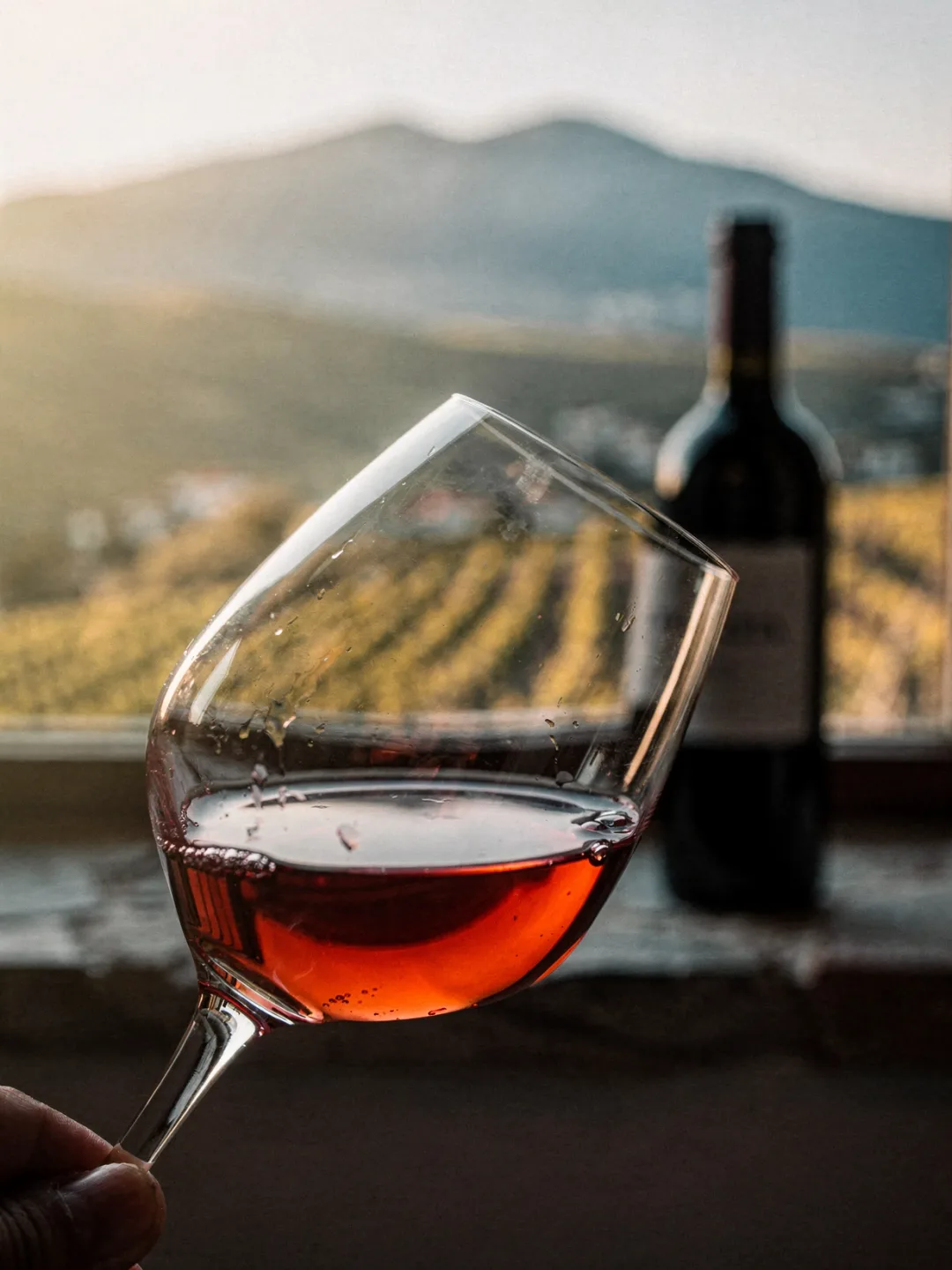
Tilt a glass of Naoussa against something white and look at the rim. A young wine shows a rich, rather pale ruby there, almost translucent compared to a Cabernet. That's not a flaw, but the result of Xinomavro's thin, pigment-poor skin. After five or six years, that same rim already turns brick-red, while the center stays dark.
The aroma surprises almost everyone the first time. The zone's official description names tomato paste and black olive as the most characteristic traits — two aromas you'll find in almost no other red wine in the world with such clarity. Only after that come red fruits and spices, and with a few years of age, dried plum, smoke, and dry nuts join in. Once you've recognized this combination blind, you never forget it.
In the mouth, it's worth checking acidity and tannin separately. You feel the acidity along the sides of the tongue; it makes saliva flow immediately. In Xinomavro this is especially strong, since the variety produces twice as much tartaric acid as most other grapes. The tannin, by contrast, sits as a dry sensation on the gums and palate. Young Naoussa wines show both in raw form, often edgy and impatient; only with bottle age do acidity and tannin fuse into something that carries rather than attacks.
The balance between the two matters more for quality than sheer power. A Xinomavro without enough fruit behind it quickly turns hard and lean, while one with too much age turns dull and shapeless. The best wines from Giannakochori or from the old vines of the Ramnista site hold this balance for decades, often across an entire winemaker's lifetime, far beyond the first years after harvest.
In the end, it's the finish that counts. With a simple Naoussa, the flavor lingers for five, six seconds after swallowing; with a great Réserve, twenty seconds or more. This length can't be manufactured in the cellar. It comes solely from fruit, acidity, and tannin carrying forward together, long after the wine itself has already gone.