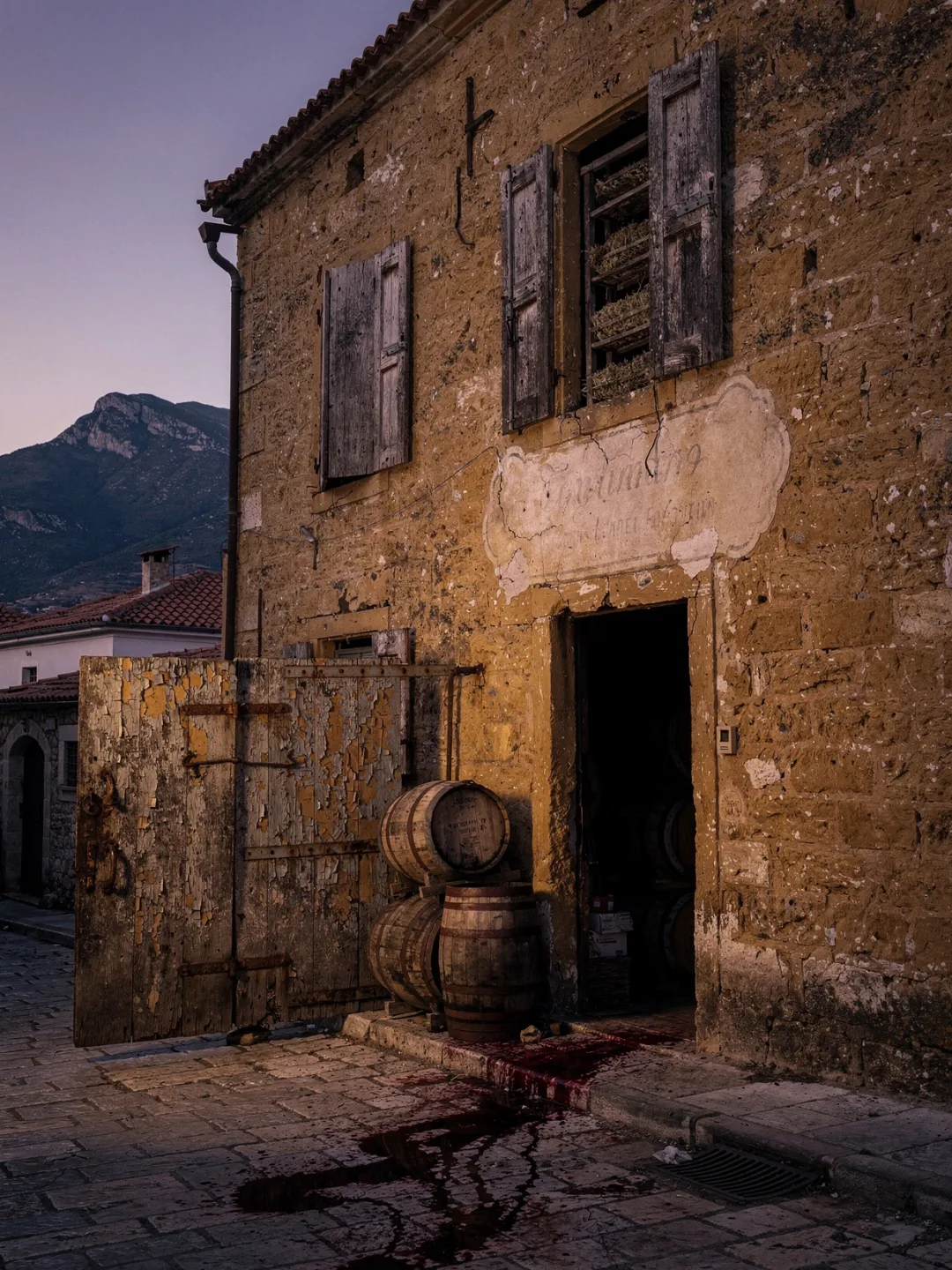
Boutari until 1971
Region & History
The myth begins before any written record does. On the slopes of Vermio, Greek legend says, lived Semele, mother of the wine god Dionysus, and here his dancing companion Silenos was born. Believe it or not, wine has grown here for as long as anyone can remember.
Solid evidence comes later, but it's unambiguous. In 1528, the area around Naoussa appears in Ottoman tax registers as a wine-growing district of Veria. From 1700 onward, travel accounts praising the wine become more frequent. Bishop Meletios called Naoussa "famous for its excellent wine" in 1728. The French consul François Pouqueville wrote in 1826 that it was one of the finest wines of Macedonia. The taste was sour and austere, he noted, making the wine drinkable only in the fourth or fifth year after harvest. And the traveler Esprit-Marie Cousinéry compared Naoussa to Burgundy in 1831: in Macedonia, he wrote, this wine always cost double the others, and only the wine of Tenedos was better still.
In 1879, Ioannis Boutaris began trading wine in Naoussa. In the early 20th century, the family added its first own cellar on Zafeiraki Street, the press below, silkworm farming above, in the same building. From here, "Naoussa Boutari" set out on its journey — the first bottled red wine of Greece to carry an origin statement on the label.
Then came collapse. Phylloxera reached the vineyards in 1928, two world wars followed, and by the sixties, of once thousands of hectares, only five remained — farmers planted apples instead, which still thrive here today. It was only Ioannis Boutaris's grandsons, Giannis and Konstantinos, who bought land again in Giannakochori and rebuilt the vineyard.
In 1971, Naoussa became Greece's first protected designation of origin by royal decree. The rules were strict even then: pure Xinomavro, from a defined zone, aged at least one year in oak. In 1976, growers replanted most of the vineyards. In the nineties came a second wave: the split of the Boutaris brothers gave rise to the Kir-Yianni estate, and young winemakers like Apostolos Thymiopoulos reread the old Xinomavro anew. Today, twenty-three growers work within the zone, many of them under forty.