Only Xinomavro
Grape Varieties
In every glass of Naoussa lies a single grape, and no other: Xinomavro. The name translates as sour-black, and it doesn't lie. Ξινό means sour, μαύρο means black, and both traits mark every drop from this grape. It is the only variety allowed to produce a ΠΟΠ Νάουσα.
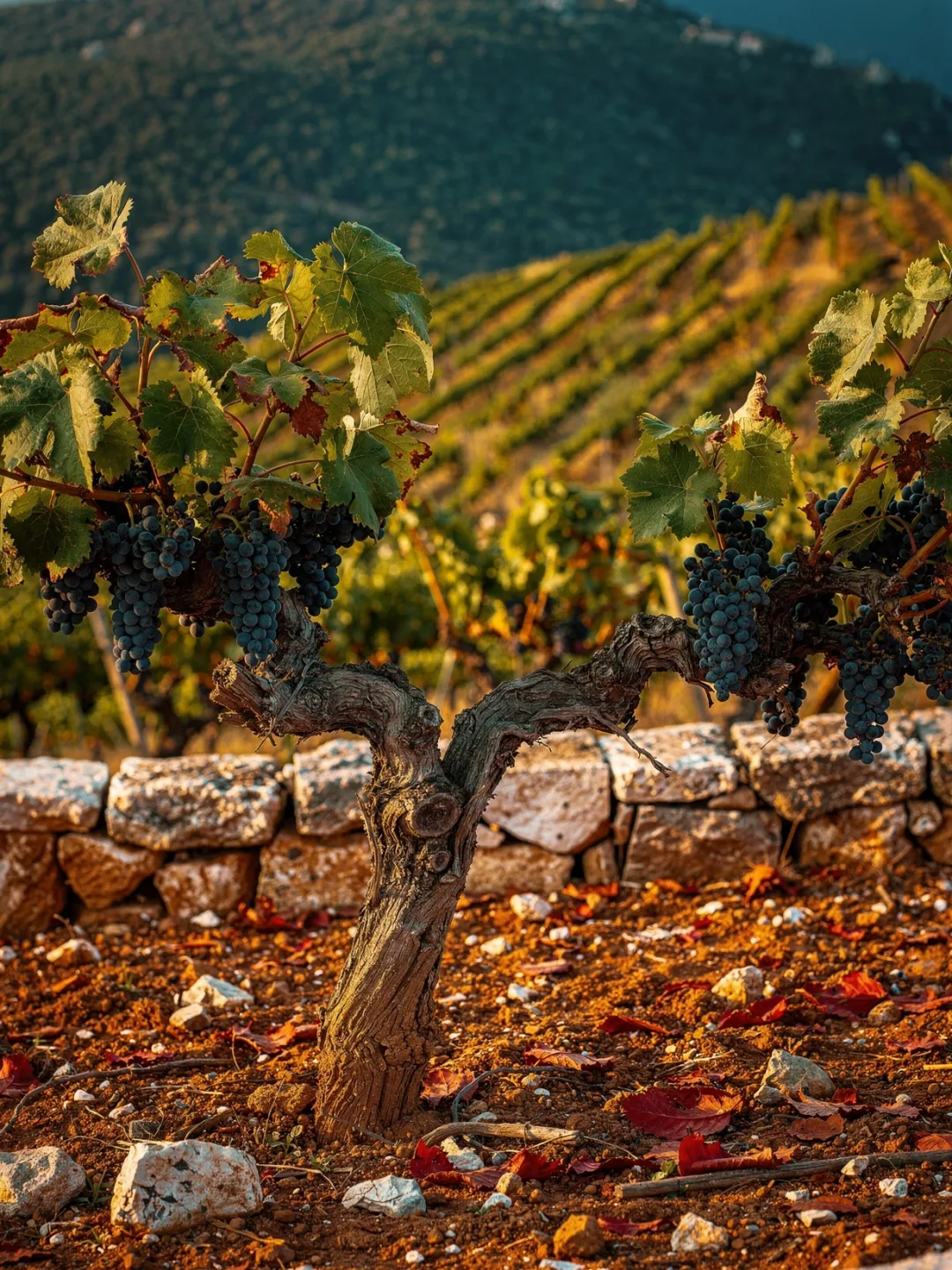
In the vineyard it's a powerhouse: vigorous, fruitful, resistant to most fungal diseases, but sensitive the moment water runs short. It buds in the first half of April and doesn't ripen until after September 20th. The cool autumn nights of Vermio then bring it sweetness without losing its acidity. Each shoot carries two to three medium-sized clusters, some weighing up to four hundred grams, with thick, blue-black skin and colorless, faintly sour flesh.
The secret lies exactly in that skin. A single berry weighs on average 2.2 grams, of which the skin makes up only 13.5 percent. Yet nearly all the tannin sits here — that rough, furry substance you feel on the gums after a sip — while the color stays relatively pale, since pigments in the skin are naturally scarce. This creates a contradiction that immediately reminds connoisseurs of Nebbiolo from Piedmont. In the glass the wine looks pale, yet the grip in the mouth feels far darker than the eye promises.
There's a chemical explanation for the acidity. Xinomavro forms an unusually high amount of tartaric acid — more than double the malic acid, a ratio most other grape varieties don't share. Calcareous soils and fewer bunches per vine dampen this acidity somewhat. Wet autumns after ripening stoke it back up.
Before Xinomavro's sole reign, the picture here was more varied: clones of Cabernet alongside Mavroudi, Mavrodaphne, and Vaftra grew side by side. Only under the oenologist Stavroula Kourakou-Dragona did the pure Xinomavro zone take hold, in the second half of the twentieth century. Today you find it in Giannakochori, Trilofos, and Stenimachos. Researchers have since distinguished at least five virus-free clones of the variety, each with its own aroma and ripening curve.