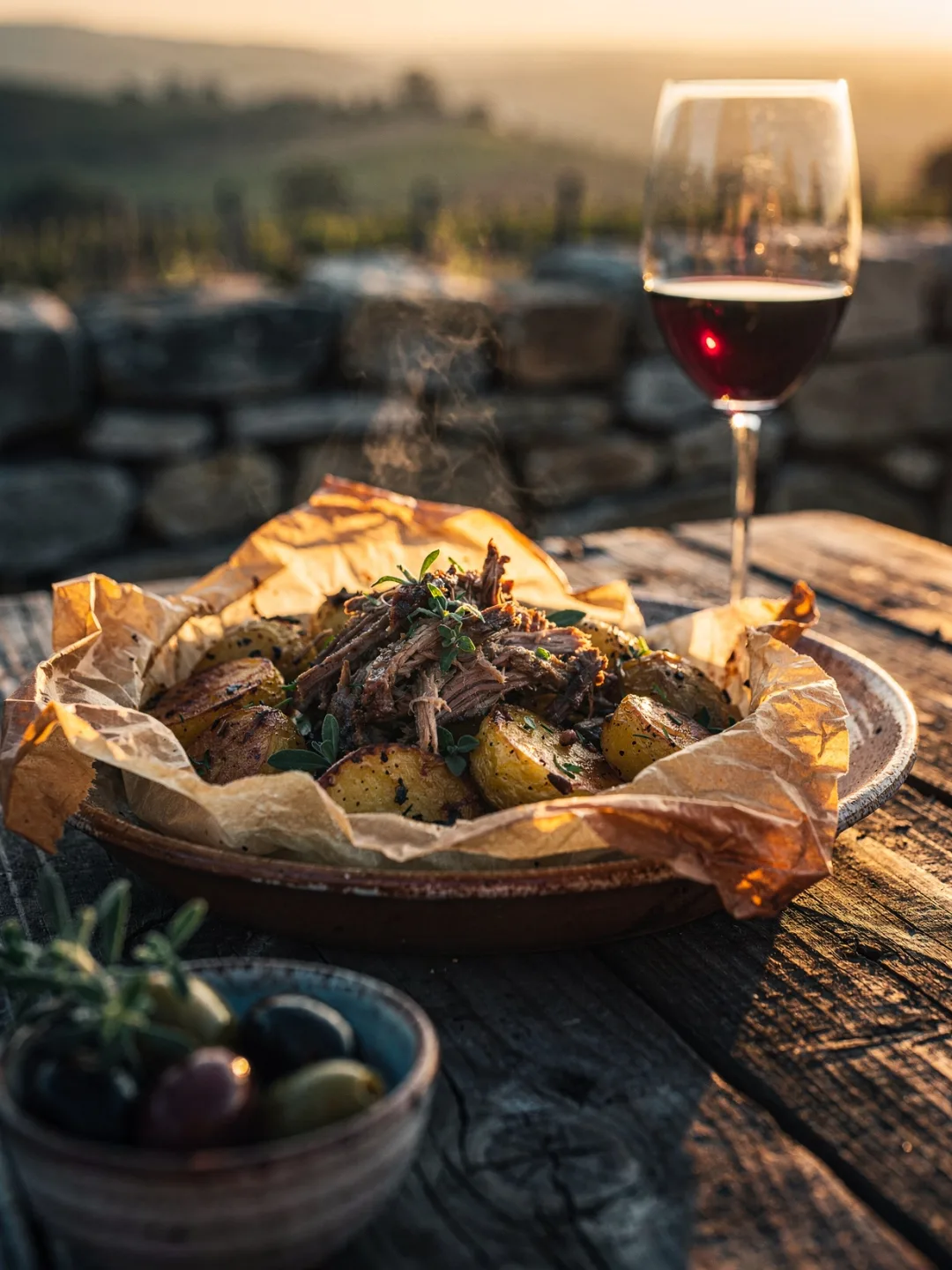
Kleftiko and Papoutsakia
Wine & Food
Around Nemea, cooking relies heavily on lamb, olive oil, and often tomato. The oil usually comes from the area's own groves, and the wine alongside has always been the same. An Agiorgitiko with enough fruit stands up to the fat and acidity of the cuisine.
Kleftiko, lamb slow-cooked for hours in foil or a sealed clay pot, falls apart so tender you barely need a knife. The tannin does exactly this work. In Agiorgitiko it is round and unaggressive, tempering the fat in the mouth — unlike a very astringent, strongly puckering red wine, which would only feel harsh here and crush the sweetness of the meat.
With Papoutsakia, eggplants baked in tomato sauce and stuffed with ground meat, the wine's acidity makes the difference. It cuts through the tomato rather than blending into it, keeping the dish fresh despite the cheese and oil. Without that acidity, the sauce would simply overwhelm the wine.
In winter, Korinthia often serves braised wild boar with quince, sweet-tart and long-cooked. This calls for a more powerful Nemea, usually oak-aged. A young, light wine from the steel tank would simply disappear next to this dish.
One exception is Bakaliaros Plaki, salt cod braised in tomato sauce with the small dark raisins for which Korinthia is world-famous. These raisins even gave the English word 'currant' its name, after the city of Corinth. Fish and red wine are otherwise considered a difficult match. Here, the mild acidity and sweetness of the raisins in the sauce itself bring even an Agiorgitiko back into balance.