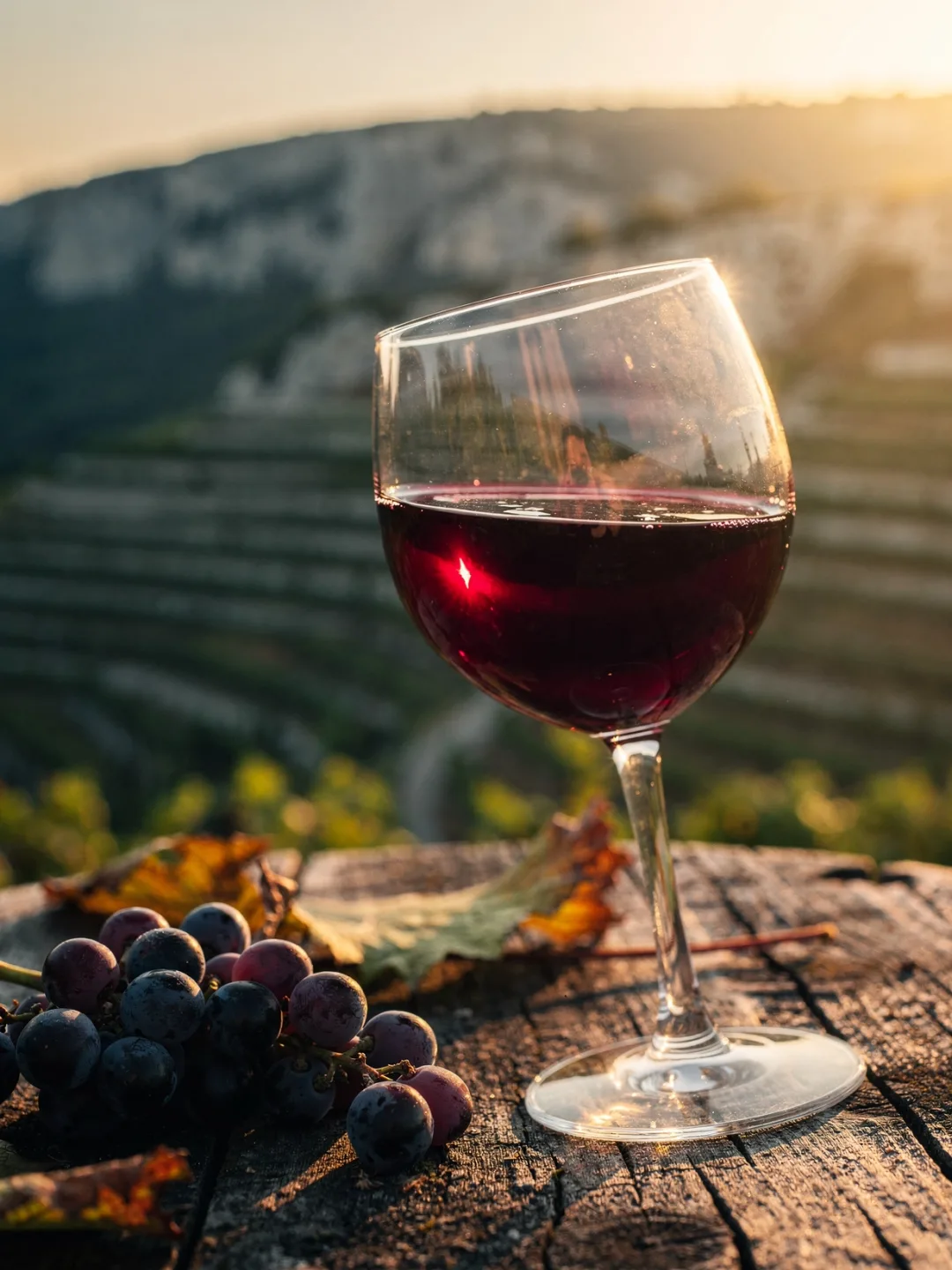
Garnet red and plum
Tasting
Held up to the light, a glass of Nemea reveals its age before you've even taken a sip. Young Agiorgitiko glows deep red with a violet, almost blue tint at the rim — a hue few other Greek red varieties reach. After eight or ten years in the cellar, this rim slowly shifts toward brick red.
Smell it twice. In the still glass, the fruit comes first: ripe plum, sour cherry, and in younger, lighter bottlings, sometimes a hint of strawberry. Only after swirling do the heavier aroma molecules rise — violet, dried tobacco, and in oak-aged wines, clove and a touch of vanilla.
In the mouth, the roundness of the tannin stands out first. The rough grip on the gums that red wine typically brings from the skin rarely feels sharp-edged here. It comes across as velvety, almost soft for such a dark wine. The acidity holds its ground, keeping the wine from tasting tired despite its fullness. This is especially true of grapes from the higher sites around Asprokambos.
Count at the end. How many seconds does the flavor linger after the wine is swallowed? For a simple Nemea, it's three or four — for a reserve from Koutsi, twenty or more. This length is hard to fake in the cellar: a winemaker can add alcohol and oak, but not true length.
Anyone who places a young, chilled Agiorgitiko next to a ten-year-old reserve from the same village suddenly understands why the variety has so many devoted followers in Nemea. Between the two lies the same wine, only a different answer to the same question: how long you're willing to wait.