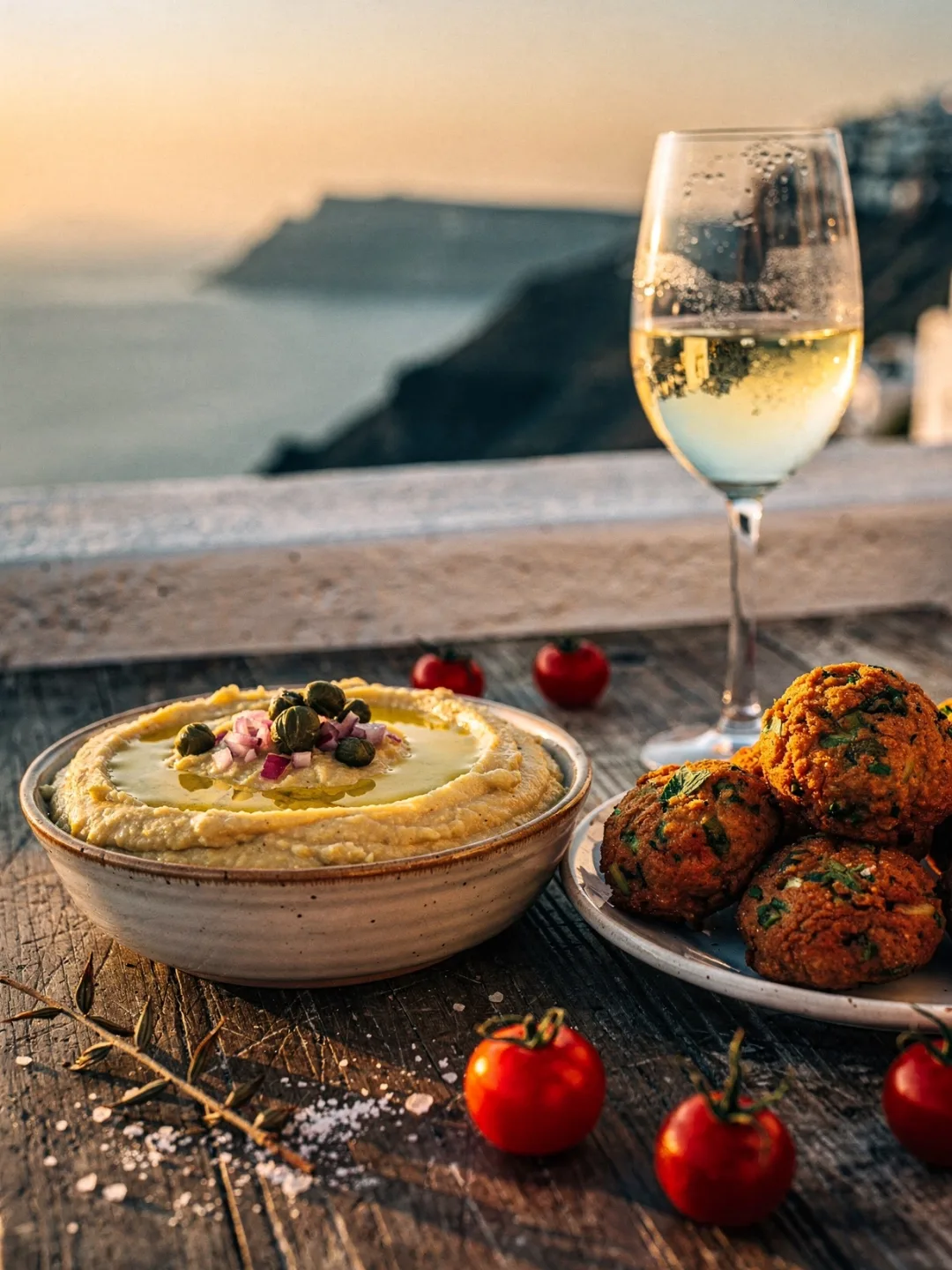
Fava and Vinsanto
Wine & food
What grows on Santorini knows no irrigation whatsoever. Just like the wine, it's a product of the same dryness. Fava, a creamy purée made from yellow split peas of the Lathyrus clymenum variety, has been grown on the island for at least three and a half thousand years, with traces even found beneath the ash of Akrotiri. Traditionally, the peas are ground with stone mills. The flour is stored in a kanava before being cooked into a velvety purée, usually topped with onions, olive oil, and a few pickled caper buds.
Tomatokeftedes, small tomato fritters, are made from Santorini's own tomataki. This cherry tomato, protected since 2013, grows without irrigation and yet tastes unusually sweet while remaining strongly acidic. Fried with onions and mint, these fritters need a wine with just as much acidity, or the oil will sit heavy on the palate. A young Santorini does exactly that: its acidity cuts through the fried batter, while its salty undertone embraces the capers baked into the mix rather than clashing with them.
White eggplants from the island are called aspri melitzana. They taste noticeably milder than the ordinary kind and absorb less oil when fried. Here, too, the same rule applies as with any rich dish: acidity clears away what oil leaves behind, and a young, unassuming Santorini reliably does that job.
Grilled octopus or more assertively seasoned fish call for a Nykteri instead. Its barrel aging and higher alcohol hold their own against smoke and char, where a lean, chilled wine would simply get lost. To close out a meal, Santorini has a pastry all its own: melitinia, small open tarts filled with fresh cheese, cinnamon, and a hint of mastic, traditionally baked for Easter. These call for Vinsanto — a dry wine would taste thin and sour next to so much sweetness.