Salty without salt
Tasting
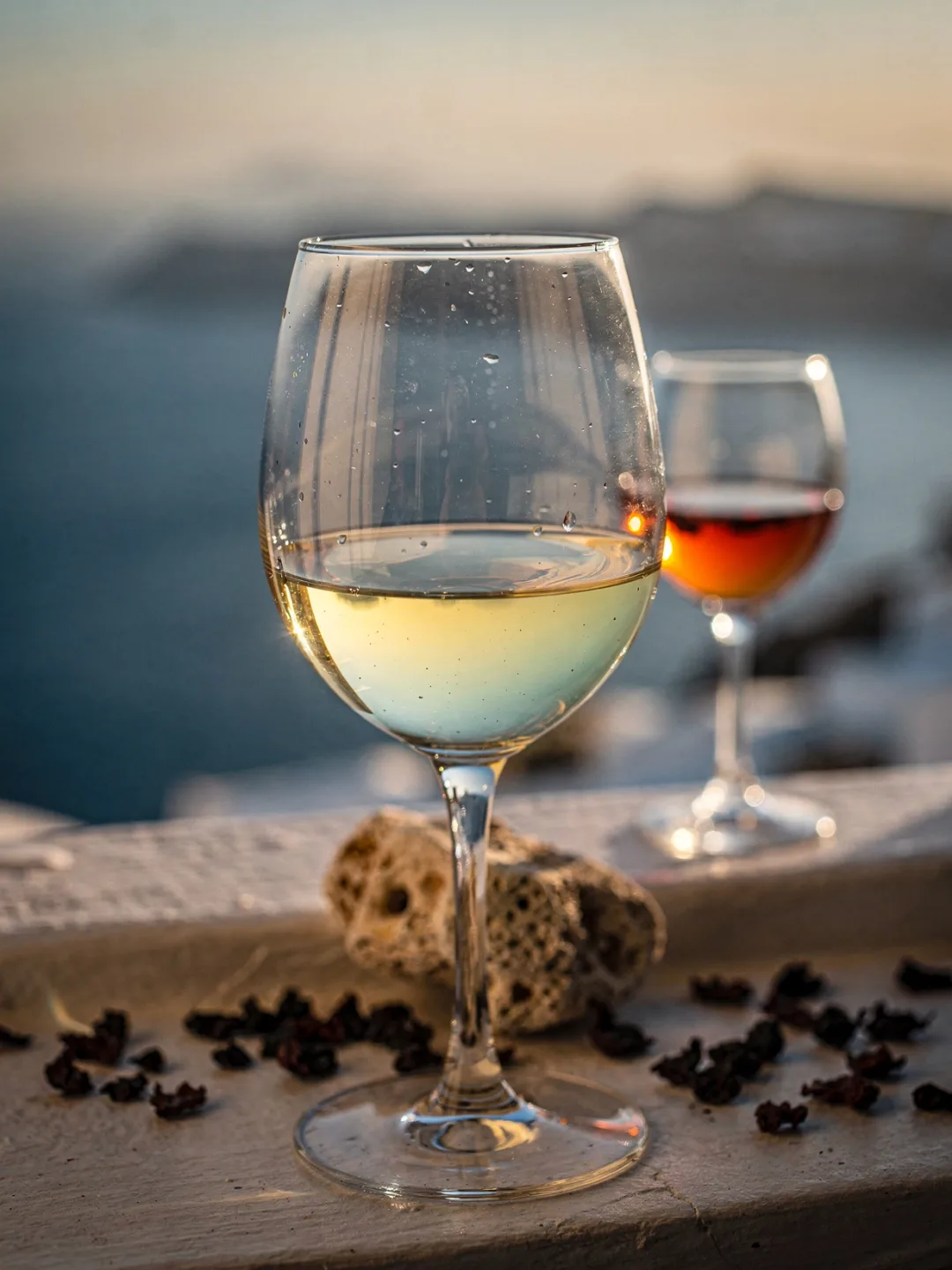
Hold a young Santorini up to the light, and you'll barely see any color. A pale green-yellow, almost water-white, is completely normal. It's a sign of the high acidity that keeps these wines from darkening much even after a year or two in the bottle. A deeper gold, on the other hand, usually points to barrel aging — in other words, a Nykteri.
Smell it first without swirling. In a still glass, lime almost always comes through first, sometimes with a touch of grapefruit. Swirl the glass, and a second, salty note joins in, one that many compare to the smell of seawater after a rain shower. After a few years of aging, a third note emerges — smoky, almost petrol-like, the kind you'd otherwise expect from a mature Riesling.
Strictly speaking, this saltiness is an illusion. No vine absorbs salt from the soil — the concentration of dissolved minerals in the water is far too low for that. What tastes like salt in the mouth is actually an interplay between very high acidity and a certain mineral-like impression on the palate. It's convincing enough to fool anyone, but chemically it's something quite different from what it seems to taste like.
On the palate, you notice the acidity first along the sides of the tongue, sharp and persistent, even before any fruit arrives. In a Nykteri, a broader texture rounded by oak sits on top of that. With Vinsanto, everything shifts: honey, dried apricot, and raisin take over. Yet that same high acidity carries even this sweet wine through a finish that lingers for a full minute without ever feeling cloying.