Sun, night, barrel
Production
Harvesting on Santorini is still done almost entirely by hand. The kouloura baskets lie so flat against the ground that no machine on earth could pass between them. So pickers walk the rows and cut each bunch individually from its nest of vines. For the dry wine, the calmest chapter follows: brief skin contact, gentle pressing, and fermentation in stainless steel at cool temperatures to preserve citrus fruit and acidity. Many producers then let the young wine rest on its lees for months, adding texture without a single piece of wood.
One category even carries the harvest time in its name. Nykteri literally means 'night work': in the past, the latest, ripest grapes were picked during the cool hours of the night. They were pressed before sunrise so they wouldn't spoil in the summer heat. Today, Nykteri is a protected designation within the Santorini appellation, requiring at least 13.5% alcohol and a minimum of three months in oak.
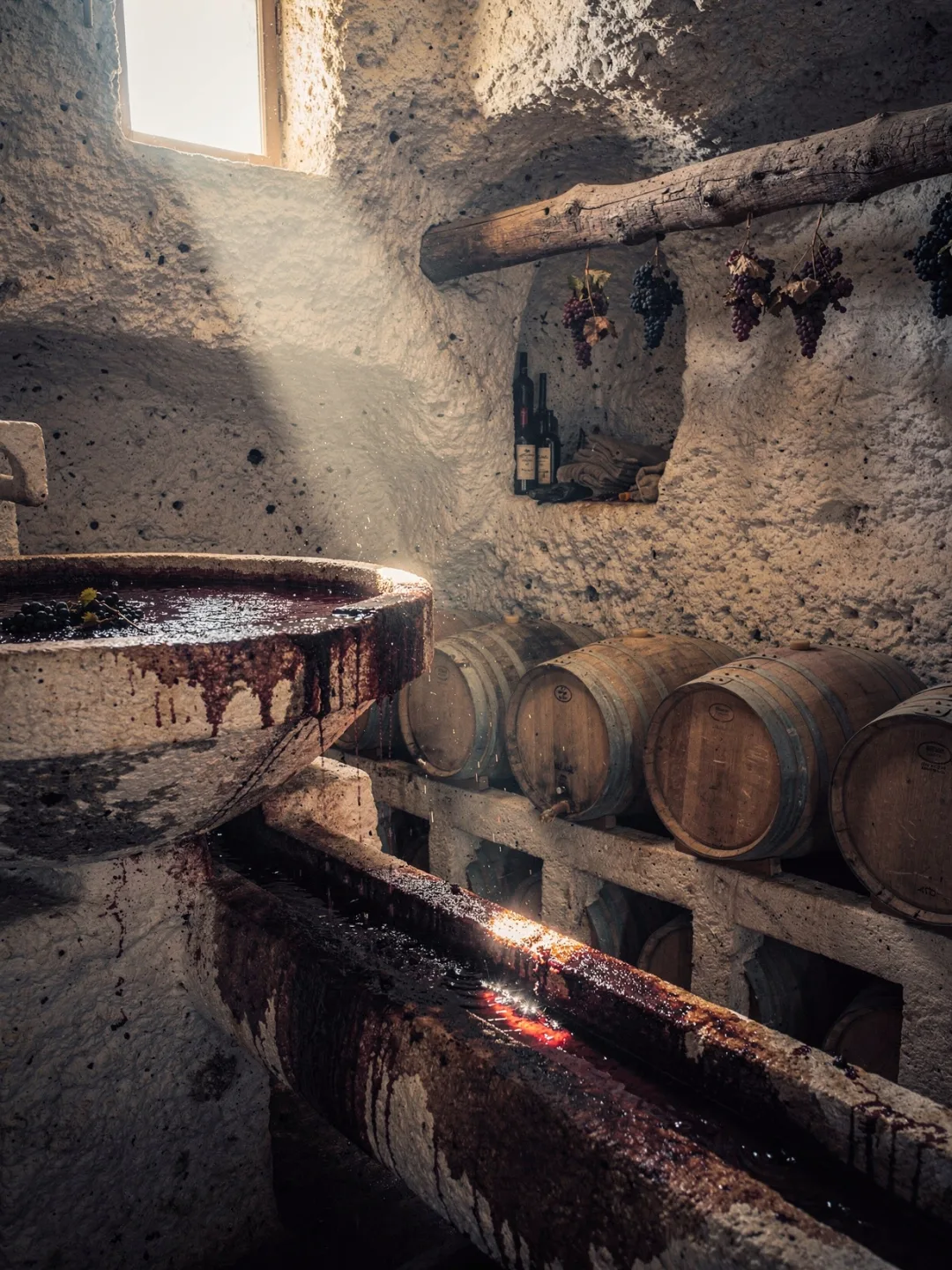
For Vinsanto, the real work begins only after harvest. Assyrtiko and Aidani grapes are laid out on mats or rooftops in the sun and left to raisin for one to two weeks, as most of their water evaporates and the sugar concentrates within the berries. Only then are they pressed, and fermentation drags on for months because of the sheer amount of sugar. The wine then ages oxidatively in barrel for at least twenty-four months, often much longer — some labels list twelve years or more.
All of this traditionally takes place in a kanava, a cellar carved directly into the island's volcanic rock. In villages like Pyrgos, some of these cave cellars date back to the nineteenth century and are still in use today. Their advantage lies in elevation: when a winery is built into the hillside across several levels, the must can flow from the press down into the barrels by gravity alone, with no pump required.