Along the Cerasuolo
Tasting
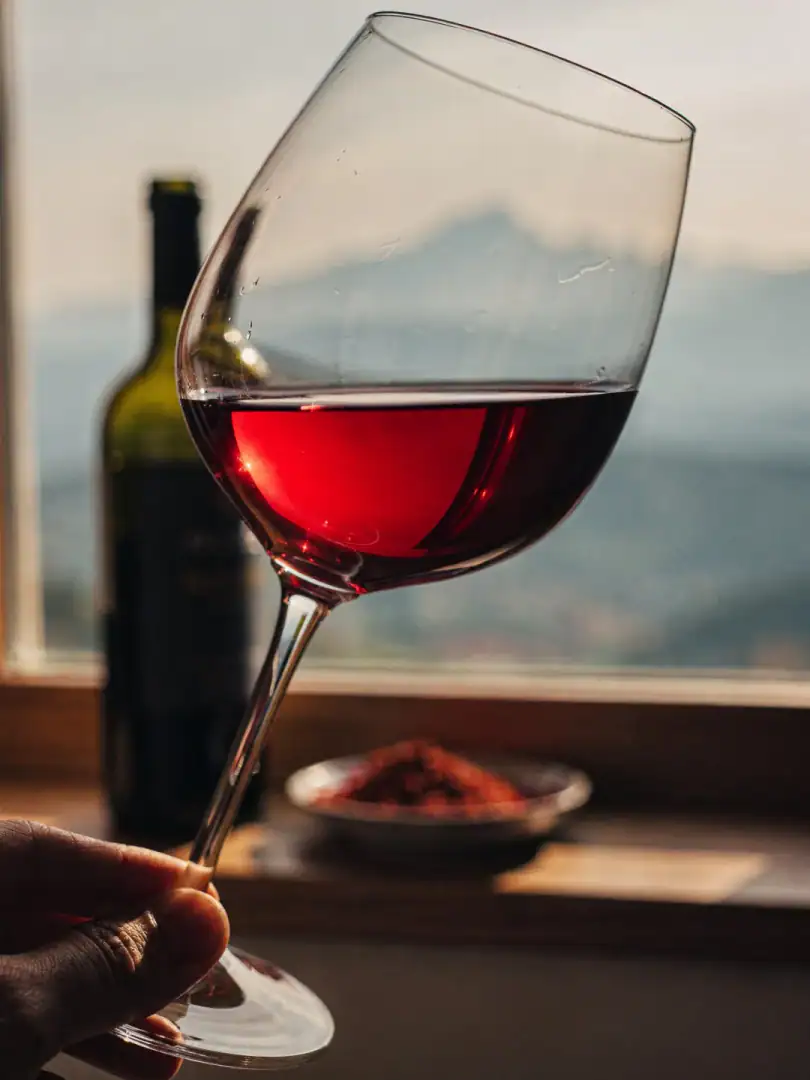
Hold a glass of Cerasuolo at an angle against something white. The color is no pale pink, but a deep, nearly translucent cherry red — hence the name, from the Latin cerasum, meaning cherry. It sits closer to red wine than most rosés, even though it results from only a few hours of skin contact.
Smell it twice, once at rest, once after swirling. In the still glass, sour cherry and strawberry rise first, light molecules that evaporate soonest. After swirling, floral notes follow, sometimes a hint of herbs or white pepper — aromas that are heavier and take longer to rise.
In the mouth, the tension is surprising. Cerasuolo has more acidity than most rosé wines. On top of that comes a light but noticeable tannin, the rough grip on the gums usually expected from red wine. This comes from the fact that it's made from the same thick-skinned Montepulciano grape as the region's great red wine, just with far less contact with the skins.
Try a young Montepulciano alongside it afterward. The color is nearly black, the tannin considerably firmer, and the aroma is dominated by blackberry, plum, and a hint of licorice rather than bright cherry. Only time on the skins separates the two wines — a single difference in the cellar, and yet two completely different wines in the glass.
Count, at the end, how long the taste lingers after you swallow. With a simple Cerasuolo, that's three or four seconds. With a mature Montepulciano from the Colline Teramane, you can easily count to twenty or beyond, and it's precisely this length that separates an ambitious wine from a merely pleasant summer glass.