Tendone to Barrique
Production
Everything begins at the vine's trellis. That's where it's first decided how a Montepulciano will eventually taste. For centuries, winegrowers trained it high on the pergola abruzzese, a leafy canopy on posts at head height. One could walk upright beneath it between the rows. Practical for harvest, but a problem for the glass: the more grapes a vine carried under this canopy, the thinner its color and aroma became.
Since the 1990s, more and more estates have switched to Guyot training: closer row spacing, fewer grapes per vine, but greater concentration in the glass. Both systems exist side by side in Abruzzo today — Pergola for everyday wine produced in bulk, Guyot for the more ambitious bottles.
Montepulciano and Cerasuolo come from the same grape, but part ways in the cellar. For the red wine, the must, the mixture of juice and skins, sits for weeks, releasing color and tannin. For Cerasuolo, the same grapes are pressed off the skins after just six to twenty-four hours, long enough for the cherry-red color, short enough to gain freshness rather than power.
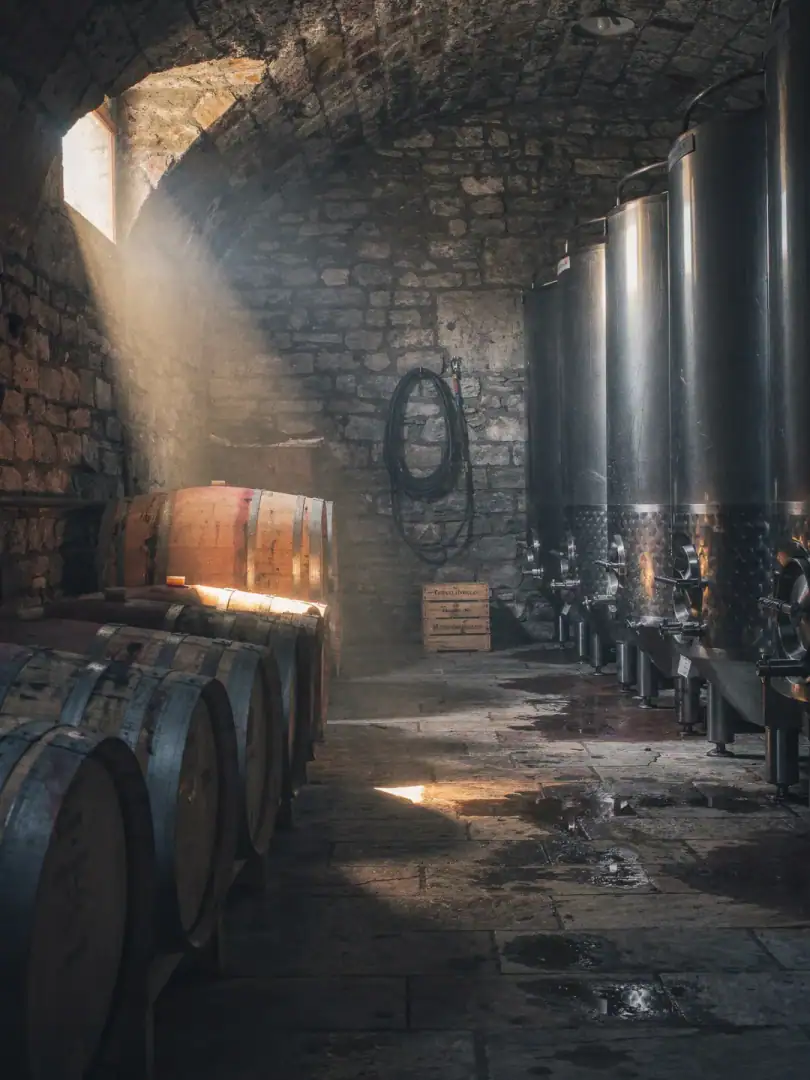
The Colline Teramane DOCG sets the strictest rules in the region. The grapes must contain at least ninety percent Montepulciano, plus at most ten percent Sangiovese. The wine then ages for at least two years, including at least one year in oak and six months in bottle, before it may be sold. The Riserva requires three years in total, likewise with at least one year in oak.
With white wine, the cellar work stays simpler. Trebbiano and Pecorino typically ferment in stainless steel tanks, cool and without oak contact, to preserve their acidity. Only a few producers, such as Valentini, instead age their Trebbiano in large old casks and then for years in bottle before selling it at all — a path almost no one else in Abruzzo follows.