Romans, Monks, Cooperative
Region & History
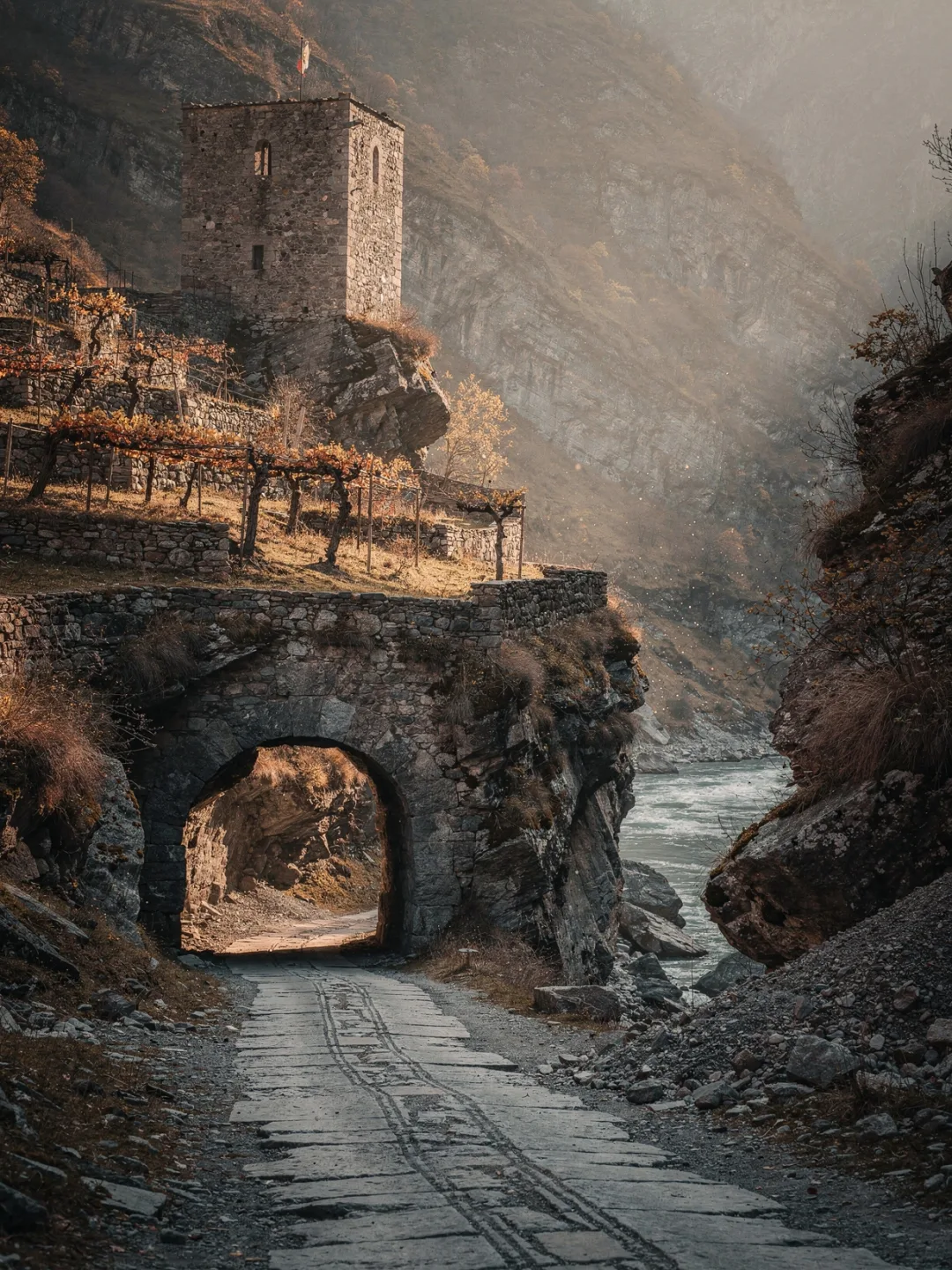
Aosta lies at the foot of Mont Blanc. It was right here that archaeologists unearthed grape seeds from the Bronze Age, older than any written record of wine in this valley, and the Romans later turned this chance discovery into an established system along the Dora Baltea. They even built their own road through the valley, the Via delle Gallie. Clay vessels from the first century, found near Aosta, prove that wine flowed all the way to the garrisons at Gran San Bernardo.
The first written trace is a deed of donation. It dates from 1032 and names a single vineyard by name. From there, the area under vine grew over the centuries, carried forward by noble houses and monasteries, until it peaked in the nineteenth century. Then came the collapse: phylloxera, fungal diseases, industrialization, and cheap rail-borne wine from Piedmont left behind half-abandoned terraces. Anyone who could left the valley for the factories.
1951 brought the turning point, and it came through a school. Swiss canons from the Hospice of Grand-Saint-Bernard took over the valley's practical agricultural school and flipped its goal: away from quantity, toward quality. The first cooperative cellars followed in the 1970s. They pooled together tiny plots that could never have survived on their own.
In 1971, Donnas became the valley's first standalone DOC. Fourteen years later, the region went further than any region in Italy had gone before: a single regional DOC called Vallée d'Aoste, uniting all seven subzones under one roof. Since March 2022, a joint consortium has brought together 39 wine estates. Together they farm barely four hundred hectares of vines, smaller than many single estates elsewhere.