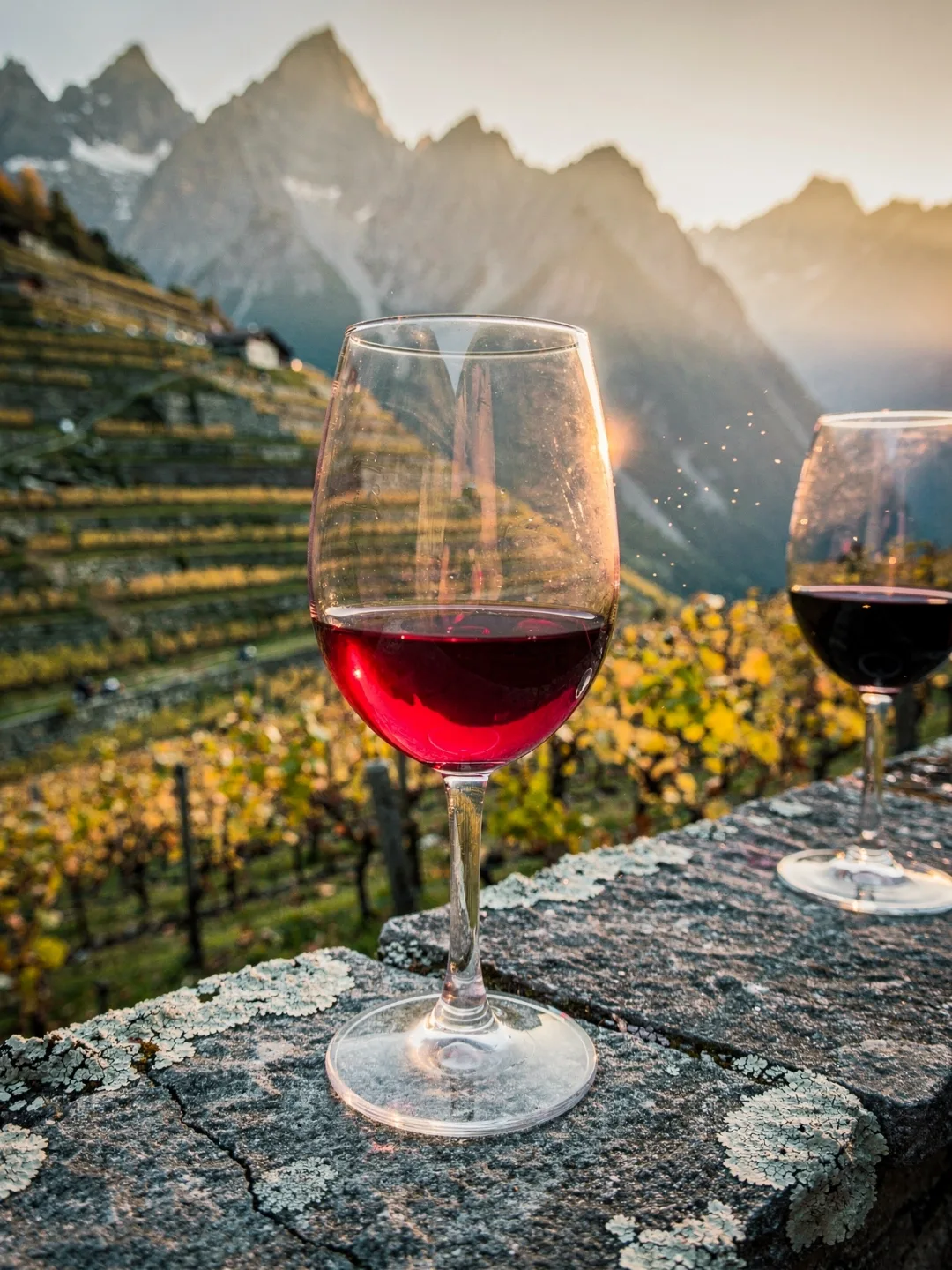
A Torrette in the Glass
Tasting
Pour yourself a Torrette and hold the glass up to the light. The color is pale, almost translucent at the rim, ruby red with a hint of violet. Petit Rouge, which makes up at least seventy percent of the blend, never produces the dark color of a Cabernet.
Smell first, without swirling. Cherry usually comes first, along with a hint of violet and sometimes something green reminiscent of freshly cut grass. Only after swirling do the quieter notes open up: a suggestion of spice and sometimes a touch of mountain herbs, speaking of the vineyards' high elevation.
In the mouth, pay attention to the acidity. It sits along the sides of the tongue and immediately gets the saliva flowing, a sign of the cool nights in which the grapes ripened. The tannin stays restrained, soft rather than gritty. It's exactly this ratio of high acidity and low tannin that makes Petit Rouge so easy to drink without feeling thin.
Set a Fumin beside it, and the difference is immediate. The color is nearly black, the tannin grips noticeably at the gums, and the finish lingers for ten to fifteen seconds instead of the five or six of the Torrette. Taste both one after the other, and in a single minute you'll understand why this small valley needs two such opposite red wines at once.
Finally, a glance at Picotendro from Donnas, if it happens to be in your glass: paler than Fumin, but firmer than Petit Rouge, with a dry, almost dusty tannin that only softens after years. Three wines, one valley. Three completely different answers to the same stony ground.