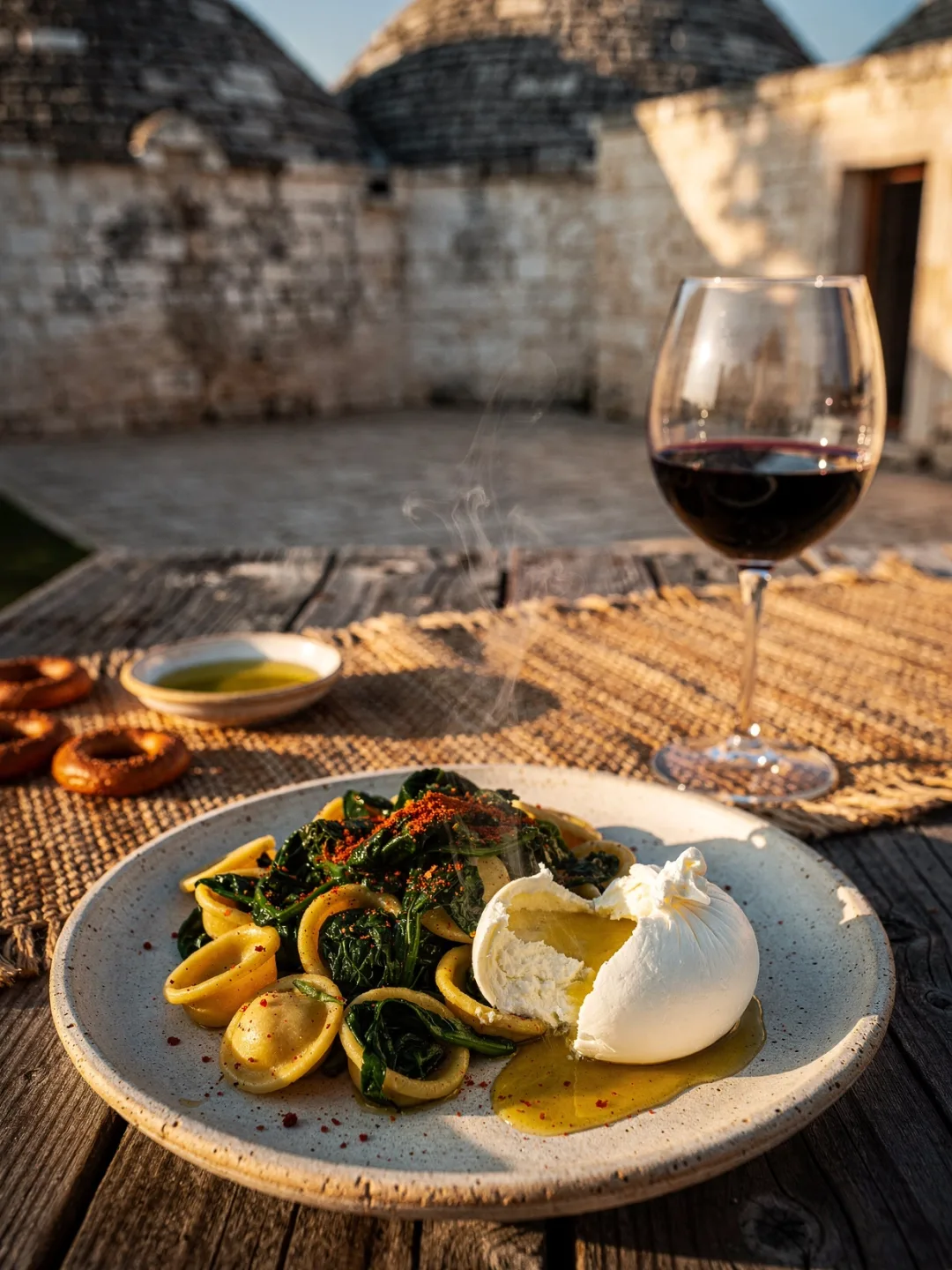
Burrata and Bombette
Wine & Food
Puglia's cuisine and its wine share the same austerity. Where the soil yields little, people cook with what's abundant: vegetables, legumes, bread, and plenty of olive oil. Hardly any other region in Italy presses as much of it—nearly half of Italy's entire olive oil harvest comes from Puglia.
Burrata was born out of necessity. In the 1920s, cheesemaker Lorenzo Bianchino, working in a dairy near Castel del Monte, invented a trick to avoid throwing away leftover cream. He wrapped strands of pulled cheese curd and the skimmed cream in a thin shell of cheese. The word first appeared in a travel guide in 1931, and since 2018, Burrata di Andria has been an EU-protected product.
A heavy Primitivo doesn't suit burrata. The delicate, creamy milk would be overwhelmed by its power. A young, cool-served Negroamaro Rosato or a Five Roses works better. It's a different story with Bombette, small rolls of pork and bacon, often stuffed with Caciocavallo cheese and grilled over charcoal. Here, Primitivo can show its full strength—its tannin is soft enough to carry the fat without crushing it.
Orecchiette, small ear-shaped pasta made from durum wheat semolina, is usually served with Cime di Rapa, the bitter stems of turnip greens sautéed in garlic and chili. Negroamaro suits this bitter dish better than Primitivo. Its own bitter note in the finish picks up on that of the Cime di Rapa instead of fighting it. Taralli, the small, hard ring-shaped crackers made with white wine and olive oil, are more of a companion to the glass than a dish in their own right.
Along the coast, everything changes. With raw shellfish, sea urchins, or grilled fish from the Adriatic or Ionian Sea, people in Puglia usually drink a cool Verdeca or a Locorotondo—never one of the powerful red wines. Two seas, two cuisines, and in the middle, a handful of grape varieties that suffice for both.