Tasting a Primitivo
Tasting
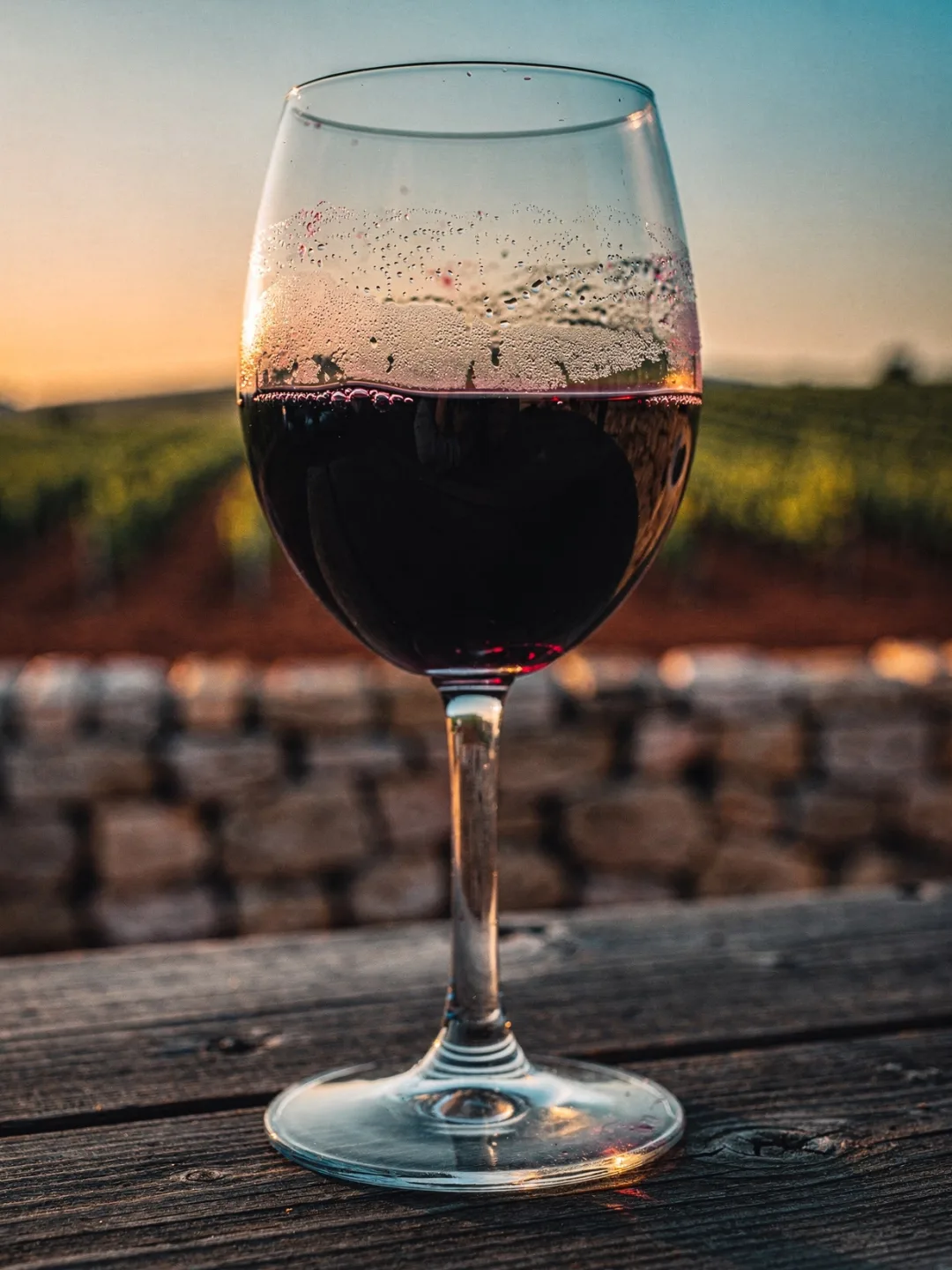
Take a glass of Primitivo and hold it up to the light. The color is nearly opaque, a dense purple bordering on black that only lightens slightly at the very rim. That alone reveals the small, thick-skinned berries. From them comes a wine matured under the strong Apulian sun.
Smelling comes next, best done twice – once calmly, once after swirling. On the nose, dark, sweet fruits arrive first: blackberry, ripe cherry, often a hint of dried fig. After swirling, more depth follows – licorice, sometimes a touch of cocoa or black pepper, aromas typical of ripeness and the warmth of the vintage.
In the mouth, tannin rarely stands out as a problem. Primitivo often matures so smoothly that its velvety grip is barely recognized as tannin at all. A young Nero di Troia, by contrast, stays firm and angular. What stands out instead is the warmth: at over thirteen and a half percent alcohol by volume, you feel a slight burn in the throat that has to match the fruit's sweetness, or else the wine feels out of balance.
Negroamaro tastes different, and the difference is worth comparing in a single evening. Where Primitivo comes across as round and sweet, Negroamaro brings more acidity. Add to that a bitter, almost earthy note in the finish that suits its name. Both grapes often grow just a few kilometers apart, yet the wines could hardly taste more different.
In the end, a third sip is worth it: a Primitivo di Manduria Dolce Naturale, no longer a dry wine but sweet, with high, natural alcohol from semi-dried grapes. Between these three glasses lies the entire range of the region – tart, round, and sweet, all from the same soil.