Friulano and Ribolla
Grape Varieties
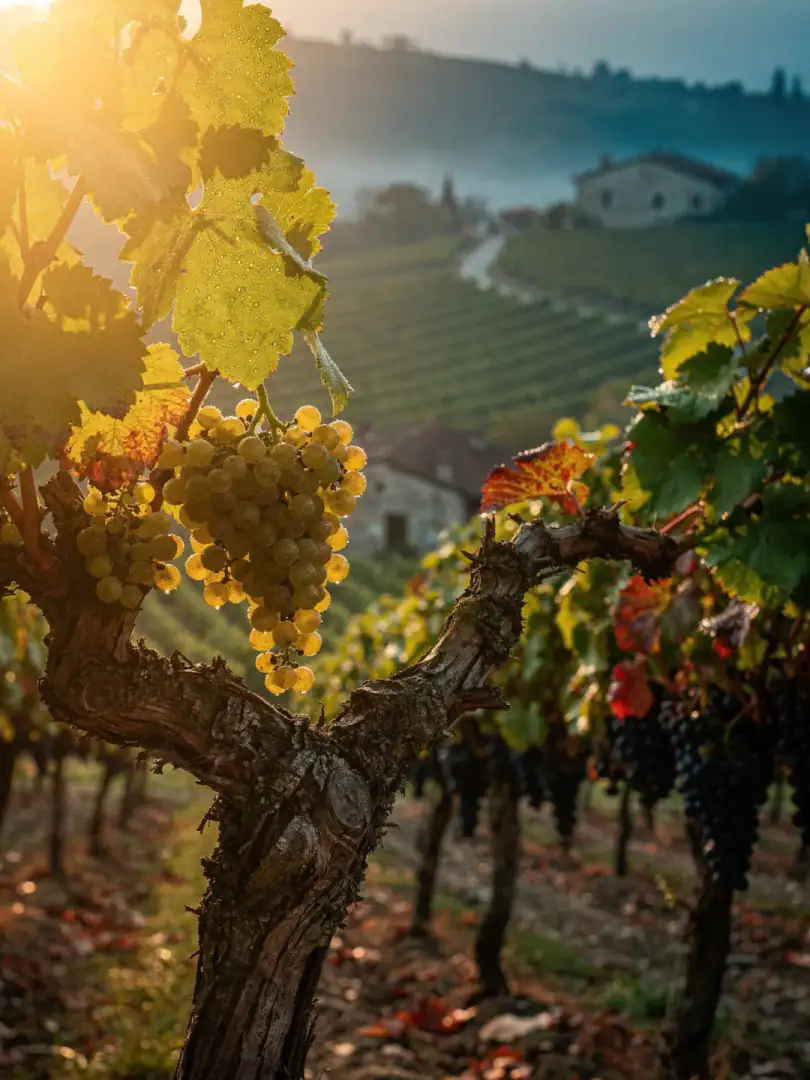
A single grape defines the image of this region. Until 2007, it wasn't even allowed to carry its familiar name. Friulano was called Tocai Friulano until the EU, after decades of dispute with Hungary, ruled that the name Tocai belonged exclusively to Tokaji. The wine itself stayed the same: dry, with scents of apple and meadow flowers. What remained above all was the bitter almond note on the finish, so distinctive that connoisseurs can identify the variety blind.
Just as important is a second white variety, Ribolla Gialla. Classically pressed, it brings plenty of acidity and little color. Leave the skins in the must for weeks instead, and the pale wine turns amber, with noticeable tannin, the style the winemakers of Oslavia made famous. The same grape, two completely different wines. The whole difference lies in time spent on the skins.
With the rare varieties, things get almost dramatic. Picolit produces blossoms that largely fail to set fruit and wither away, a genetic quirk that pushes yields down to a fraction of the usual amount. The sweet wine made from it is priced accordingly high. Pignolo nearly went extinct in 1978. Around Rosazzo, growers found just two surviving old vines and propagated the entire current plantings from them. Schioppettino, meanwhile, was banned by municipal decree in the seventies in the commune of Prepotto, because the law only permitted officially registered varieties. Only a citizens' assembly under the banner "Save the Schioppettino" secured EU approval in 1978.
Among the reds, Refosco dal Peduncolo Rosso dominates. Dark, sharp with acidity, with a bite reminiscent of forest berries and pepper that softens with age. In the Carso, Vitovska grows alongside it, a white rarity suited to the stony ground, found almost nowhere else. Since the 1970s, Cabernet Sauvignon and Merlot have also grown on the gravel soils of the Grave, planted by winegrowers wanting to prove that international varieties could ripen here just as well as native ones. Whether that still belongs to Friuli is a debate that continues to this day.