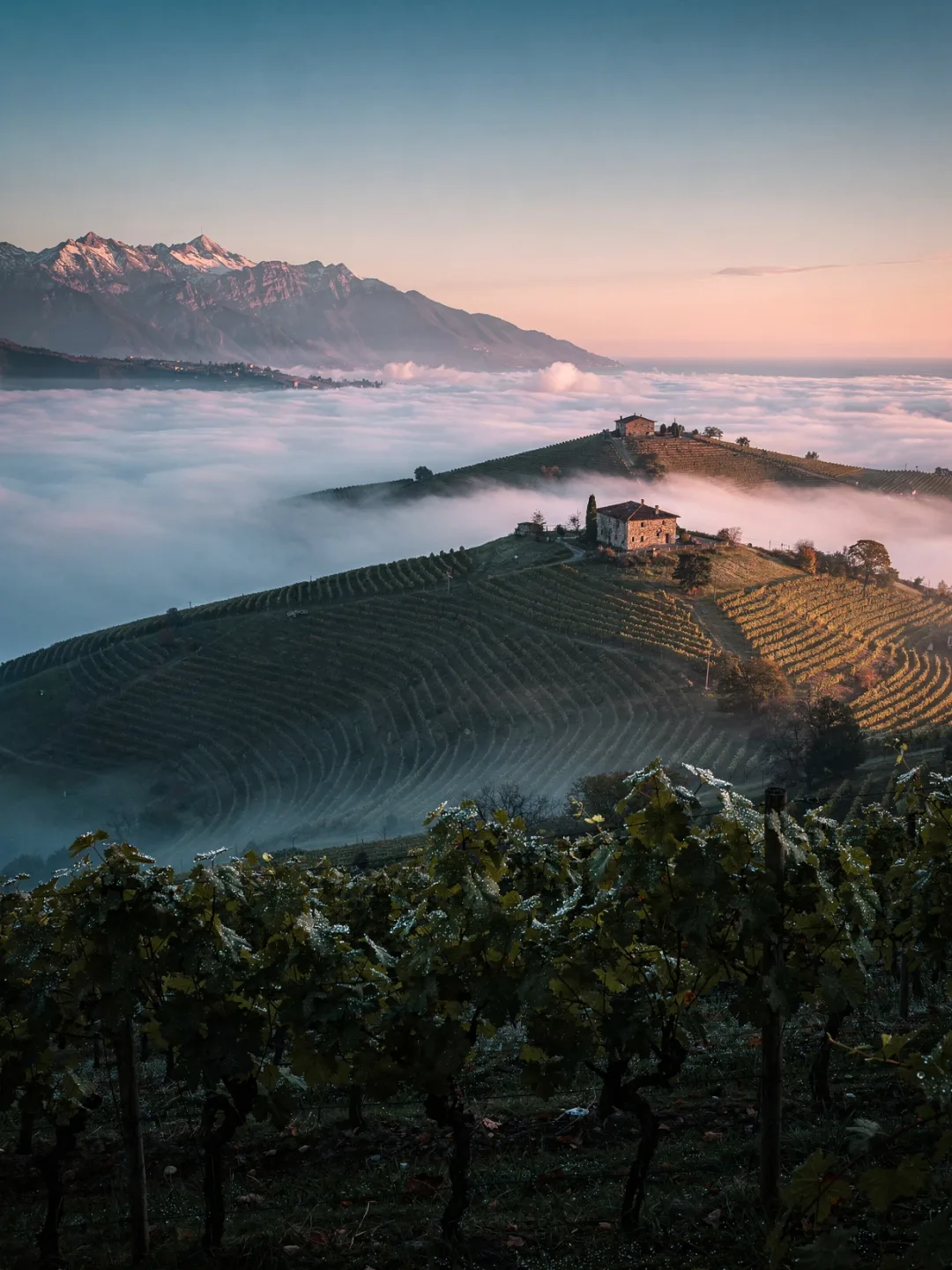
Alps, Adriatic, Bora
Climate
Nowhere else in northern Italy does the climate change over such a short distance. To the north, the Julian Alps shield the land from cold northern winds; to the south, the Adriatic tempers the winters, and only a few dozen kilometers separate the two. Standing in the Collio, you look out over gentle hills between one hundred and three hundred fifty meters, moist and green, with plenty of rain in autumn. Up to a meter and a half falls there each year, more than almost anywhere else in the region.
It's a completely different story twenty kilometers further south, in the Carso above Trieste. There, the Bora whips across the plateau, a cold katabatic wind from the northeast that can reach gusts over one hundred fifty kilometers per hour. It dries the grapes within hours of every rainfall. It also keeps fungal diseases at bay, but forces the vines into a low, almost creeping training system so they aren't left defenseless against the wind. Without it, there would be no winegrowing here at all. With it, every harvest is a small battle.
Inland, on the gravel plain of the Grave, the Tagliamento river creates a notably more continental climate. Summers there are hotter, winters colder. The permeable gravel soil stores heat during the day and releases it at night, which speeds up the ripening of red varieties but costs freshness. That's one reason why the aromatic whites tend to come from the cooler eastern hills, while the fuller-bodied reds tend to come from the plain.
In the end, what matters most is the swing between day and night in the hills of Collio. In September, temperatures often climb past thirty degrees Celsius during the day and drop to twelve at night, and it's exactly this swing that locks acidity into the grapes while the aromas ripen. Without it, Friulano and Ribolla Gialla would taste dull instead of vibrant. Climate change is now measurably shrinking this swing. Many winegrowers today harvest two to three weeks earlier than they did thirty years ago.