Sand & Clay
Soils
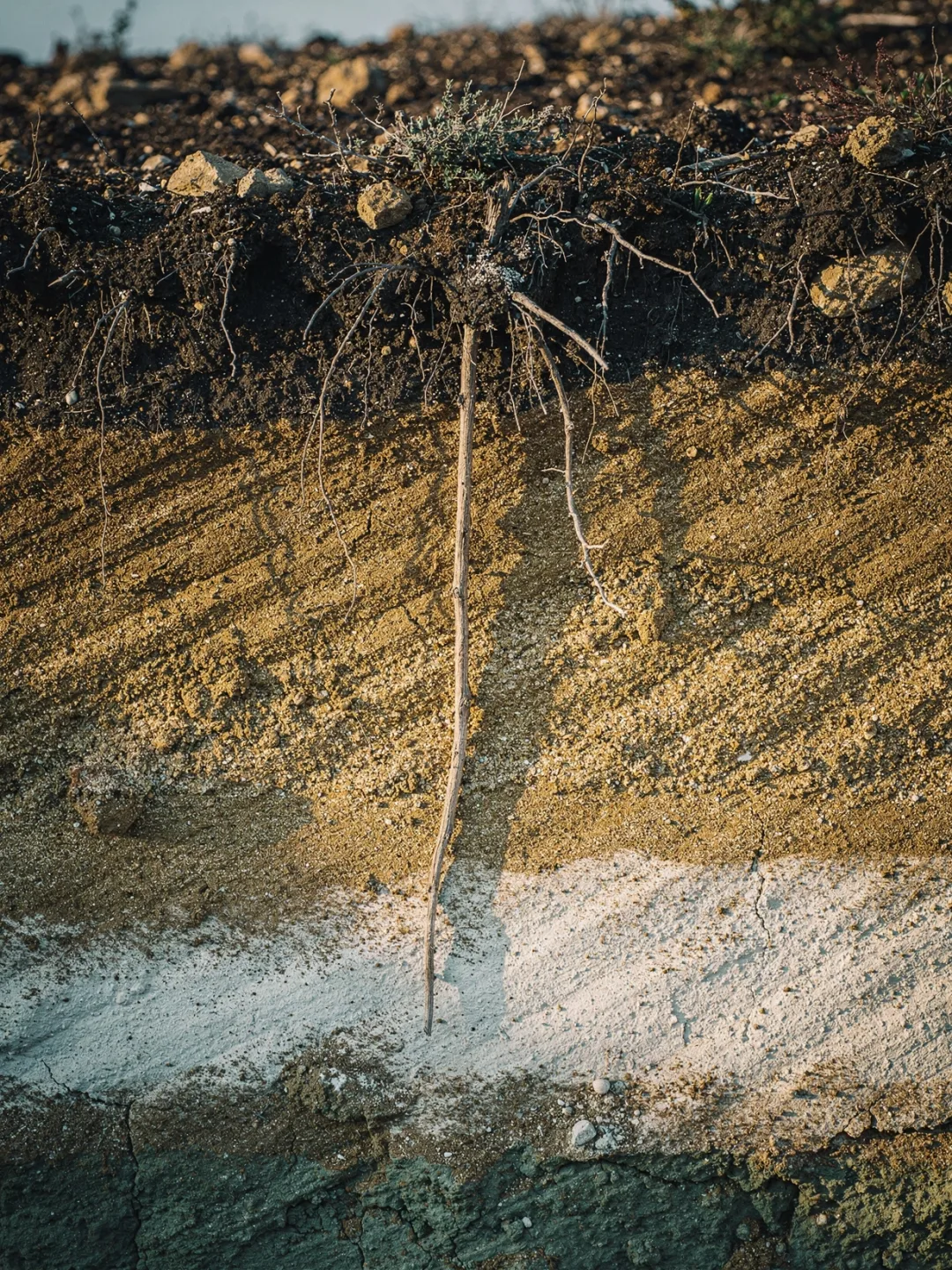
Dig a hole in a vineyard near Cirò and the first thing you'll hit is loose, pale sand. It's golden-brown to slightly reddish, fine, and runs through your fingers almost like beach sand. No coincidence there. This sand was once seabed, deposited back when the Ionian Sea still reached further inland here.
Deeper down, the soil turns firmer. After forty or fifty centimeters comes compact, pale clay, in places almost white, which holds far more water than the sand above it. Between coast and hill country, these two soil types alternate over small distances, sometimes within a single vineyard. The Cirò growing area spans some twenty thousand hectares along just twenty-five kilometers of coastline.
You can taste the difference, especially in Gaglioppo. Loose sand of marine origin lets roots grow fast and deep, offers few nutrients, and yields wines that are lean and fragrant. Compact, white clay, on the other hand, forces the vine to work harder and retains more water through the summer. The result is wines with more structure and greater aging potential. Taste both parcels side by side, and you'll taste two different Calabrias in two neighboring glasses.
Beneath both often lies marl, a mixture of clay and limestone rich in calcium, phosphorus and available potassium — though these minerals don't themselves produce the much-debated 'mineral' taste in the glass, since the amounts actually taken up are far too tiny. Instead they act through the soil's texture: through water balance, heat retention, and how easily or with how much difficulty the root works its way through.
That's why a Cirò from the sandy coastal plain usually tastes lighter and more floral than one from the clay hills further inland — even though both often come from the same grape and neighboring villages. The new Cirò Classico DOCG therefore requires a precisely defined zone between coast and hills, in addition to the grape itself. The soil helps decide who may call their wine Classico and who may not.
A thin, dark layer of decomposed scrubland and herbs from the Mediterranean macchia. Under the Calabrian sun, it's rarely thicker than a hand's width.
The root: Here sit the fine roots that absorb the rare rainfall immediately — and are the first to dry out in summer.