Alberello in the Sand
Production
In the vineyards of Cirò, the vine often still stands as it did centuries ago: as alberello, a little bush-vine. A short trunk of thirty to fifty centimeters carries three to five arms, each with one or two short shoots, with no wire or stake at all. This training method likely dates back to Greek times. It suits the sandy, dry soil well, since the vine stays low, partly shades itself, and survives dry spells that would leave a wire-trained vine exposed.
After harvest, a delicate phase begins for Gaglioppo. As with any red wine, the must sits on the skins, where the thick skins of the small berries release color and tannin. Gaglioppo naturally brings plenty of tannin to the table already. That's why winemakers today work more carefully than in the past, with shorter maceration times and gentler pump-overs, aiming for a wine with structure that doesn't turn hard.
The rules for blending are precisely defined and, since 2025, tiered. Cirò Rosso and Rosato DOC require at least eighty percent Gaglioppo. The remainder may be filled with other Calabrian red varieties, though Barbera, Cabernet Franc, Cabernet Sauvignon, Sangiovese and Merlot together may make up no more than ten percent. The new Cirò Classico DOCG tier is stricter still. At least ninety percent must be Gaglioppo, supplemented by no more than ten percent Magliocco and Greco Nero, with no international varieties allowed at all.
Cellar time is now tiered as well. Simple Cirò Rosso may be sold starting June 1 after harvest, with virtually no mandatory aging. A Riserva needs at least twenty-four months. Cirò Classico DOCG, by contrast, ages for a minimum of thirty-six months, including at least six months in wood. Before the 2025 DOCG recognition, Calabria had never required aging of this length.
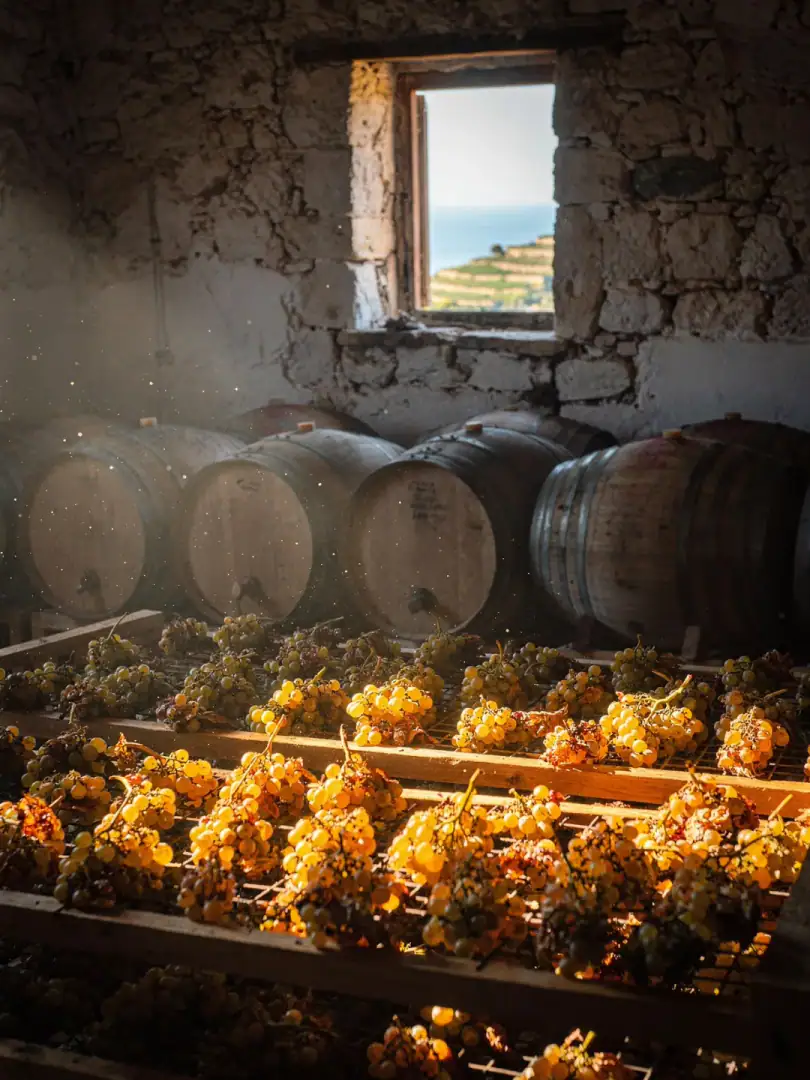
With white Greco di Bianco, everything works differently. After harvest, the grapes aren't pressed right away but are partially dried for several weeks on racks or mats, allowing water to evaporate and sugar to concentrate. Only then does fermentation begin, slow and at cool temperatures, so the concentrated aromas are preserved. The result is a sweet white wine made from at least ninety-five percent Greco Bianco, one that can match a red wine's intensity without any of its tannin.