A Cirò
Tasting
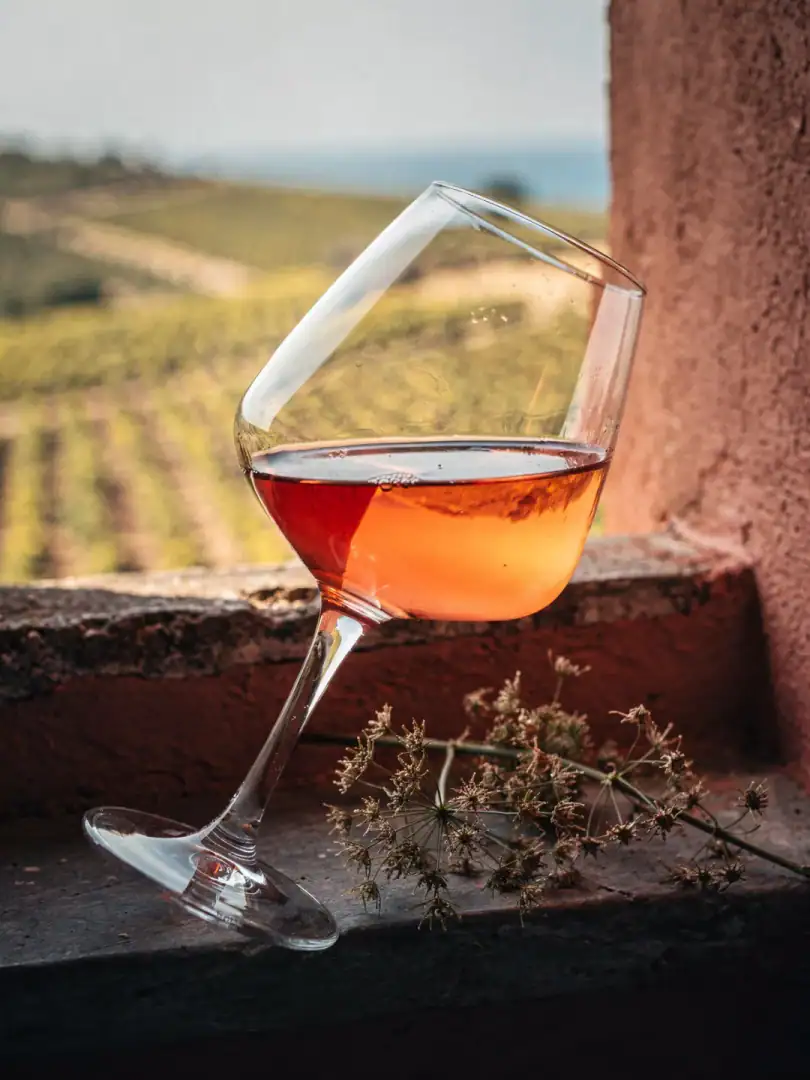
Take a Cirò Rosso and hold the glass against something white. At the rim it appears pale, almost salmon-colored to garnet, far lighter than a Nero d'Avola or an Aglianico from elsewhere in southern Italy. That's deceptive. Gaglioppo is paler in the glass than the palate would lead you to expect, and this paleness is purebred — not a sign of dilution or a weak harvest.
The nose needs patience. Right after pouring, ripe cherry and pomegranate come forward first, with a trace of violet above them. Swirl the glass, and heavier notes emerge. Dark spices, dried herbs and a balsamic streak recall bay leaf or wild fennel — plants that grow all over the Ionian coast anyway, often right between the vine rows.
On the palate it becomes clear why Gaglioppo has long had a reputation as a difficult variety. The acidity sits along the sides of the tongue and sets the saliva flowing immediately, while the tannin leaves a dry, almost dusty grip on the palate. Together, in youth, this can feel austere, even edgy. It takes either a few years of bottle age or a dish rich enough in fat and salt to smooth out the edges.
A slightly bitter, spicy note often lingers at the finish—a Gaglioppo trait, not a flaw to be mistaken for one. It's precisely this finish that makes the variety recognizable in blind tasting. Combined with its striking paleness and firm tannin, one rule holds: no other Italian red wine looks so light while tasting so powerful.
Place a simple Cirò DOC next to a Cirò Classico DOCG, and you'll taste the difference aging makes immediately. The young DOC comes across fresh, fruity, almost restless. The DOCG, at least three years older and partly aged in wood, shows rounder tannins, more dried fruit than fresh, and a longer, calmer finish. Two wines from the same grape, from neighboring vineyards—yet thanks to time in the cellar, two entirely different experiences.