Tasting a Taurasi
Tasting
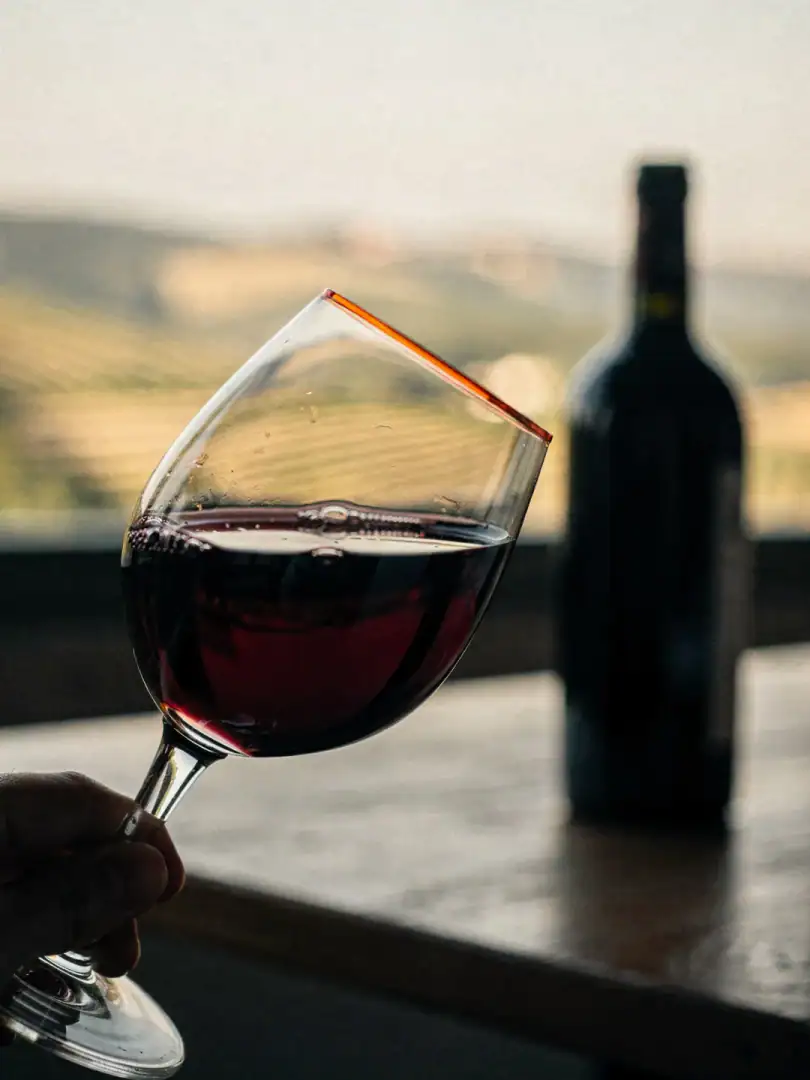
Pour a Taurasi into the glass and hold it up to the light. Young, it's nearly opaque, a dense garnet red with a violet rim; only after ten or fifteen years does the rim shift toward brick red. The center often stays dark for a long time. This depth sets Aglianico apart from many other Italian red wines, which already look paler when young.
Smell first without swirling, then again afterward; the difference is considerable. In the still glass, dark cherry and plum emerge, sometimes a touch of licorice. After swirling comes what's heavier: leather, dried herbs, a hint of tobacco, and in older vintages, something balsamic too. It calls truffle to mind. The green tomato note familiar from Tuscan Sangiovese is completely absent here, since Aglianico smells darker and less fruity, more earthy.
In the mouth, you notice two things almost simultaneously, and both are powerful. The acidity runs along the sides of the tongue and gets the saliva flowing; the tannin sits as a dry, almost dusty coating on the gums and palate. Together they act like a clamp holding the wine together, even after twenty years in the cellar.
At the end, count how long the flavor lingers after you swallow. With a good Taurasi, twenty or thirty seconds is nothing unusual, and it's exactly this length that separates a serious wine from a merely powerful one. A cellar master can add alcohol and use oak. Length he cannot force.
Set a glass of Greco di Tufo next to it for comparison, and the difference becomes immediately tangible: pale straw color instead of garnet, citrus instead of cherry. A lean acidity replaces the tannin entirely. Two wines from the same province of Avellino, grown less than fifteen kilometers apart as the crow flies, and yet they could hardly taste more different.