Maceration & Oak
Winemaking
In Campania, red and white wine part ways right from the first step, just as everywhere else: if the skins stay in contact during fermentation, the wine turns red; if pressed immediately, it stays pale. With Aglianico, the skins stay in contact for a long time, from days to weeks. Only this way does the wine draw enough color and tannin from the skins to carry a wine meant to age for decades.
What comes next is precisely dictated by law. A Taurasi DOCG requires at least three years of aging, including twelve months in oak, before it can be sold. The Riserva demands four years, including eighteen months in oak, and a minimum alcohol content of twelve and a half percent. Few other Italian red wines have such a precisely mandated waiting period before release.
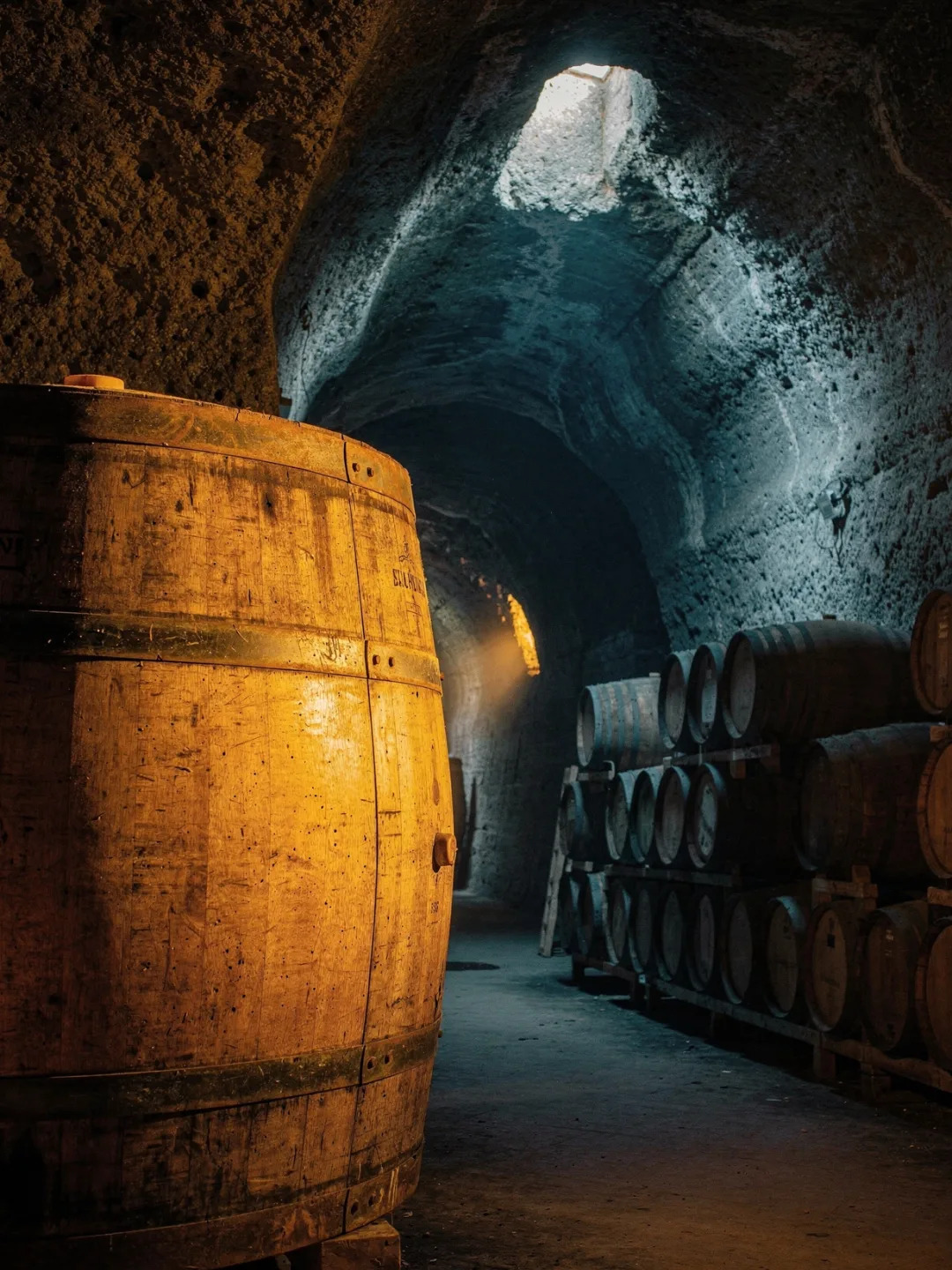
Opinions differ when it comes to oak. Traditionally, Aglianico ages in large old casks of Slavonian oak, which impart barely any flavor and expose the wine to oxygen only slowly. Newer producers additionally use small barriques, which add vanilla and toasted notes. For a variety that already brings plenty of tannin on its own, this remains a contested choice even within the region.
Fiano and Greco take the opposite path. The grapes are usually pressed directly, without skin contact. They ferment cool in stainless steel tanks to preserve citrus fruit and floral aromas rather than have them masked by oak. Some Falanghina from the Campi Flegrei is then left on the fine lees for several months. This gives the wine more texture without making it heavier.
In the Campi Flegrei and on Ischia, there's an additional peculiarity. Many old vineyards still stand today on their original, ungrafted roots, since phylloxera found no foothold in the loose volcanic sand. The slopes are steep and the parcels small. That's why grapes here are still harvested by hand, and often carried by hand as well: machines struggle on sand and terraces.