Fraschette and Porchetta
Wine & Food
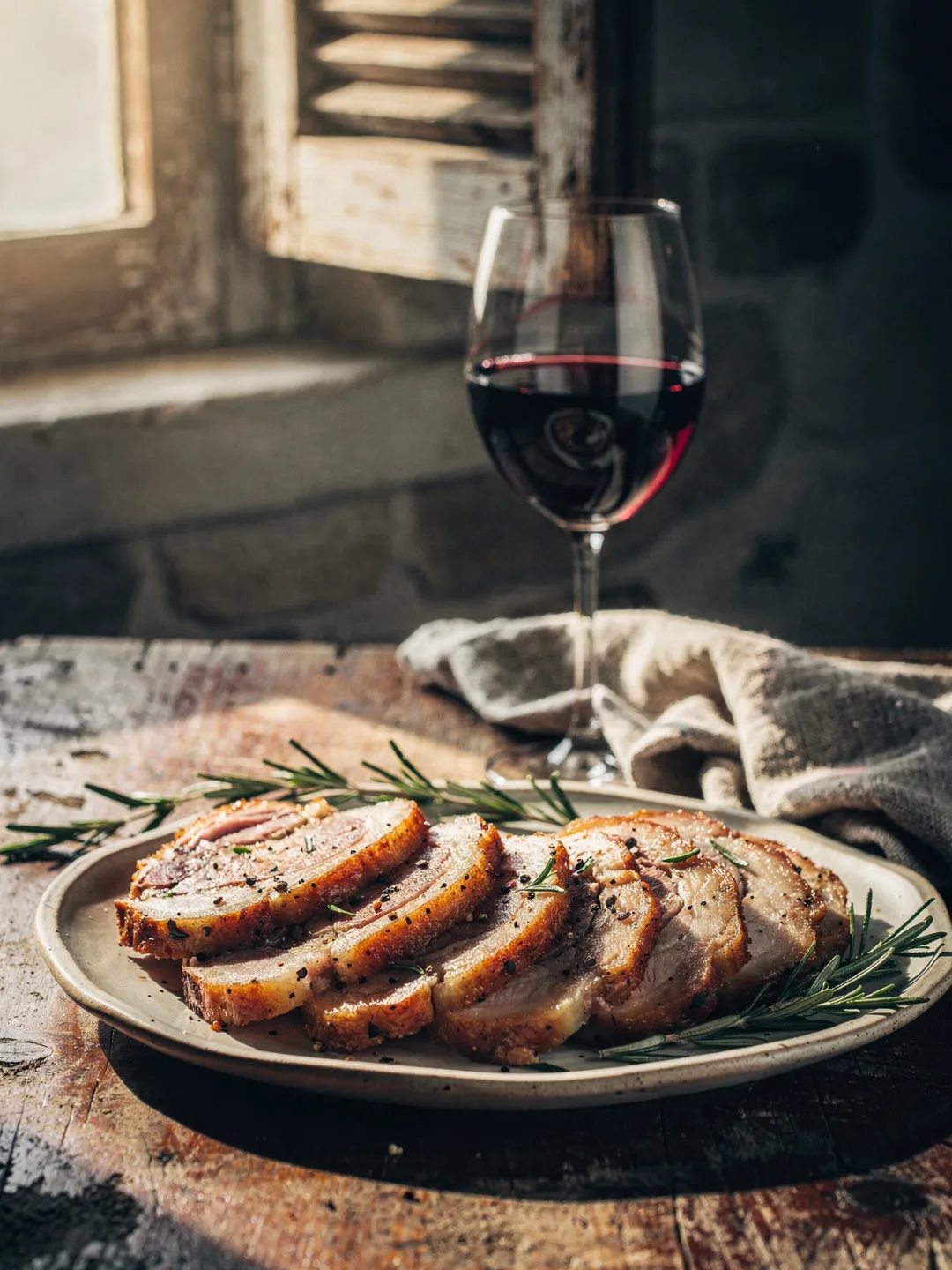
Lazio eats the way it drinks: down to earth, with plenty of fat and even more herbs. The fraschette of the Castelli Romani, simple wine taverns right at the winery, have always served up the same picture. A jug of Frascati, a plate of Porchetta — nothing more was needed.
Porchetta di Ariccia has even carried its own quality seal for a few years now, IGP, with prescribed ingredients: only salt, pepper, garlic, and rosemary, no foreign spices. The rich fat of the slow-cooked pork needs acidity so it doesn't feel heavy. That's exactly what a chilled Frascati Superiore delivers.
From Rome's old Jewish ghetto come Carciofi alla Giudia: whole artichokes, fried crisp in hot oil until every leaf crackles on its own. Their slight bitterness meets the bitter-almond note of Malvasia Puntinata almost as if made for each other — a coincidence that became the rule over centuries.
At Easter, Abbacchio traditionally comes to the table, young milk-fed lamb, usually braised with rosemary and garlic. Here white wine no longer suffices. A young Cesanese, with its acidity and velvety tannin, carries the tender meat without overwhelming it.
For Coda alla vaccinara, oxtail braised for hours in tomatoes and celery, you need more weight in the glass — a Cesanese del Piglio Riserva, for instance, one that can handle years in the cellar and whose tannin has enough power to stand up to the gelatinous, rich meat.
To finish, Pecorino Romano often comes to the table, strongly salted with a slightly sharp bite. Its saltiness noticeably rounds off a Cesanese's tannin. Every trattoria in the Castelli Romani knows this trick. Hardly anyone can explain it.