On a Frascati
Tasting
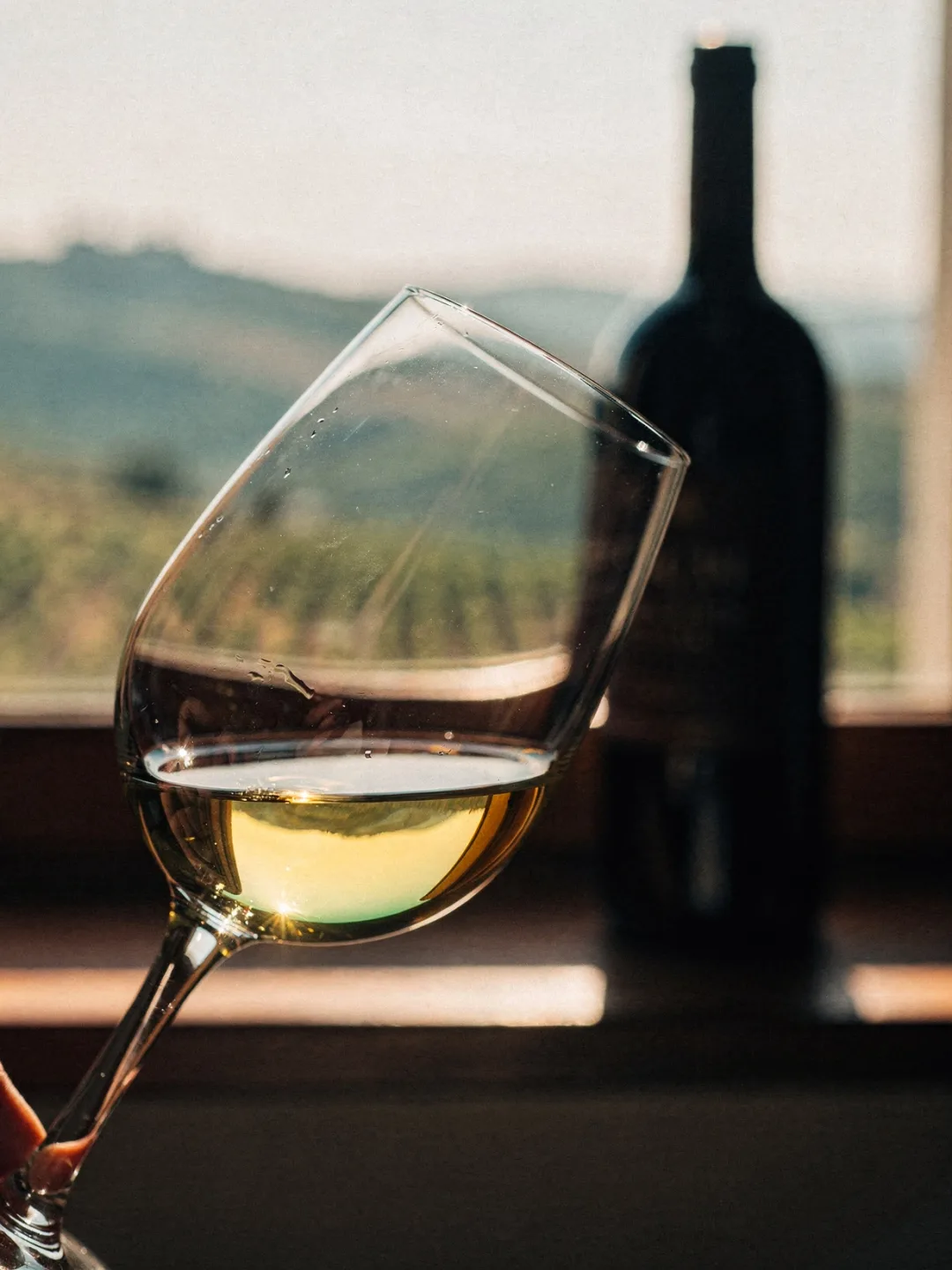
Hold a glass of Frascati Superiore against a white sheet of paper. The colour is straw-yellow with a hint of green, paler than most other Italian whites, almost like diluted apple juice. That's a sign of cool, controlled fermentation, not weakness.
On the nose comes first hawthorn or almond blossom, then, depending on the vintage, a slightly bitter almond note rarely found in other Italian white wines. It comes from Malvasia Puntinata and the brown dots on the berry skin that give it its name. Sometimes a touch of citrus peel comes through, but rarely more.
On the palate, the acidity strikes first, along the sides of the tongue, fresh and fairly high for a wine from what is, after all, a warm growing region. The volcanic soils and the wind off the nearby sea keep it locked in, year after year, no matter how hot the summer was. The body stays lean. Alcohol usually sits just above twelve percent, and a residual bitterness in the finish belongs to the variety, not to a flaw.
Cesanese shows itself differently: dark ruby with a violet rim in young vintages, shifting toward brick red over time. On the nose sit sour cherry alongside dried rose petals and black pepper, sometimes a hint of liquorice that grows stronger with age.
On the palate the tannin is noticeable, but rarely hard. It sits as a fine, almost velvety layer on the gums, carried by plenty of fruit. Count the seconds the flavour lingers after swallowing. With a good Piglio Superiore, that's easily twenty or more, a sign of the concentration forced out by the poor limestone soil of Ciociaria.