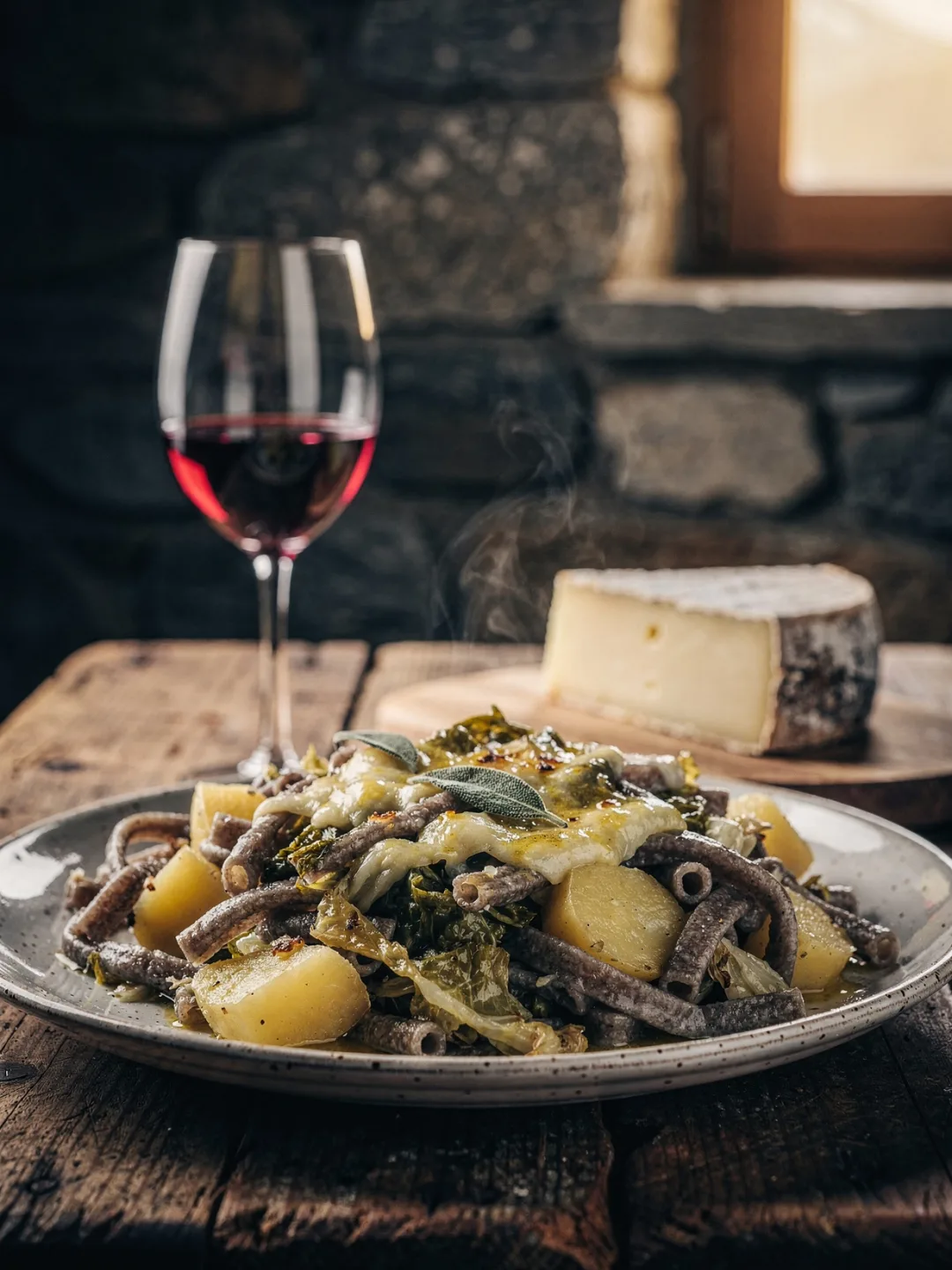
Pizzoccheri and Bresaola
Wine & Food
In Valtellina, the cooking is above all hearty, floury, and rich in cheese. This is food for cold winters and hard labor on the terraces. Pizzoccheri are short, gray ribbon noodles made from buckwheat flour. They're cooked with potatoes and savoy cabbage, then layered in a dish with melted butter, sage, and plenty of cheese — usually Valtellina Casera, sometimes the rare, long-aged Bitto from the high pastures.
This pairs best with a young, lightly chilled Valtellina Rosso, far better than any heavy, oak-driven wine. Its acidity cuts through the butter, while its fine-grained tannin stays calm and doesn't compete with the creaminess of the cheese for attention.
With Bresaola, the situation is different. This air-dried beef fillet from the same region is served sliced paper-thin, with just a touch of olive oil, lemon, and freshly ground pepper, almost fat-free. A wine too rich in tannin quickly seems drying alongside it. A Franciacorta Rosé, on the other hand, only lifts the meat's mild acidity further.
In Franciacorta itself, the food is often simpler — almost deliberately restrained. One example is Casoncelli, stuffed pasta pockets from nearby Bergamo, served with brown butter and a few sage leaves. Pair it with a dry Franciacorta Brut, which cleanly clears away the butter with its fine carbonation, right before the next bite arrives.
In the end, one rule holds true. The richer and more cheese-laden the food from the mountains, the more acidity the wine needs alongside it — whether that acidity comes from rising bubbles or from a grape grown on crumbling granite.