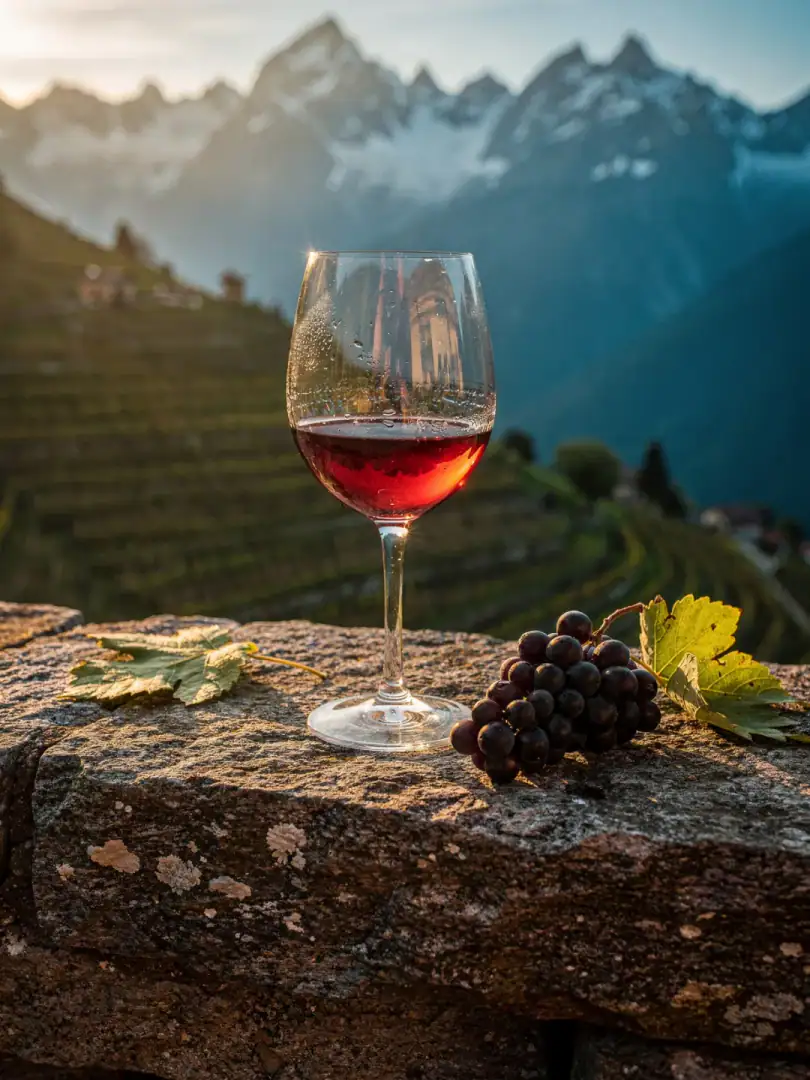
A Sassella, up close
Tasting
Take a Sassella, one of Valtellina's five named crus. Hold the glass up to the light. The color is pale for a red wine, almost garnet with orange reflections at the rim — a trait Chiavennasca shares with every Nebbiolo, no matter where it comes from.
Smell it twice. Once calmly, once after swirling. In the thin mountain air of Valtellina, the grape ripens slowly, and that's exactly what you taste in the glass: dried herbs, bergamot, sometimes a hint of violet. Along with that comes a fine, almost dusty note that many associate with the pale granite soil the vines grow in.
On the palate, acidity strikes you first. It sits along the sides of the tongue, fresh and almost piercing. Only after that comes the tannin, fine-grained rather than coarse, and together the two make this a wine that practically demands fat and salt in the food alongside it.
Taste a Franciacorta on the same evening, and the approach shifts almost entirely. With sparkling wine, the perlage comes first: fine, evenly rising bubbles indicate long lees aging, while large, restless bubbles suggest a young, simple wine. Only then come aroma and flavor, often with notes of brioche and toasted bread from the time spent on the lees.
At the end, pay attention to the finish. With Sassella, a bitter, herbal echo lingers, recalling cherry and herbs for a long while; with Franciacorta, instead, there's a fine tingling on the tongue that lasts for seconds, long after the last bubble has burst.