Three Fermentations
Production
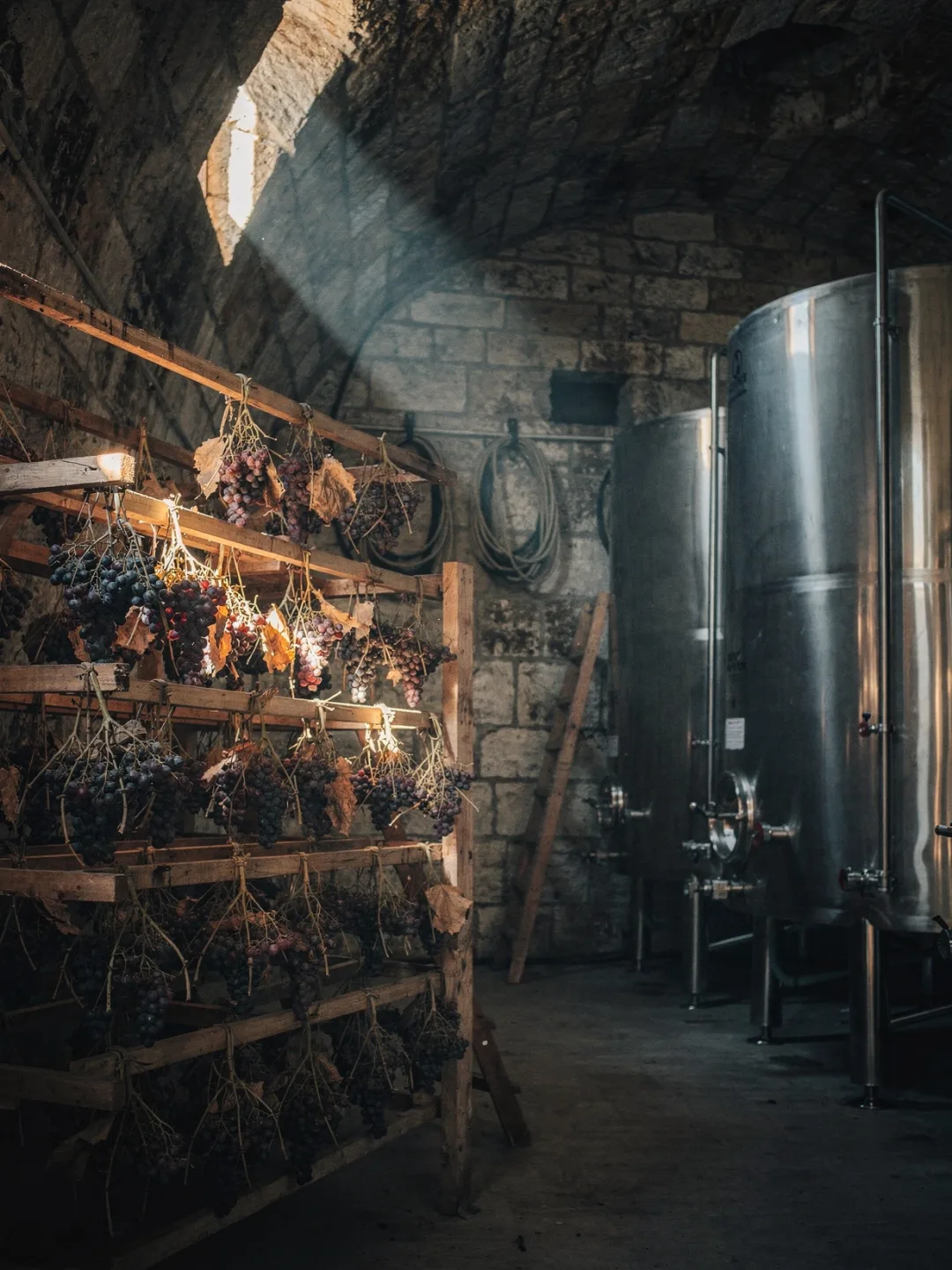
Nowhere else in Italy does a wine need a calendar quite like Vernaccia di Serrapetrona. Harvest begins in October, as it does everywhere in the region. But a portion of the grapes, at least forty percent, doesn't go to the press afterward — instead it's laid out on wooden racks to dry. There they hang until mid-January, three months, while outside the first snow has long since fallen.
The rest is fermented immediately, in the usual way, into a dry base wine. Only in January does the must from the dried grapes join in, concentrated and sweet, setting off a second fermentation. A third follows in the pressure tank, where the carbonation forms. Three fermentations for a single wine — hardly any other producer in all of Italy manages that. Here, time is an ingredient.
Verdicchio, by contrast, usually stays uncomplicated. Most producers ferment in steel tanks without any wood, so the citrus and almond notes stay clear. Afterward, the young wine often rests for months on the fine lees, the spent yeast cells left after fermentation, which give it body and a faint bready note without weighing it down. For the Riserva, that's not enough. The law requires at least eighteen months of aging, including six in bottle, before the wine may even be sold.
With Rosso Conero, time on the skins determines the wine's power. Montepulciano releases color and tannin only slowly. That's why the must often sits on the skins for two to three weeks, longer than most red wines from central Italy. The top tier, Conero DOCG, then ages for at least twenty-four months, counted from the first of November of the harvest year, before the first bottle leaves the cellar gate.