Almond and Iodine
Tasting
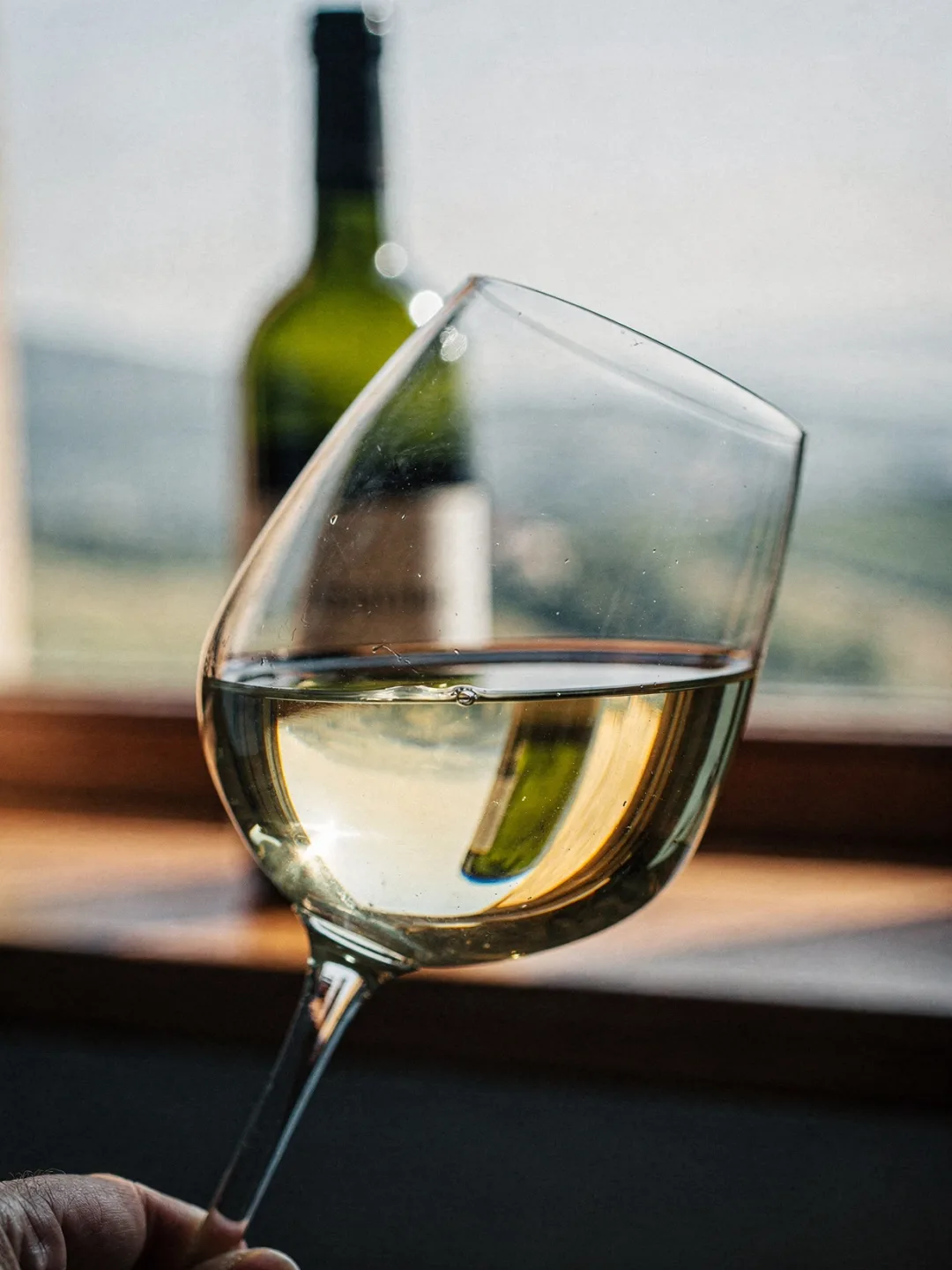
Held at an angle against something white, a Verdicchio reveals its age instantly in its color. Young, it's pale green with a hint of straw, almost like the unripe grapes themselves. After ten years in the cellar, that pale green often turns deep gold. This surprises most people, since hardly any Italian white wine holds up this long without turning dull.
Smell it twice — once with the glass still, once after swirling. In the still glass, citrus comes first, often grapefruit, sometimes green apple. After swirling, something nutty follows — green almond, so characteristic of Verdicchio that connoisseurs often recognize the variety by this alone. Alongside it, a salty, almost iodine-like note. Many link it to the nearby Adriatic, even though no one can quite prove why that should be so.
On the palate, pay attention to the acidity. It sits along the sides of the tongue, gets the saliva flowing, and often barely fades for years, even once the wine is fully mature. With Rosso Conero, focus instead on the tannin against the gums. It's noticeable but rarely harsh, since Montepulciano naturally carries softer tannins than, say, Sangiovese or Nebbiolo.
Lacrima di Morro d'Alba confuses almost everyone who tastes it for the first time. On the nose, it smells sweetly of roses and dark berries, almost deceptively light. On the palate, real tannin follows, dry and gripping — a contradiction that only this one variety in Marche carries through so consistently.
At the end of a tasting, count the seconds after swallowing. With a simple young Verdicchio, it's usually just five or six. With an aged Riserva from Matelica, it's often twenty or more, salty and long-lingering, a finish you'd hardly expect from many white wines grown in far warmer countries. Rarely, even longer.