Pampanella & Caciocavallo
Wine & Food
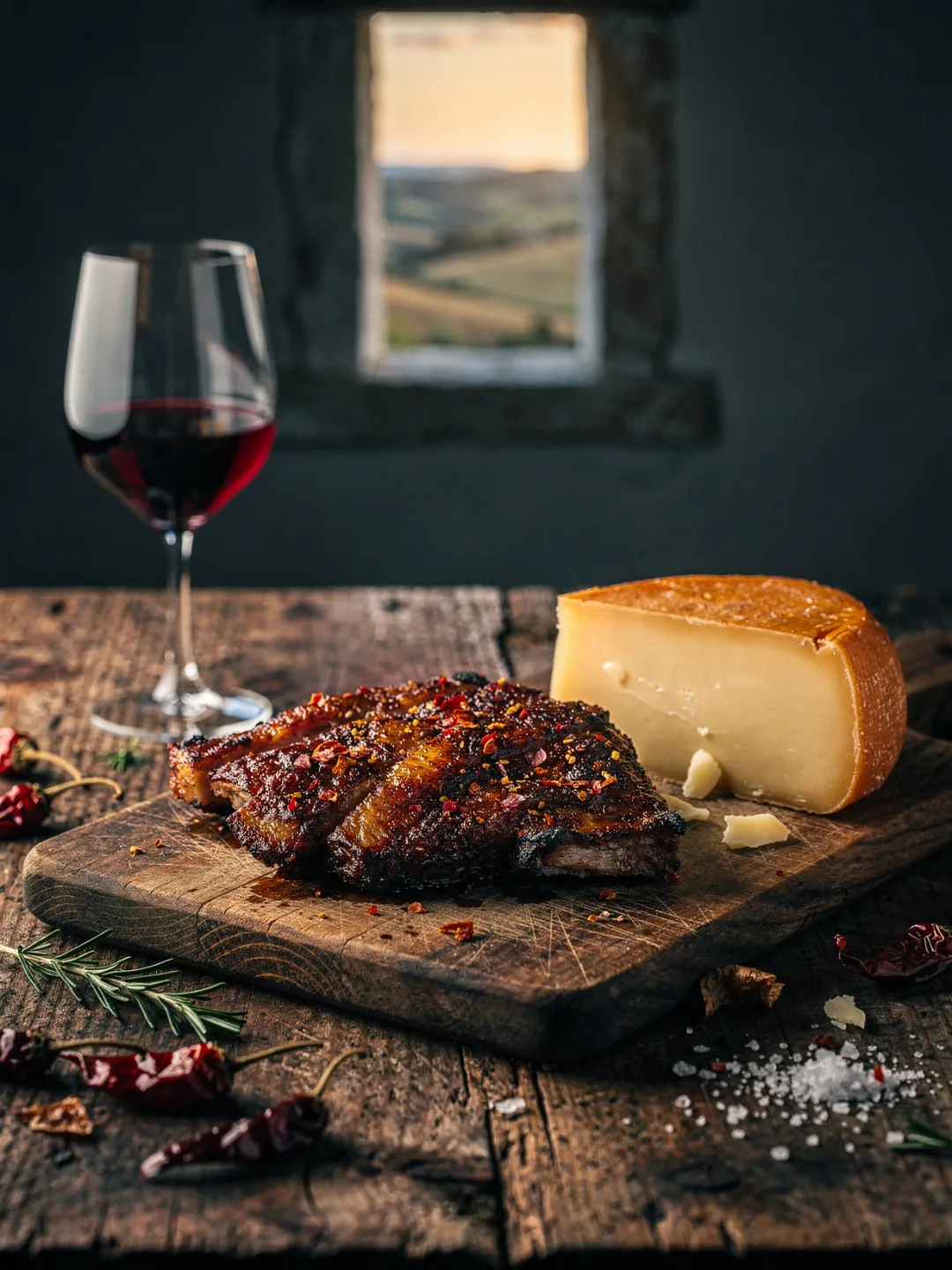
The cuisine of Molise is hearty, spicy, and unpretentious, much like its wines. Pampanella, a specialty of lower Molise, is pork roasted in the oven with plenty of red chili until the skin turns nearly black. A dish like this demands a wine with tannin and acidity, otherwise all that's left of the meal is the heat.
This is exactly where Tintilia shows its strength. Its tannin binds fat, while its acidity washes the heat away instead of amplifying it, as a sweeter wine would. The same rule applies to the spicy Ventricina, a cured pork sausage loaded with paprika, often crumbled into a sauce for the small, finger-shaped Cavatelli pasta.
With cheese, a different rule applies. Caciocavallo di Agnone is an aged, smoked hard cheese. It brings enough salt and fat to round out even angular tannin. Next to this cheese, a young Tintilia suddenly feels more approachable than it does on its own. White truffle from the forests around Isernia, shaved over pasta or eggs in autumn, also calls for structure rather than fruit.
On the coast, it's all about fish, and that's where Biferno Bianco takes center stage. Its blend of Trebbiano and Bombino Bianco stays fresh and lean enough not to overpower grilled fish. That fish often comes from the trabucchi of Termoli, those wooden fishing structures that still jut out into the Adriatic today. A heavy red wine would crush all the delicacy the sea has to offer.
If you want to remember one rule, make it this: fat and salt make an edgy wine more approachable. Heat, on the other hand, calls for tannin and acidity, not sweetness. In Molise, chili turns up in nearly every other dish. That's no coincidence—it's exactly why the region still relies on a wine as tannic and acid-driven as Tintilia.