On a Tintilia
Tasting
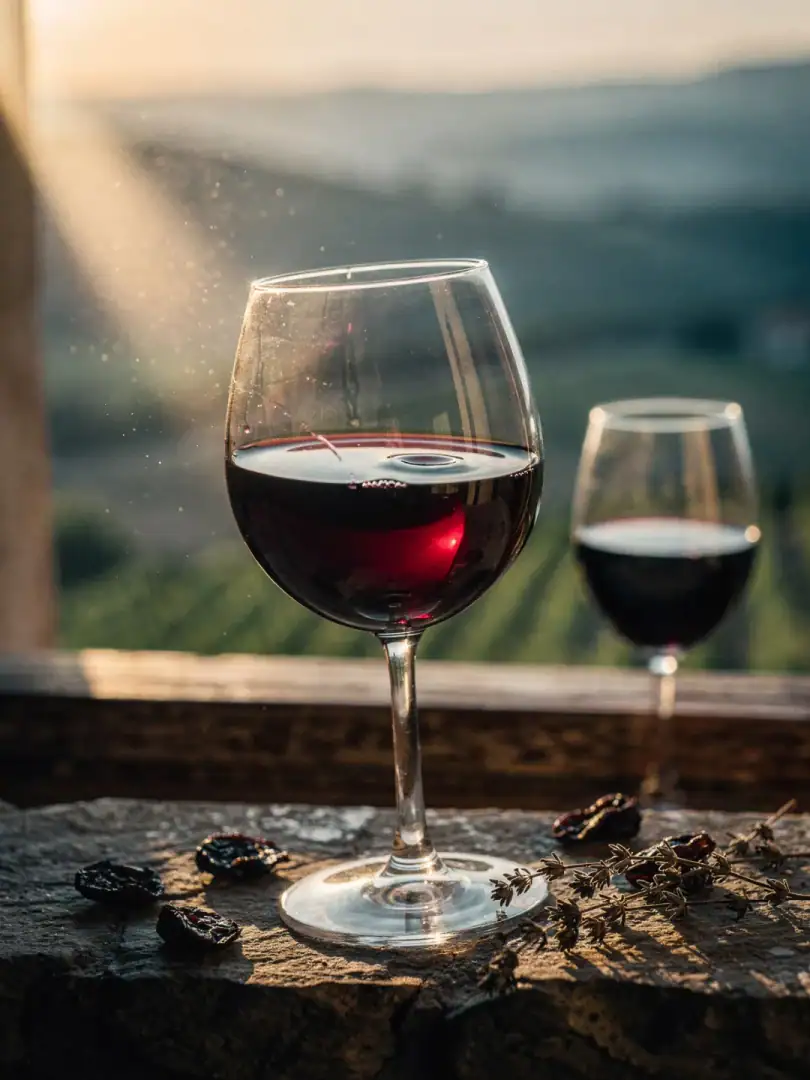
A glass of Tintilia, tilted gently against the light, reveals its age at the rim immediately. Deep purple in a young vintage, shifting toward brick red after a few years in the cellar. That the color still looks so dense even then comes as little surprise — the variety's firm tannin holds it together.
The aroma rewards two passes. Right at the still glass, the lighter aromas step forward first, dark cherry and plum above all, since they evaporate fastest. Only after vigorous swirling do the heavier notes emerge: licorice, black pepper, and on some days an earthy streak reminiscent of dried herbs.
On the palate, novices quickly understand why Tintilia long had a reputation for being difficult. The acidity runs sideways across the tongue and gets the saliva flowing, while the tannin simultaneously coats the gums with a rough layer. Together they feel angular at first, though in a good, mature example the effect is taut and lively rather than harsh.
A comparison glass of Biferno Rosso shows the difference to a blended wine. Thanks to the Aglianico component, it often appears darker in fruit, with more body and less of the wild acid edge so characteristic of Tintilia. Tasting both side by side reveals immediately how much character a single grape variety can give a wine that most people barely know.
Finally, what matters is how long the flavor lingers after swallowing. Experts call this the finish. In a simple Molise wine, it lasts only a few seconds. In a mature Tintilia Riserva, it lasts considerably longer. This length can't be manufactured in the cellar the way alcohol or oak aroma can. That's why it ranks at the top of any serious tasting.