From Samnites to Tintilia
Region & History
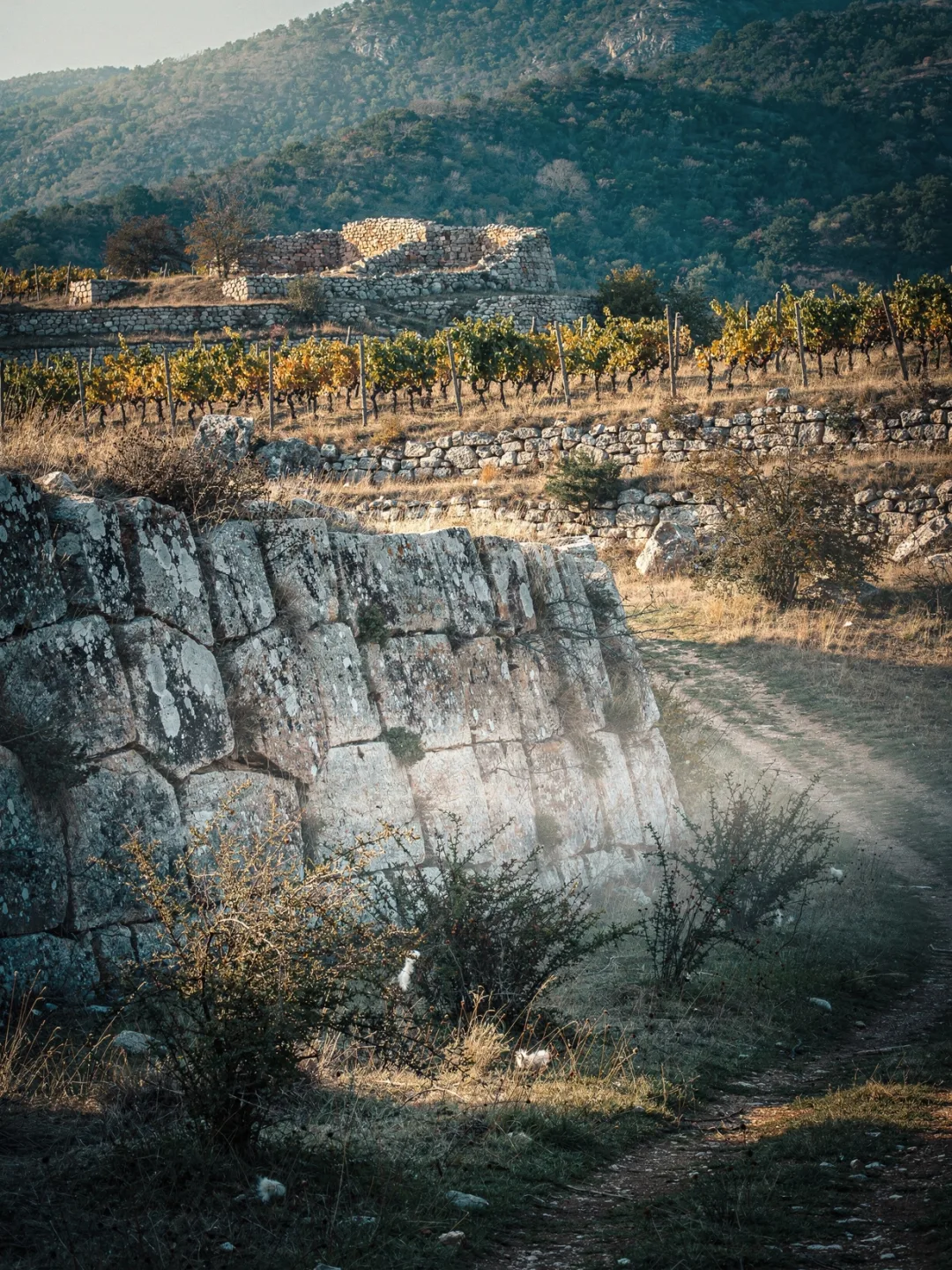
Long before anyone here thought about wine, shepherds moved through the land with their flocks. The Samnites, a fierce Italic people, lived here as early as 600 BC, divided into four tribes. The Pentri settled the heartland of today's Molise, with their capital at Bojano, ancient Bovianum. Rome needed three wars, fought between 343 and 290 BC, to subdue the mountain tribes.
What remained was a network of paths that still shapes the landscape today: the tratturi. Along these wide grassy strips, shepherds drove their sheep for centuries — up to the mountains of the Matese in spring, back to the Adriatic coast in autumn — a migration called Transumanza, recognized as UNESCO Intangible Cultural Heritage since 2019. Wine, meanwhile, remained a side matter for a long time, grown for the family table. That's why no estate here ever grew into something like a Tuscan noble house.
Politically, Molise is remarkably young. Until 1963 it formed a single region with its neighbor, Abruzzo and Molise. Only a constitutional law separated the two, and the province of Isernia wasn't added until 1970. That makes Molise the youngest region in Italy and, after the Aosta Valley, the second smallest.
The region's own grape variety came close to disappearing altogether. Tintilia once covered most of the slopes, but after the Second World War farmers ripped out vine after vine because yields were too low. In the 1970s, agronomist Giuseppe Mogavero began tracking down old vines, and in the 1990s Claudio Cipressi continued the search. A genetic analysis by the University of Molise later revealed the grape to be closely related to no other known variety, with records dating back to the late eighteenth century. In 2011 Tintilia was granted its own DOC.
One of the players behind this rescue was the Di Majo Norante winery near Campomarino, which has owned vines for generations and farmed organically since 1996. It proved that something distinctive could emerge from an almost forgotten grape. Today Molise has four of its own appellations, from the broad Molise DOC to the strict Tintilia del Molise.