Brasato and Castelmagno
Wine & Food
Piedmontese cuisine often begins with a pot on the table rather than the stove. Bagna cauda literally means hot sauce. It's made from plenty of garlic, salted anchovies and olive oil, kept warm over a small flame called a fojòt, into which you dip raw and cooked vegetables. A delicate wine stands no chance here. A young, acidity-driven Barbera, on the other hand, holds its own against garlic and salt with ease.
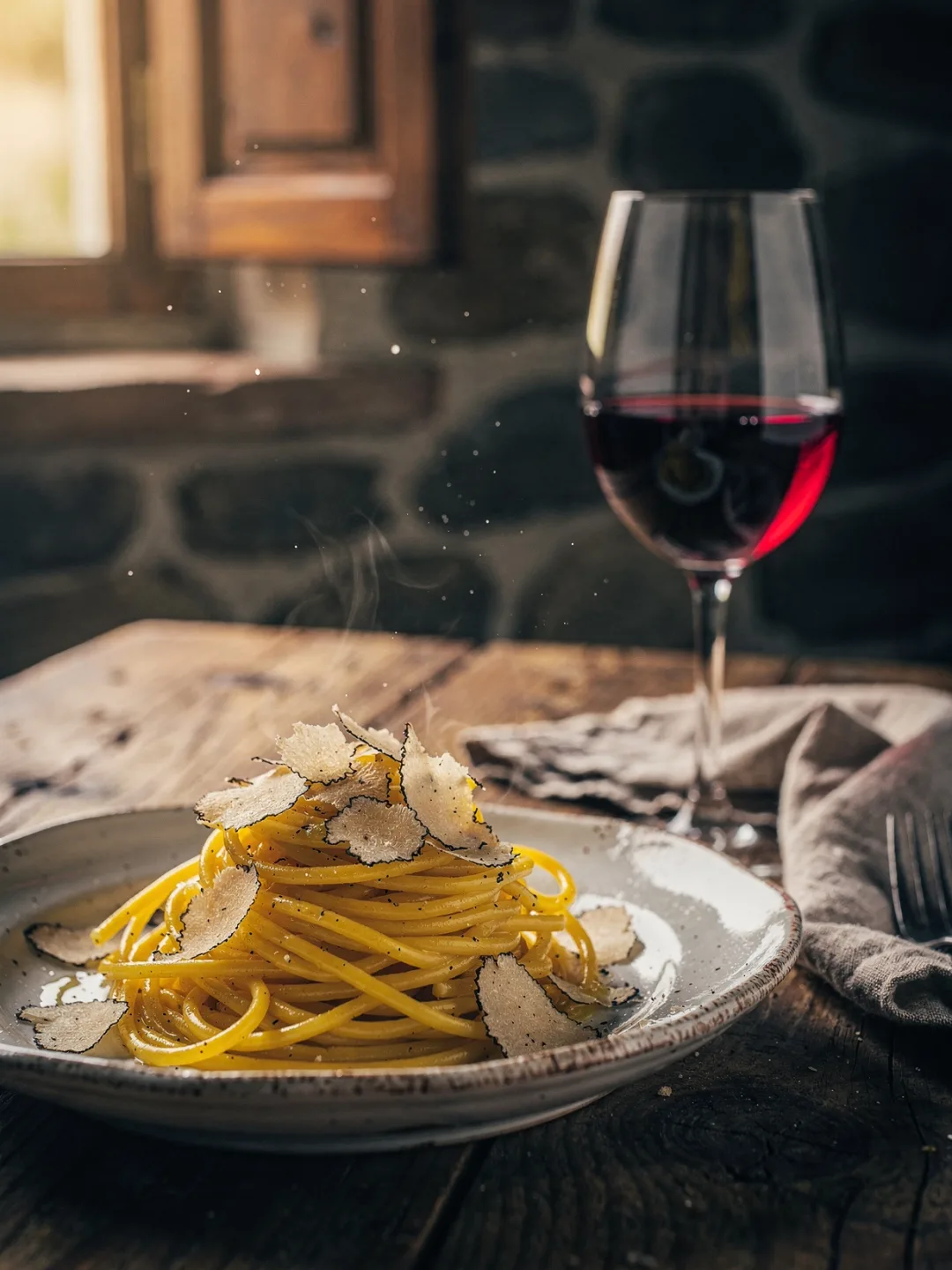
Pasta often follows. In the Langhe it's usually tajarin: wafer-thin ribbon noodles made from many egg yolks, almost always served simply with butter and shaved white truffle from Alba. The truffle fair in Alba has been held since 1929, founded by hotelier Giacomo Morra, and it made the region's truffles world famous. A young Nebbiolo, not yet too tannic, pairs better with truffle than a heavy Barolo — the latter would overwhelm the delicate aroma.
The dough is pinched by hand around the filling. This quick pinch gives the Piedmontese stuffed pasta its name: Agnolotti del plin, plin meaning pinch. They're usually filled with leftover roasted meat, served simply with roasting juices or brown butter. A medium-bodied Barbera d'Alba carries them without overpowering them.
A piece of beef, often from the Piedmontese Fassone breed, braises for hours in Barolo with root vegetables until it falls apart at the touch of a fork. This is how the region's best-known main course comes about: Brasato al Barolo. It's best paired with the very same wine the meat was cooked in, or at least the same grape variety. Otherwise the tannins in the meat juices and in the glass simply talk past each other.
Crumbly and lightly blue-veined, Castelmagno usually appears at the cheese course — a mountain cheese from the area around Cuneo. It's often melted into fonduta, with egg yolk and a little milk. The salt and sharpness in the cheese noticeably soften rough Nebbiolo tannin. To finish, a hazelnut cake usually appears on the table, baked from the region's famous Tonda Gentile hazelnuts. A glass of Moscato d'Asti pairs well with it — or, even more fittingly, a Barolo Chinato: Barolo infused with cinchona bark and spices, first created around 1891 by a pharmacist from Serralunga d'Alba as a remedy for colds.