Tar, Roses, Cherry
Tasting
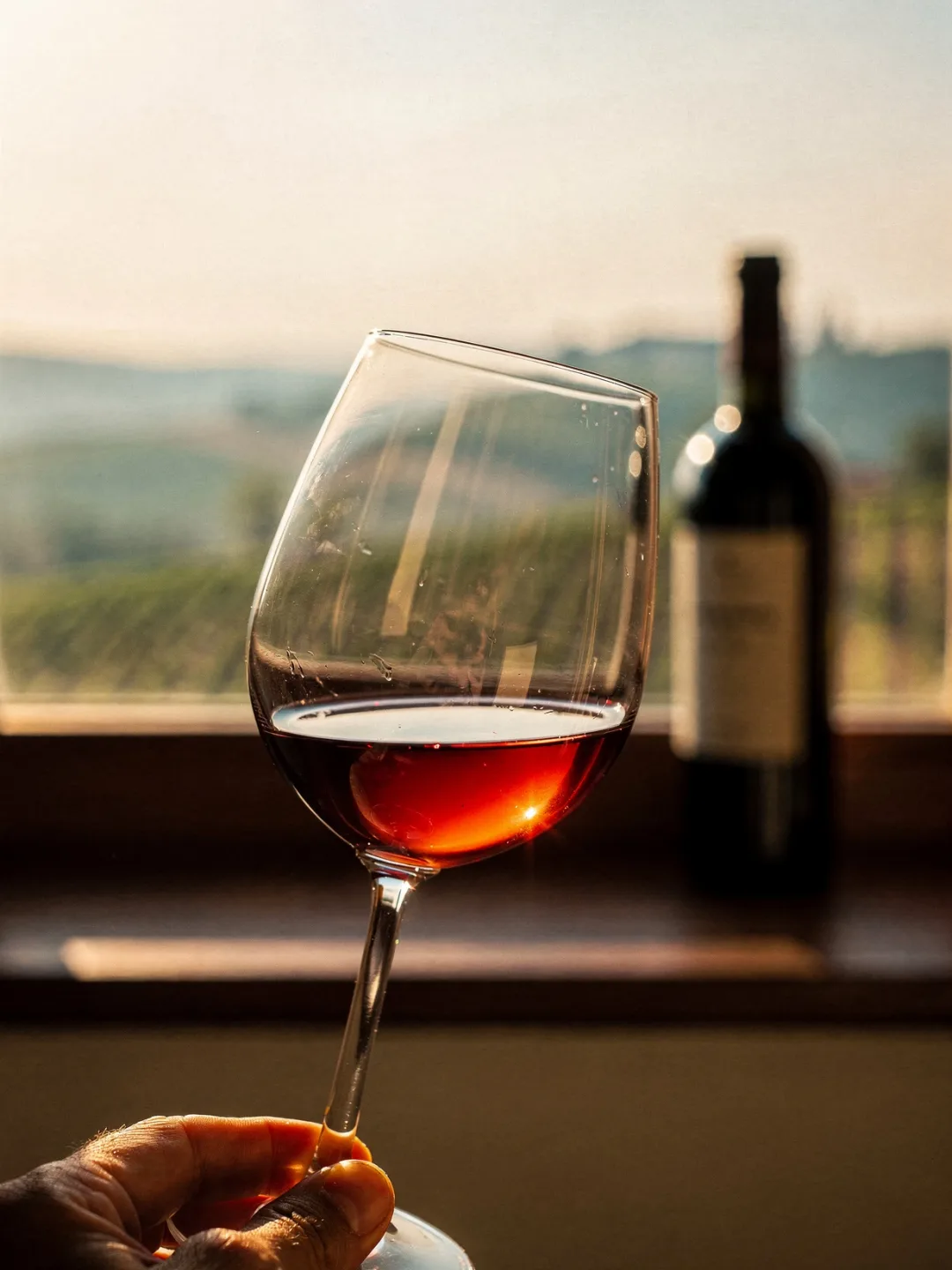
Hold a glass of Barolo against something white, and the first surprise comes immediately: the color is pale, almost like a light Pinot Noir, with an orange rim that appears even in a three-year-old wine. The color deceives here. It masks what follows in the mouth.
Nebbiolo has comparatively little color pigment in its skin, but enormous amounts of tannin and acidity — which is why a Barolo looks delicate yet tastes formidable. That's no coincidence. Judge this grape's power by its color, and you'll almost always be wrong.
On the nose, you'll encounter a combination that English wine writers decades ago described as tar and roses. The two belong together. Dried cherry almost always joins them, along with a hint of licorice, and as the wine ages, leather and wet leaves. After many years in the cellar, a hint of truffle sometimes even emerges, fittingly, given the landscape the wine comes from.
In the mouth, pay attention to two things separately. The acidity gets your saliva flowing immediately and keeps the wine fresh despite its power. The tannin, by contrast, settles over the tongue and gums as a dry, almost dusty sensation — in a young Barolo this can feel downright harsh, while in a twenty-year-old it turns into velvety texture.
Finally, count how long the taste lingers after you swallow. With a simple wine, that's two or three seconds. With a good Barolo or Barbaresco, you can easily count to thirty, sometimes longer, and it's precisely this length that separates a great Nebbiolo from a merely pleasant one. Length can't be faked.