Sand & Granite
Soils
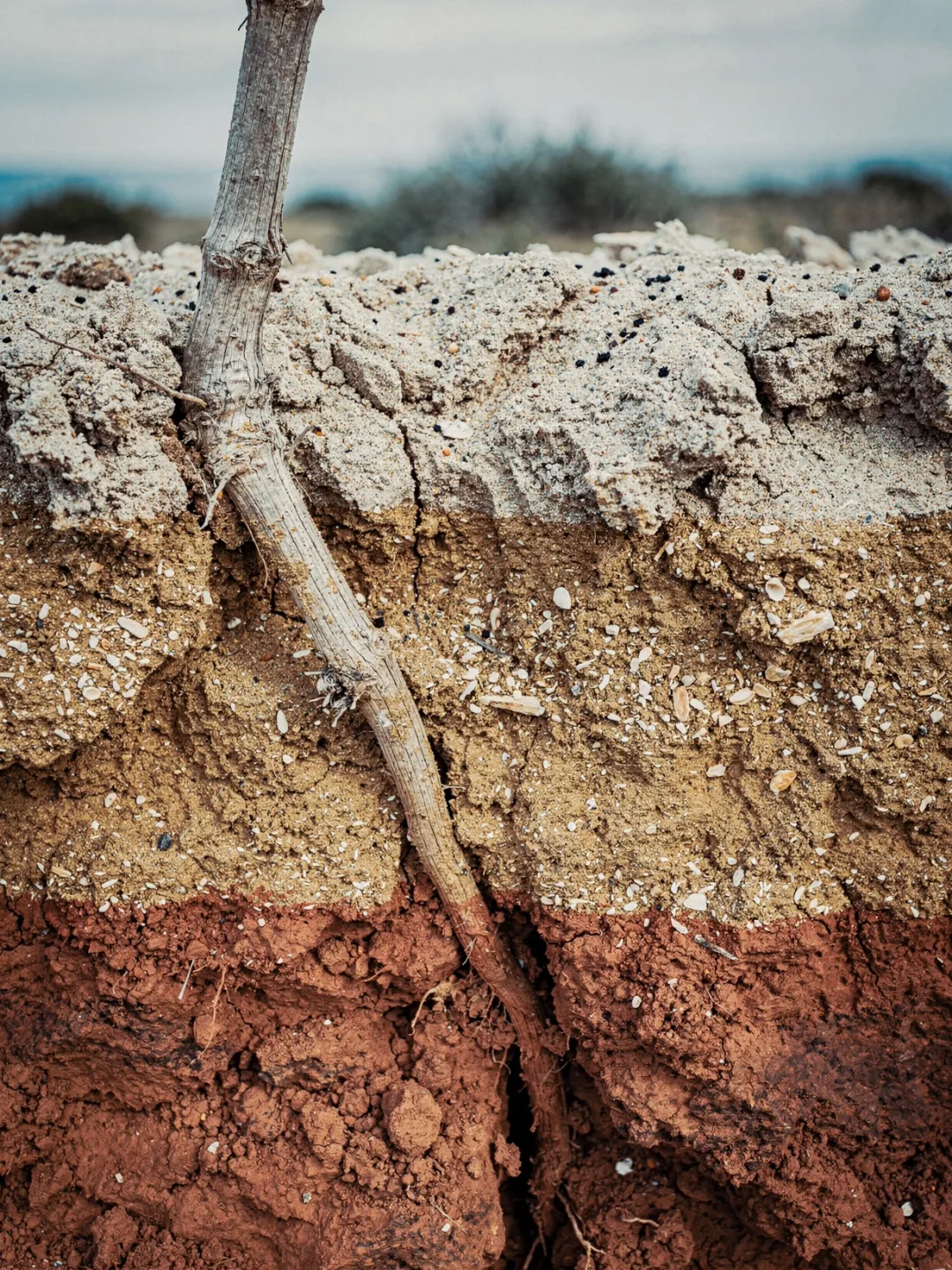
Dig a hole in a vineyard on the island of Sant'Antioco in the south, right behind the dunes. After just a few centimetres, you're no longer holding soil, but pure, pale sand, as fine and loose as on the beach next door. Roots find almost no grip in it, and even less nourishment. This is exactly why vines still grow here that have long since disappeared elsewhere in Europe.
Phylloxera, the root-eating pest that nearly destroyed Europe's vineyards in the late nineteenth century, cannot move through loose sand. It needs solid soil to dig its tunnels through. In Sant'Antioco, it finds none. That's why Carignano vines still stand here today on their own, never-grafted roots, some over a hundred years old, trained in the low bush form known as Alberello latino.
Beneath the loose top layer, the sand becomes firmer and denser, interspersed with shell fragments from earlier sea levels. Deeper still, you hit compacted, reddish dune sand from a much older era, cemented into rock by a calcareous binder. This layer resists digging. The loose sand above it, by contrast, simply runs through your fingers.
A vine growing in such soil must travel deep to reach water at all. It sends long, thin roots downward, sometimes several metres. Above ground, it produces small, thick-skinned berries in return, since little water remains to swell them. Colour and tannin sit in the skin, which is why a Carignano from these old sandy soils tastes denser and darker than many a younger wine from more fertile land.
In the north of the island, the story looks completely different. In the Gallura, pink granite weathers into coarse, free-draining sand that gives Vermentino its salty, mineral edge. This isn't because the root tastes the rock, but because this soil stores heat and drains water quickly. Two islands within one island: granite sand here, dune sand there, and each tells in its own way why Sardinian wines have so little in common with one another.
Pale, fine wind-blown sand with no visible layering, deposited right behind the coastal dunes of Sant'Antioco.
The root: Almost bare purchase. Fine roots find hardly any nutrients here and push straight on downward.