Wind, Sun, Sea
Climate
Sardinia ranks among Italy's sunniest regions. On average, the sun shines around three hundred days a year, often ten to eleven hours a day in August. The Mediterranean climate brings long, dry summers and mild, wetter winters. For grapes, this means plenty of ripening time, but also the risk of losing acidity before sugar has accumulated enough.
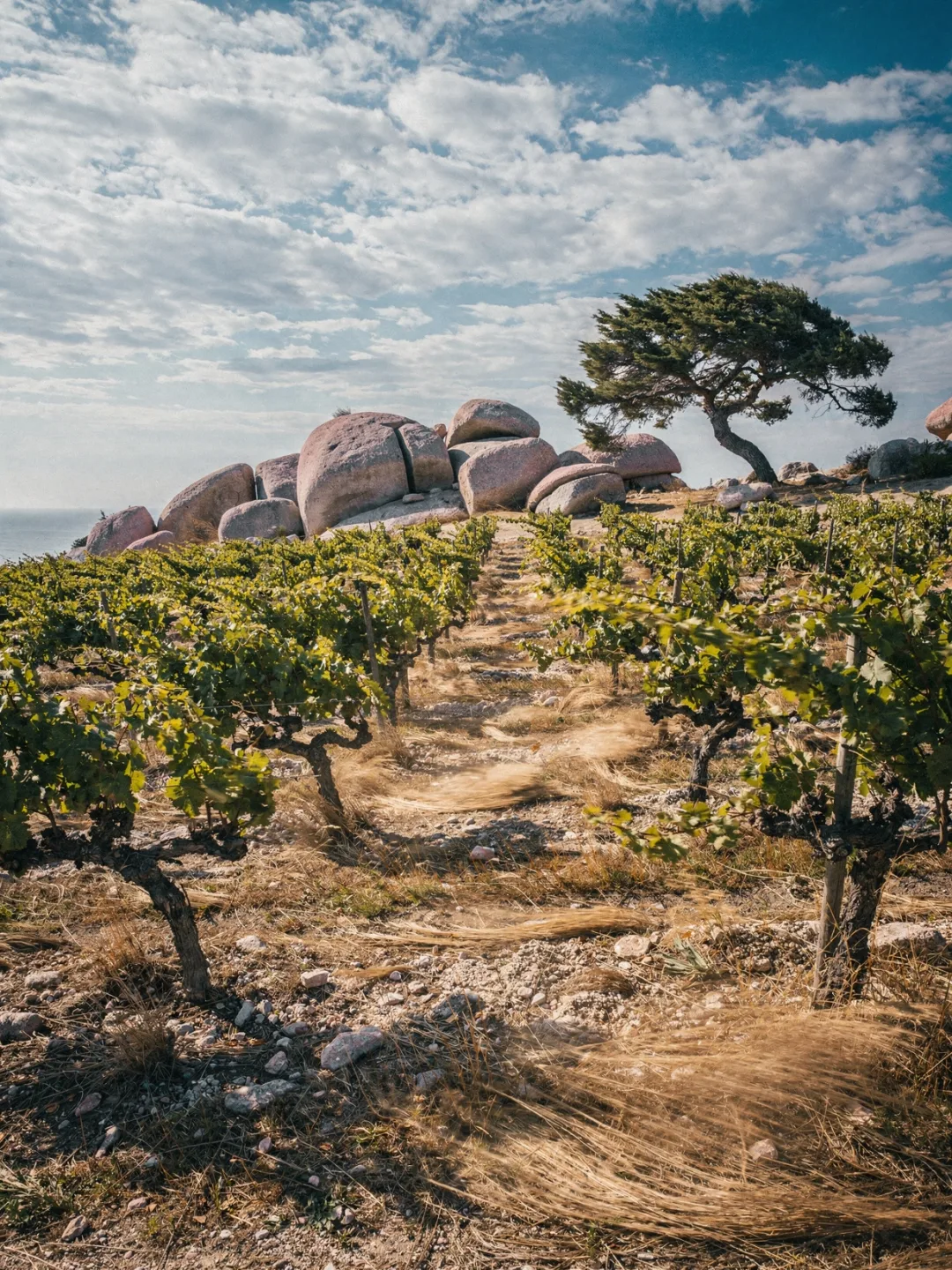
What protects the island from this is the wind. The Maestrale blows mostly from the northwest, often in gusts and especially reliable in spring and autumn, cooling the vineyards on hot afternoons. It dries the grapes quickly after rain, keeping fungal diseases at bay that would otherwise develop far more readily in humid, still air. Winemakers in the Gallura sometimes say their wine tastes of wind.
The sea acts like a giant temperature buffer. Along the coast, nights stay mild even in high summer, rarely dropping below twenty degrees Celsius, while inland, in the Barbagia, it cools noticeably as soon as the sun sets. This mountainous region often lies between two hundred and seven hundred metres in altitude. The difference between day and night gives the wines from there more freshness, even though the region lies farther from the sea than the coastal sites.
In summer, the Scirocco can also arrive from the south, hot and dry out of the Sahara. It drives temperatures sharply upward within just a few hours. This wind is rarer than the Maestrale. But it's considerably more unpleasant for the vines, as it causes berries to wilt rather than ripen and forces some winemakers to harvest earlier than they would like.
How early the harvest begins therefore depends strongly on where a vineyard is located. On the coast in the Sulcis, picking often starts as early as late August, while in the higher elevations of the Barbagia and around Oliena, growers wait until October. Between these two dates lies the island's entire climatic spectrum. From southern heat to near-alpine coolness, on the very same patch of land.