Skin, Flor, Steel
Production
Cannonau ferments on the skins like most red wines, usually for ten to fourteen days, sometimes longer for the Riserva. Part of it then ages in large old wooden casks. Another portion ages in smaller barriques, a choice with consequences. This choice reveals a great deal about a winery's style, much as it does elsewhere in Italy, where oak has sparked debate for decades.
In the Sulcis, production long looked quite different. For decades, Carignano mostly supplied bulk wine for blending, unremarkable and cheap, until things changed with the founding of the Santadi cooperative winery in 1960. Private producers later joined in and built on this foundation. Today, some Carignano del Sulcis ages in barrique and is traded internationally, made from the very same grape that once barely carried its own name on the label.
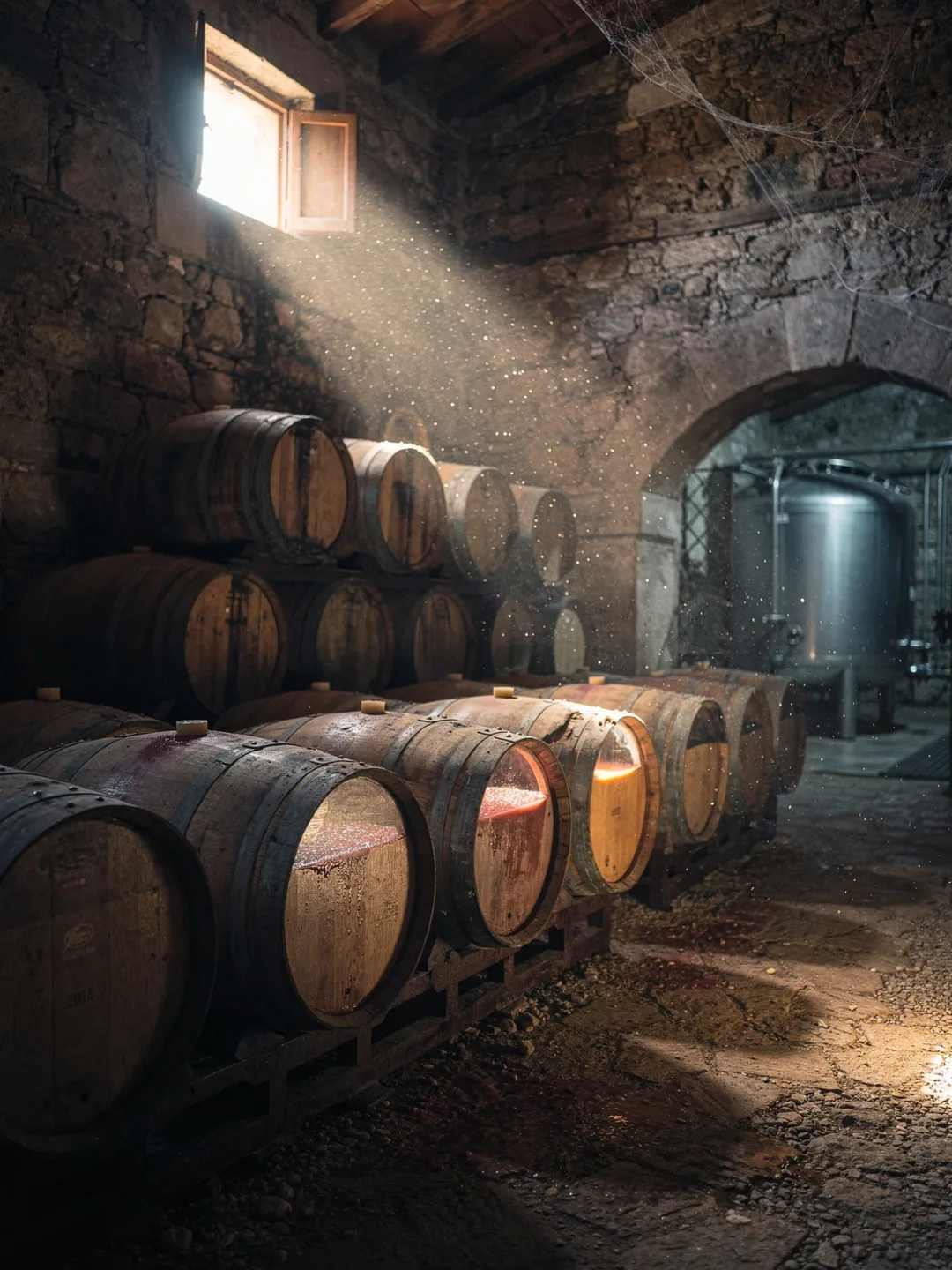
The island's most elaborate production belongs to Vernaccia di Oristano. The wine ages in traditional wooden casks called caratelli, which are deliberately left not quite full. A layer of yeast known as flor then forms on the surface, similar to certain Sherry styles from Andalusia, which age their wines in the same way. This layer protects the wine from oxygen. At the same time, it gives the wine its typical, slightly nutty and salty character, found in hardly any other Italian wine.
Vermentino di Gallura, by contrast, comes about in an entirely different way. It ages reductively and cool, with no contact with oxygen whatsoever. The grapes are pressed quickly, the must fermented cool, usually in stainless steel tanks, to preserve the fine citrus aromas and the salinity drawn from the granite soil. The base version requires at least eleven percent alcohol by volume, while the Superiore designation demands twelve. Yields per hectare are also lower for this classification.
Three methods, three completely different wines, and yet the same island: here the protective skin contact of Cannonau, there the deliberate oxidation of Vernaccia, and alongside them the cool, oxygen-free technique of Vermentino. Hardly any other Italian region shows such contrasting paths from must to finished wine within so small an area.