Cherry, Myrtle, Salt
Tasting
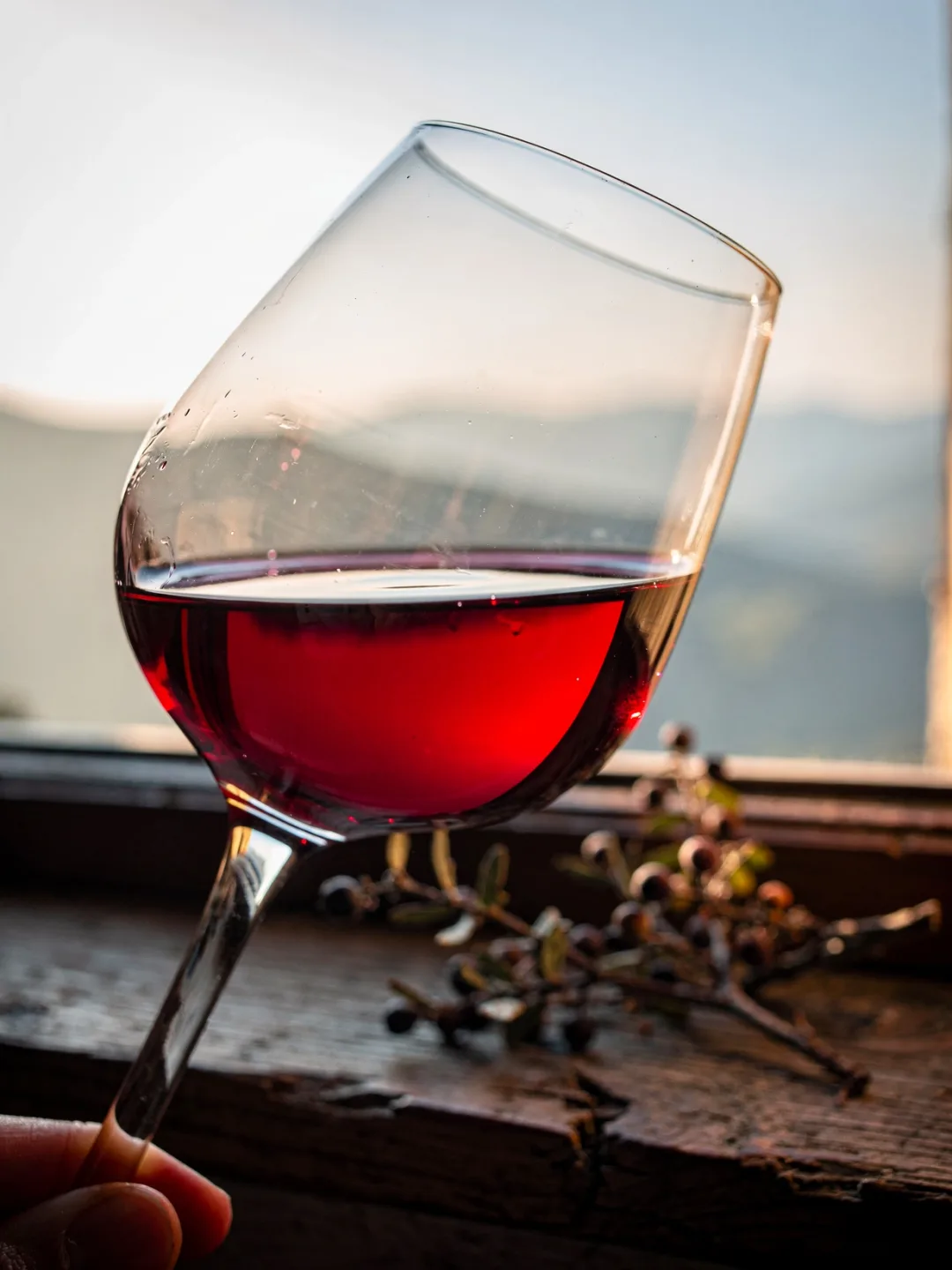
Take a Cannonau and hold the glass against a sheet of white paper. The colour is usually a deep, warm ruby red, rarely as pale as Tuscan Sangiovese, yet almost never as dark as a Cabernet. At the rim, the colour stays remarkably intense for a long time. This is a sign of the high alcohol content, which keeps the pigments stable in the glass.
Smell first without swirling, then again after. In the still glass, ripe, almost stewed cherry rises up first, along with a hint of cinnamon. After swirling, the herbs of the macchia follow: rosemary, thyme, and above all myrtle, the shrub from which the island's Mirto liqueur is also made. Once you recognise this aroma, you'll spot it again and again.
In the mouth, the first thing you notice is the warmth. Alcohol content almost always exceeds thirteen, often fourteen percent by volume, and it carries the whole wine, provided enough fruit and tannin stand up to it. A weak Cannonau stands out immediately. It then tastes of nothing but alcohol, lacking the cherry and herbal notes that separate a good wine from a mediocre one.
Switch afterwards to a Vermentino di Gallura, and the difference is immediately obvious. Instead of warmth, you sense salt, almost like a light sea breeze, along with citrus peel and sometimes a hint of almond blossom. This salinity doesn't literally come from the rock. But the lean, free-draining granite soil of the Gallura is the roundabout path by which it ends up in the glass all the same.
At the end, count how long the taste lingers. With a simple wine, it's just a few seconds; with a carefully made Cannonau della Riserva, often twenty or more. This length can't be faked in the cellar. In the end, it determines which wine from the island endures and which is forgotten.