Cannonau & Vermentino
Grape Varieties
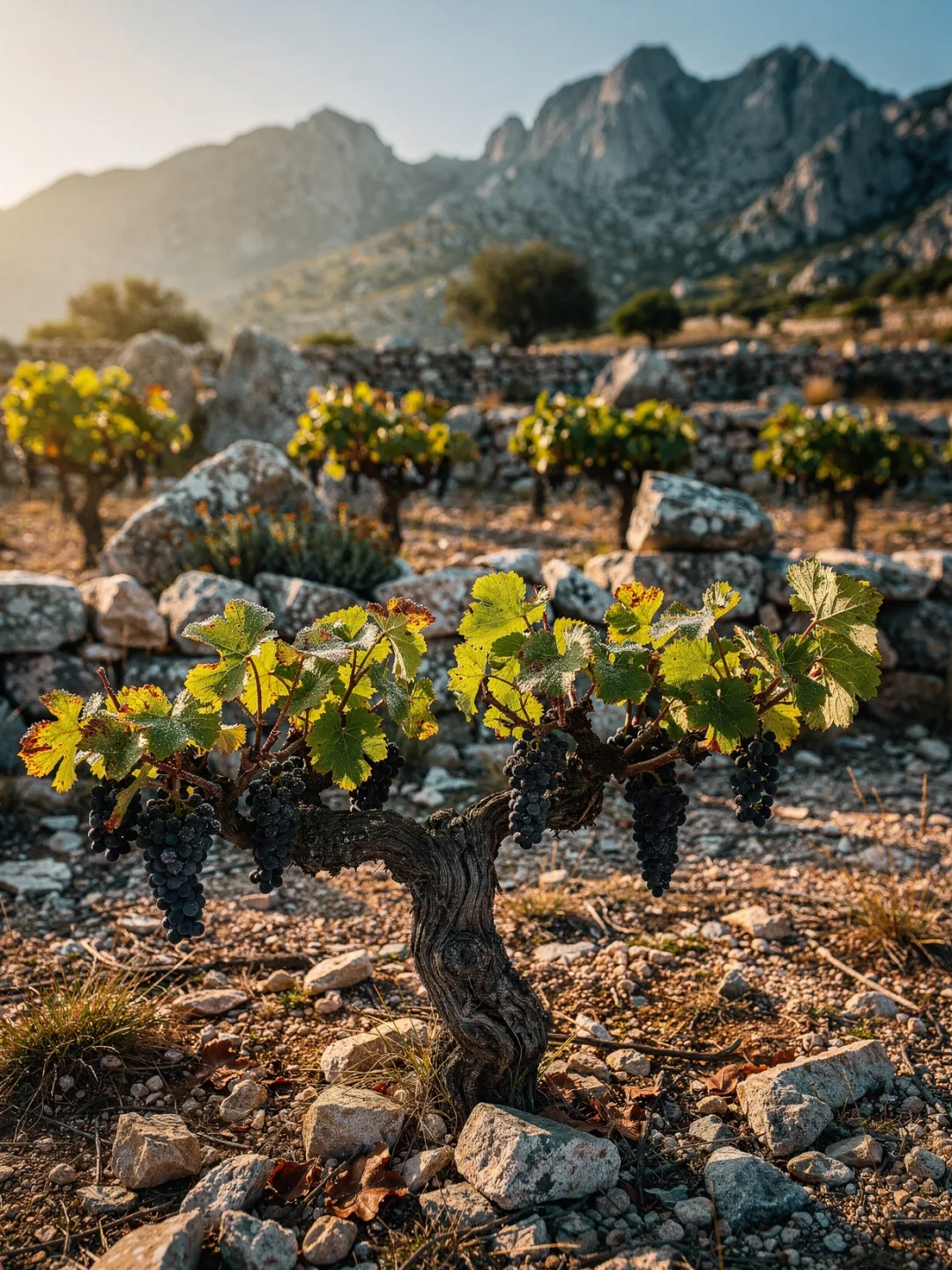
A single red grape variety dominates Sardinia's vineyards. Cannonau grows on more land than any other variety on the island, estimated at a quarter to a third of the entire Sardinian vineyard area, and carries the Sardinian name for the grape variety Grenache. In Spain the same grape is called Garnacha, in France simply Grenache. The DOC requires at least eighty-five percent Cannonau. In the Mandrolisai region of central Sardinia, it's even blended with the more austere Bovale and with Monica to create a third, distinct red wine.
In the glass, it shows plenty of power. The colour is a deep ruby red, and alcohol content almost always exceeds thirteen percent. For the Riserva, regulations require at least thirteen. The aroma recalls ripe cherry, dried herbs from the macchia, and sometimes myrtle, the shrub from which the island's Mirto liqueur is also distilled. Tannin is abundant, but rarely harsh.
In the north, a white variety takes over. Vermentino has probably grown on Sardinia since the fifteenth to eighteenth century, likely introduced from Spain, though its exact origin remains disputed to this day. On the weathered granite of the Gallura, the grape develops a salty, almost maritime edge. This earned it the reputation as Italy's most distinctive expression of Vermentino, noticeably crisper than comparable wines from the mainland.
In the south, meanwhile, in the Sulcis, stands Carignano. The same variety is called Carignan in southern France and Mazuelo in Spain. Its thick skins ripen late and need plenty of sun, which is why it thrives especially well in the hot coastal plains, and on Sant'Antioco, vines still grow today that were never grafted onto American rootstock. Some are over a hundred years old. The pure sandy soil there kept phylloxera at bay.
Alongside these, old white wines persist. Nuragus probably dates back to Phoenician times and yields fresh, uncomplicated wines with plenty of citrus character. Vernaccia di Oristano, by contrast, ages oxidatively under a layer of yeast, similar to Spanish Sherry, and tastes of almond and salt. Its cultivated area has shrunk from over fifteen hundred hectares in the 1970s to only around three hundred hectares today, making it one of Italy's most endangered wine traditions.