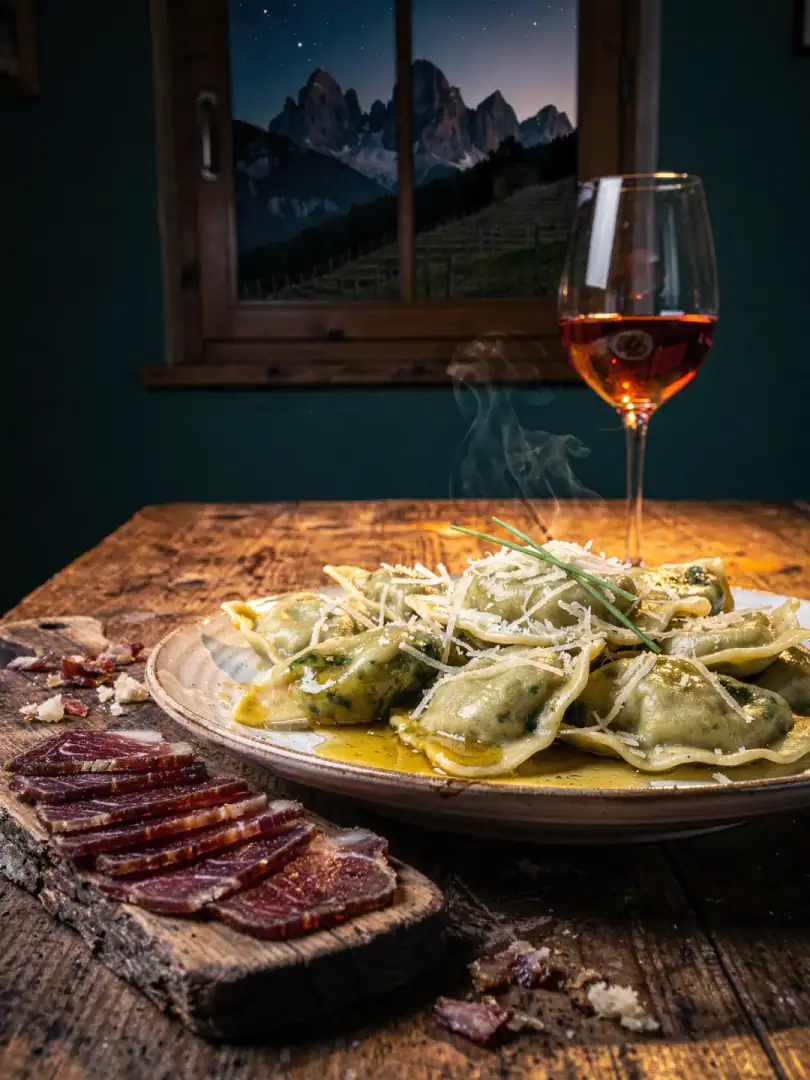
Speck and Schlutzkrapfen
Wine & Food
South Tyrolean cuisine sits somewhere between alpine hut and Italian trattoria. Hearty as in the rest of the Alps, but with an Italian touch of lightness — and its wines have followed suit for centuries, not the other way around.
Speck, air-dried and lightly smoked, is the region's best-known product. It cures for months in the mountain air, seasoned only with salt, pepper, and a few herbs. Its fat and smoke call for acidity to push back against them. That's exactly what a young, chilled Gewürztraminer delivers, its intense fruit aromas standing up effortlessly to the bold flavor of the speck without overwhelming it.
Schlutzkrapfen, on the other hand, call for something lighter. These are pasta pockets filled with spinach and ricotta, served in browned butter and grated cheese. A chilled Vernatsch, with its delicate bitter almond note, fits precisely into that space between mildness and herbal spice, without overpowering the delicate filling.
At the other end stands Gröstl: fried potatoes with pan-roasted beef scraps, topped with a fried egg — a dish for cold days after work in the barn. Lagrein suits it well, robust enough for the pan's fat and roasted flavors, with tannins that stand their ground against the leftover meat.
With pungent mountain cheese, of the kind that ages in almost every South Tyrolean mountain village, salt softens the tannin of a young Lagrein and makes it more approachable. Apple strudel, on the other hand, calls for sweetness in the glass. Otherwise even a mild wine suddenly seems thin and sour beside it — a dry South Tyrolean wine simply doesn't work with sweet dishes.
In the end, the table reveals what the vineyard has prepared. Each of the three varieties has found its own dish, not because some sommelier decreed it, but because generations of farmers tried out what belongs together on the plate.