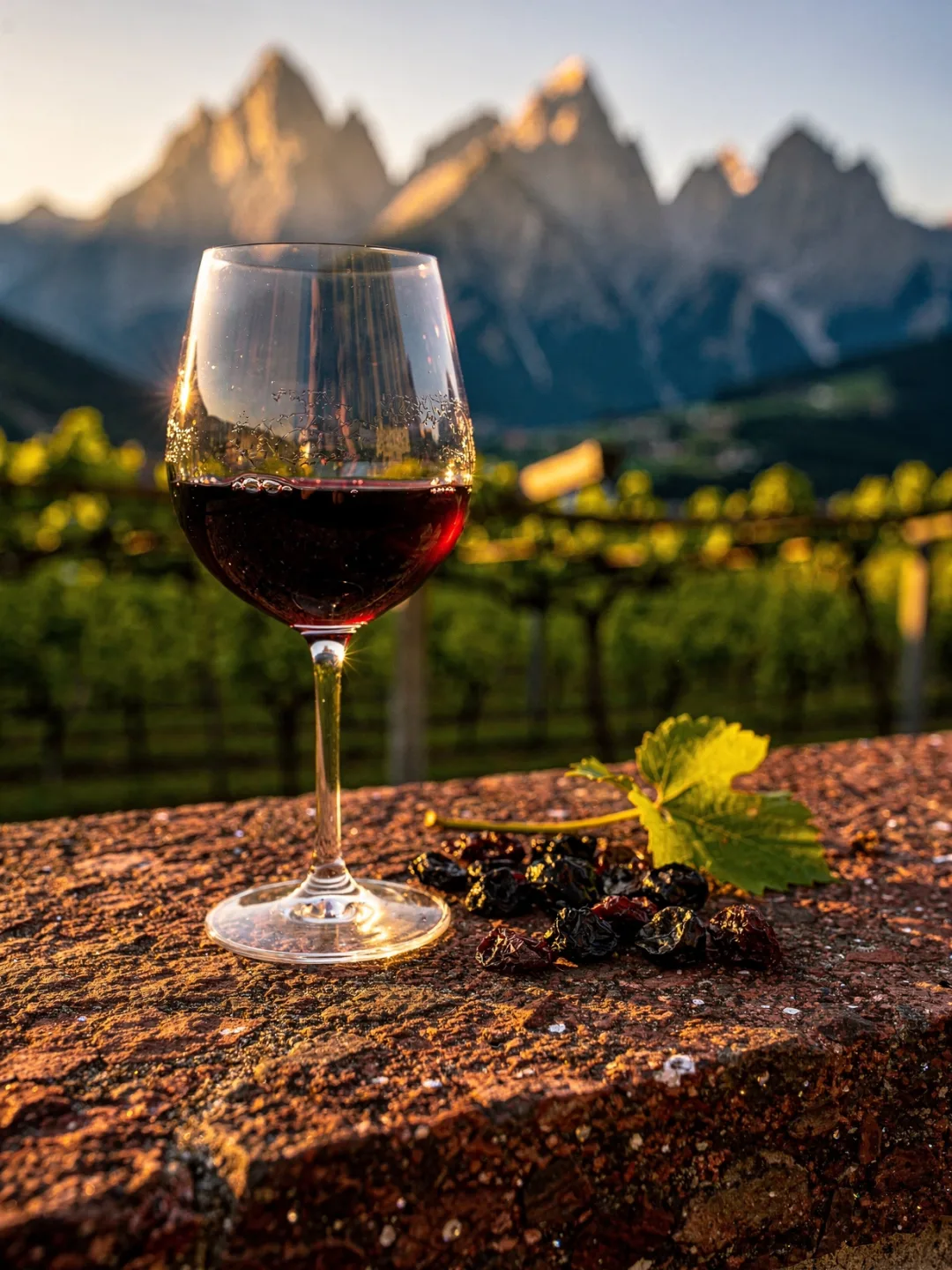
On a Lagrein
Tasting
Tilt a glass of Lagrein against something white. Barely any light gets through at the rim, that's how dark and violet the color is. It's a striking contrast to the pale, almost translucent ruby red of Vernatsch, which you recognize instantly beside it.
Smell it twice, once with the glass at rest and once after swirling. At rest, dark forest berries rise up, blackberry above all, sometimes a hint of sour cherry. After swirling, the rest follows: violets, a touch of dark chocolate, occasionally tobacco — aromas that only release themselves through movement in the glass.
In the mouth, pay attention to two things separately. You feel the tannin as a firm, almost gripping coating on the gums, more powerful than in almost any other Italian red wine variety in this price range. The acidity, meanwhile, sits along the sides of the tongue. It keeps the dense wine in balance despite its power, so it never feels heavy-handed, even when alcohol and extract run high.
At the end, count the finish. With a simple Lagrein it's five, six seconds; with a well-aged Riserva from old wood, often twenty seconds or more. Length can't be added afterward in the cellar — it's either in the grape or it isn't.
Taste a Vernatsch afterward, and it seems almost fragile. That's exactly the point: only in comparison does it become clear how differently two red wines from the same land can taste, even though both ripen under the same sun in the same basin.