Sangiovese & Co.
Grape Varieties
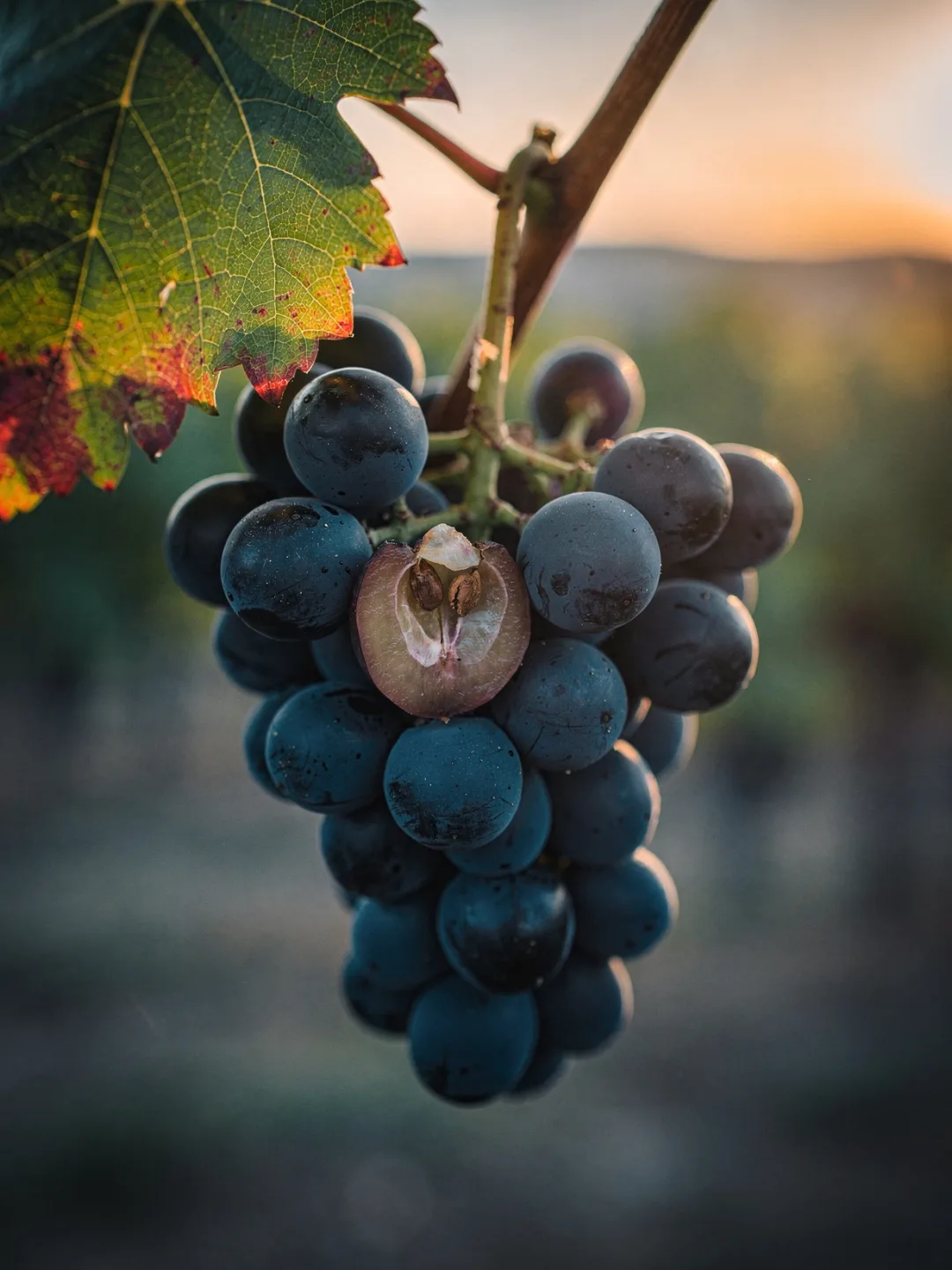
One variety determines almost everything here. Sangiovese covers two-thirds of Tuscany's vineyard area, and its name translates as blood of Jupiter. It ripens late, buds early, and forgives nothing: plant it on the wrong slope, and you'll taste it immediately.
In the glass, it's recognizable by an unusual combination. The color is quite pale for a red wine, almost translucent at the rim, yet acidity and tannin are both high — tannin being the fuzzy coating you feel on your gums after a sip. Add to that aromas of sour cherry, dried tomato, and leather. Both traits sound like drawbacks, and they're the reason these wines can age for twenty years.
The same variety goes by different names elsewhere. In Montalcino it's called Brunello, in Montepulciano Prugnolo Gentile, in Scansano Morellino — and the differences between these wines come less from genetics than from altitude, soil, and harvest timing. There are over a hundred documented variants, known as clones. Which one you plant determines more about the wine than anything done in the cellar.
Alongside it stand the old companions. Canaiolo makes the wine rounder and less austere, Colorino adds color, and Mammolo brings a scent of violets — hence its name. Until 2006, Chianti even had to include co-fermented white grapes, Trebbiano and Malvasia; today that's forbidden.
The third group are newcomers. Cabernet Sauvignon, Merlot, and Syrah arrived in the 1970s, first along the coast near Bolgheri, where it's warmer and the soil stonier. Whether as single varietals or blends, they produce the best-known Super Tuscans. Whether this still counts as Tuscan is a debate winemakers keep having — but in the glass, the two worlds are easy to tell apart: Sangiovese tastes of sour cherry and herbs, Cabernet of blackcurrant and bell pepper.