Why Altitude Matters
Climate
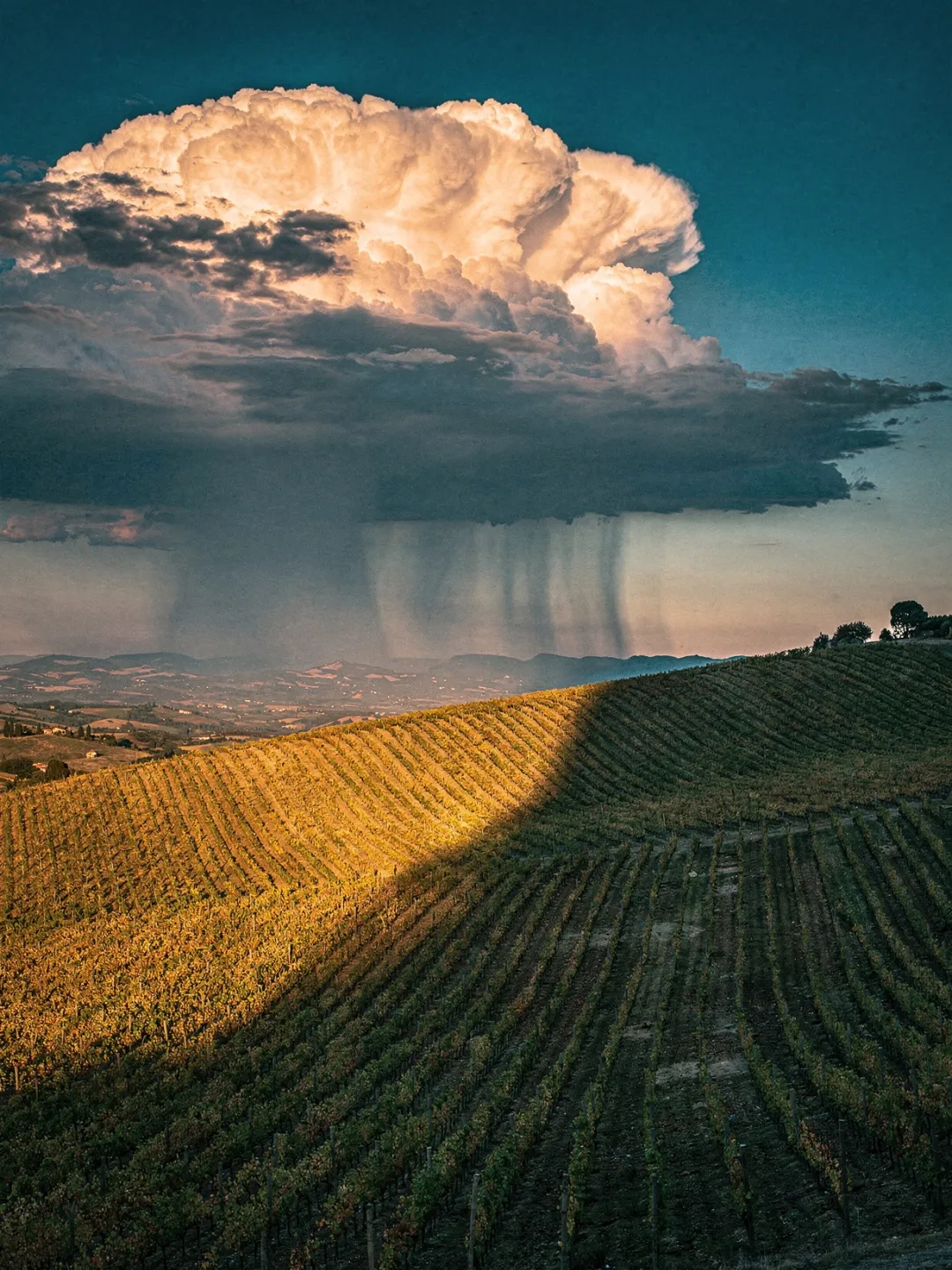
Tuscany is warm, but it isn't equally warm everywhere, and that's exactly what counts. The vineyards of Chianti Classico lie between two hundred and six hundred meters above sea level. Between the lowest and highest sites, summer temperatures differ by about three degrees.
Three degrees sounds like nothing. For the grape, it's the difference between tension and slackness, because acidity breaks down in heat, and once it's gone, not even the best cellar master can bring it back. That's why the best Sangiovese sites almost always sit higher up the slope. Down in the valley, grain grows instead.
Even more important is the difference between day and night. In September, the thermometer climbs to thirty degrees during the day and drops to twelve or thirteen at night, and the vine makes use of both: during the day the berry ripens, and at night the cool air locks in the acidity while the aromatic compounds don't escape. Where this swing is missing, wines turn out full-bodied but say nothing.
The coast plays by its own rules. In Bolgheri, less than ten kilometers from the sea, it's milder, the wind dries the grapes after rain, and frost is practically unheard of. That's why Cabernet and Merlot ripen fully there, while further inland, in cooler conditions, they often stay green and herbaceous.
And then there's the shift of the past thirty years. Harvest has moved earlier. What used to start in early October now often begins in the first week of September, and in particularly hot vintages, pickers have even been in the vineyards by late August. As a result, winemakers are planting higher again, leaving more leaf canopy for shade, and harvesting in the cool morning hours. Climate change isn't a forecast here. It's written into the harvest calendar.