Canederli and Game
Wine & Food
Trentino's cuisine comes from the mountains, not the sea. The wine to go with it has been shaped for exactly that purpose over centuries. Speck, butter, cheese, and game dominate the table far more often than fish or oil. A wine with acidity and tannin has an easy time here. A soft, fat wine, by contrast, has almost none.
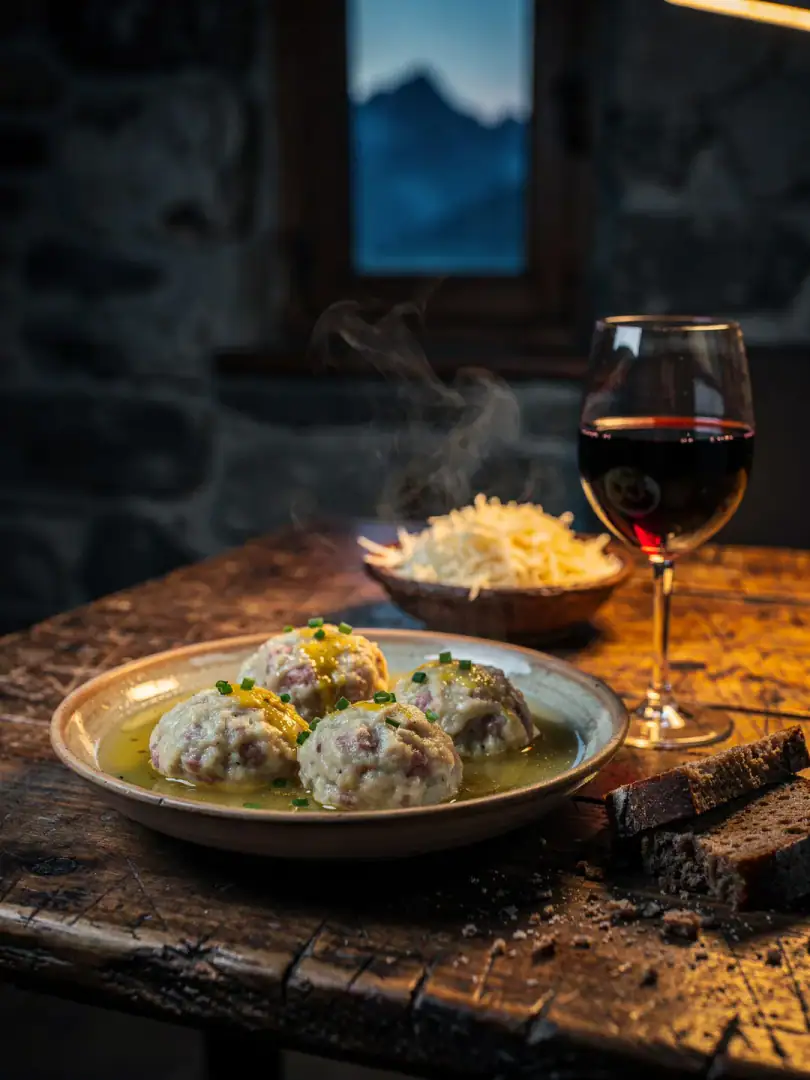
A young Teroldego pairs especially well with canederli, the hearty dumplings made from white bread, speck, and egg, because its acidity cuts through the butter the dumplings usually swim in, and its tannin finds a counterpart in the speck that rounds it out. With strangolapreti, the green spinach dumplings served with brown butter and sage, the wine may be a touch lighter. This is where Marzemino shows its strength, with less tannin and more fruit.
Game from the local forests, such as venison or chamois, served with polenta and lingonberries, calls for the boldest tier, a Teroldego Superiore or a Riserva with enough structure to stand up to the richly spiced sauce. Porcini mushrooms from those same forests, whether pan-fried or stirred into the polenta, need less power. But they share the same earthy undertone that Teroldego already carries in its wild note.
Fish rarely eaten outside the region comes from Trentino's lakes: whitefish and trout, usually pan-fried or grilled. Nosiola from the Valle dei Laghi pairs beautifully here, dry with its characteristic hint of hazelnut. It outshines any imported white wine. To open a meal, Trentodoc stands ready, with its fine bead and the toasty notes from extended lees aging. That alone builds appetite before the first course even arrives.
At the end of the meal comes Vino Santo, concentrated and honey-sweet, made from dried Nosiola grapes. Its sweetness pairs with Zelten, the dense fruit-and-nut bread with figs traditionally baked in Trentino at Christmas, like almost no other wine can. It stands equally well alongside pungent blue cheese, where salt and sweetness amplify each other instead of clashing. Anyone who has tried the two together understands why this wine is worth months of patience.