Norcia Meets Montefalco
Wine & Food
Norcia gave the Italian language a word of its own. To this day, 'norcino' means pork butcher anywhere in the country, because craftsmen from this small mountain town have traveled across Italy offering their skills since the Middle Ages. Prosciutto di Norcia has carried the EU's PGI seal since 1997, with capocollo and salame from the same artisan tradition standing alongside it on every board. No delicate wine belongs here. Even the Pecorino aged for months in these same Umbrian mountains calls for power rather than fine elegance.
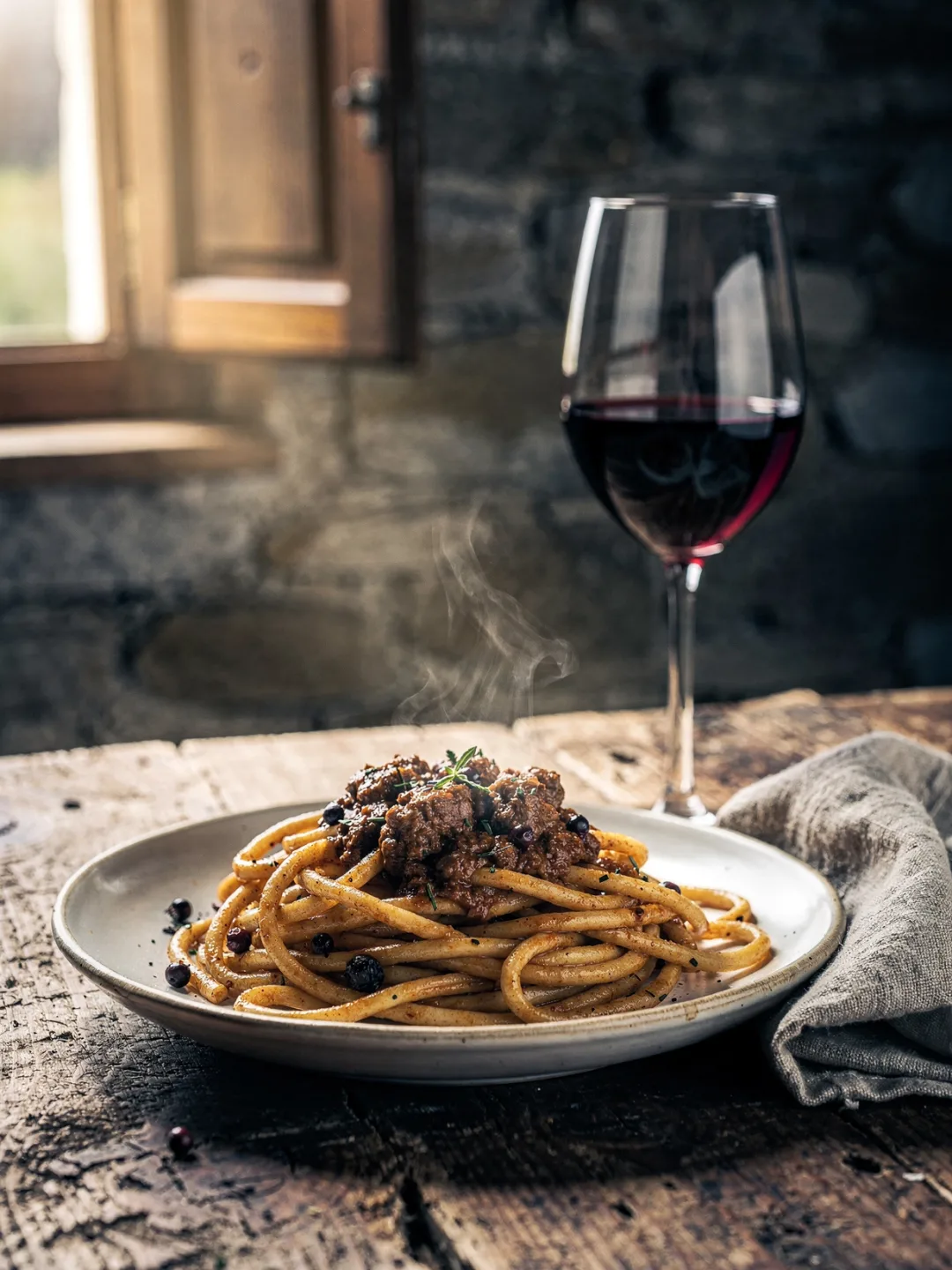
Cinghiale, the wild boar from Umbria's forests, usually lands on the plate as a slow-braised ragù, bound with juniper and bay leaf. This is exactly where Sagrantino's enormous tannin proves its worth: it cuts through the fat of the meat like a sharp knife through butter.
In autumn, black truffle arrives from the forests around Norcia and Spoleto, most often served over homemade strangozzi, a thick, hand-pulled pasta made without egg. No tannin-heavy red wine suits this delicate aroma. Far better is a young, barely aged Trebbiano Spoletino, whose freshness carries the truffle rather than overwhelming it.
At an altitude of eleven hundred meters near Castelluccio di Norcia grow the region's famous lentils: small, thin-skinned, and cookable without soaking. They end up in a simple soup or served alongside salsicce. A straightforward Montefalco Rosso suits them better than the powerful Sagrantino. Torta al Testo, a flatbread cooked on a hot stone, is often filled with exactly these leftovers.
To finish, chocolate often appears on the table in Umbria: a Bacio Perugina. Invented in 1922 by Luisa Spagnoli from leftover cocoa and hazelnut scraps. The original name was less elegant: "Cazzotto," meaning punch, after its shape. Nothing pairs better with the dark gianduia core and whole hazelnut than a glass of Sagrantino Passito, sweet, concentrated, with the same tannin that makes the dry wine famous.