Purple, Tannin, Length
Tasting
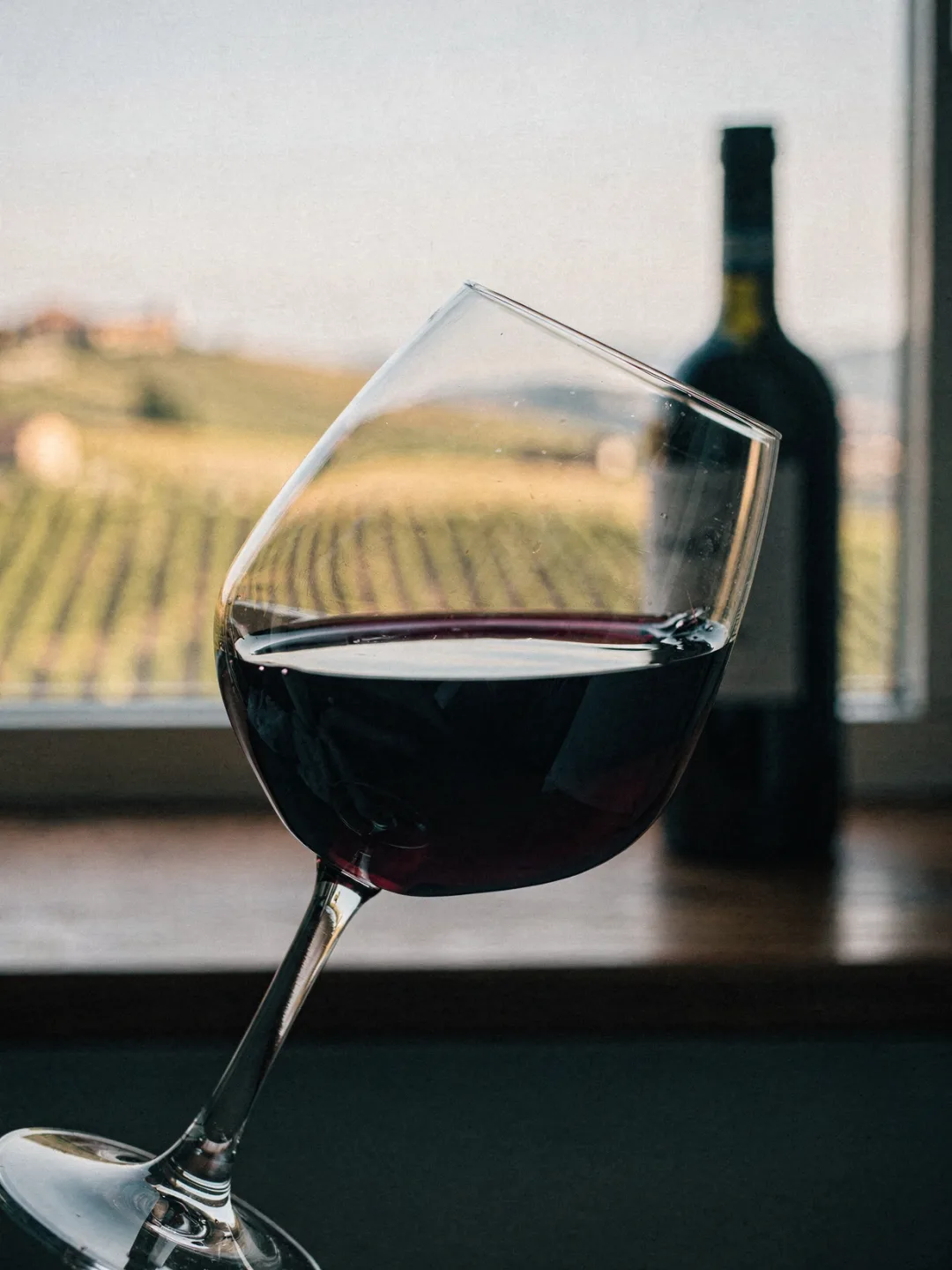
Hold a glass of Montefalco Sagrantino against something white. You'll immediately see why this grape is so famous, because its color is an almost opaque purple reaching deep into the core, barely lightening even at the outer rim. The opposite of Sangiovese. Tuscany's grape turns brick-red while still young; Sagrantino stays nearly black for years.
Smell it twice: once with the glass still, once after a vigorous swirl, because half the information a Sagrantino has to offer lies between those two moments. Berries come first. Blackberry and blueberry rise up immediately, since their molecules evaporate most easily, and only after swirling do the heavier notes follow: black pepper, licorice, and in older vintages, leather and dried herbs.
In the mouth, it's best to separate acidity from tannin. You feel the acidity along the sides, fresh and lively despite the warmth of the climate these grapes ripen in. The tannin, meanwhile, coats gums and palate like a dry cloth, one that only turns velvety after years in the cellar. Young, it can feel like almost too much.
Finally, count how long the flavor lingers after you swallow. Twenty or thirty seconds is nothing unusual for a good Sagrantino, since its extraordinary tannin load carries the finish long after other red wines would have already faded. Few wines can keep going that long.
A glass of Orvieto reads entirely differently: pale straw yellow, sometimes with a greenish shimmer, citrus peel and white blossoms on the nose instead of dark berries, plus an acidity that gets the saliva flowing immediately. Tannin is almost entirely absent, since the skins barely take part in fermentation. Two glasses, one afternoon, and you'll understand more about Umbria than any book could teach you.